Career Development
How to Use Personas to Define Coaching Clients
April 7, 2026
12 min read

How to Use Personas to Define Coaching Clients
Personas are fictional profiles based on real data that represent different segments of your audience. They go beyond basic demographics and focus on motivations, fears, and goals. By creating personas, you can:
- Understand what drives your clients to seek coaching.
- Tailor your marketing to address specific concerns and desires.
- Identify clients who align with your expertise while avoiding poor fits.
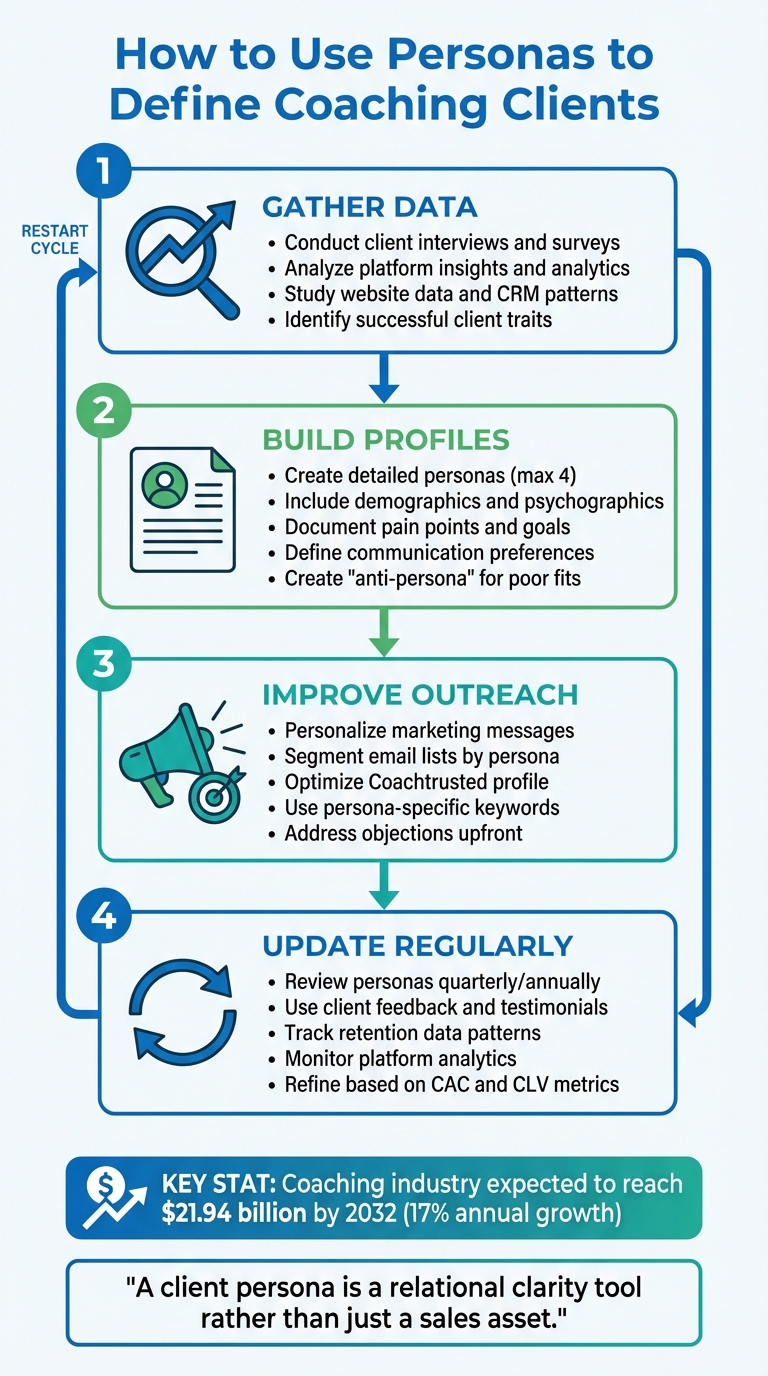
Key Steps to Create and Use Personas:
- Gather Data: Conduct interviews, surveys, and analyze platform insights to understand client behaviors and preferences.
- Build Profiles: Create detailed personas, including demographics, values, challenges, and goals.
- Improve Outreach: Personalize your marketing and refine your messaging based on persona insights.
- Update Regularly: Use feedback and analytics to keep personas relevant.
Personas streamline your marketing efforts, increase client engagement, and help you focus on clients who will benefit most from your coaching.
4-Step Process to Create Coaching Client Personas
Step 1: Gather Data to Build Your Personas
Use Client Surveys and Interviews
The best way to create effective personas is by speaking directly with your clients. Start by interviewing your most successful ones - those who’ve achieved the best results and stayed committed to your coaching. These conversations often reveal patterns and insights you won’t find elsewhere. Ask open-ended questions like, "What disrupts your life or business the most?" or "What causes you the greatest stress or worry?". Pay close attention to the exact words they use. For instance, if someone says, "I need permission to stop trying to do everything" instead of "I need better time management," that phrasing can become a key part of your messaging.
You can also gather insights through email surveys or in-site pop-ups. Focus on real experiences rather than hypothetical scenarios. Instead of asking, "Would you hire a coach?" try, "Tell me about the last time you struggled with... " This approach helps uncover the deeper motivations behind their actions.
"This tool helped me identify the specific audience that truly gets the best results from my coaching. I now have a clear view of my ideal client, their pain points, and how I can better communicate with them." – Thomas, Customer Success Leadership Coach
It’s equally important to define who isn’t a good fit. Take note of traits in clients who require constant follow-ups, ask for discounts, or fail to complete assignments. These characteristics form an "anti-persona", which can help you fine-tune your marketing to attract the right people while discouraging poor fits.
Round out these qualitative insights with data from your digital platforms.
Analyze Platform Data and Analytics
Your digital tools can reveal a lot about your audience. Website analytics, for example, can show you where your visitors are located, their age ranges, and which content topics resonate most. If you’re using Coachtrusted, you can dig into profile data to see which coaching areas generate the most interest and when clients are most active. This information doesn’t just tell you who your clients are - it also shows when and how they’re searching for solutions.
Use your CRM to filter out your most successful clients and look for shared traits like demographics, behaviors, or professional details such as team size or budget. Understanding where your traffic originates can also reveal which podcasts, blogs, or influencers your ideal clients are engaging with, helping you focus your outreach efforts. Additionally, social media insights can highlight which platforms your audience prefers and whether they respond better to videos or text-based content.
"The commonalities between your most successful clients help to signal whether future clients are a match for your services." – Anna Hunyadi, Close.com
sbb-itb-3c06305
Step 2: Create Detailed Persona Profiles
What to Include in a Persona Profile
Turn your research into actionable insights by building detailed persona profiles. Start with the basics: assign your persona a fictional name, age, location, occupation, and income source. Include family details like marital status or whether they have dependents - these factors often shape their coaching needs and availability. The real depth comes from psychographics: outline their core values, beliefs, personality traits, and the motivations driving their decisions.
Next, dive into their challenges. Document their pain points, frustrations, and past failed attempts - both those they openly share and those they may only hint at. Focus on capturing immediate concerns as well as deeper, underlying struggles. On the flip side, define their personal goals and aspirations. These should be specific and personal, not generic. Think of a clear, motivating vision that explains why they’re seeking coaching.
Evaluate their openness to coaching, noting any reservations or fears they might have about the process. Consider practicalities, like how much time they can realistically commit each week, and address potential hesitations, such as cost concerns or doubts about readiness for change. Don’t forget to include how they prefer to communicate - whether that’s email, video calls, or social media - and note the resources they trust, like podcasts, books, or influencers they follow.
Here’s a pro tip: stick to a maximum of four personas to keep your marketing efforts focused. Too many personas can dilute your strategy and waste energy on outliers. It’s also helpful to create a "Non-Ideal Client Profile" (NICP). Identify traits of clients you’d rather avoid, such as those who frequently skip prep work or expect discounted rates.
Detailed persona profiles like these will help you fine-tune your coaching outreach, ensuring better alignment with your ideal clients and streamlining your marketing approach.
Use Tables and Visuals to Compare Personas
Data becomes far more useful when you can spot patterns quickly. Visual tools like tables make it easier to compare personas side by side, helping you tailor your messaging and offerings. For example, you might compare personas based on their goals, fears, technical skills, and coaching needs:
| Attribute | Young Professional | Mid-Career Manager | Entrepreneur |
|---|---|---|---|
| Core Goal | Save for a home and retire early | Find work that feels meaningful | Optimize income and reinvest |
| Primary Fear | Not knowing where to start | Feeling "lost in translation" at work | Lack of structured business approach |
| Tech Literacy | High (mobile-first) | Moderate (prefers email) | High (interested in advanced tools) |
| Coaching Need | Education and structure | Guidance to prioritize personal needs | Flexibility and growth strategies |
Keep these profiles concise - ideally, a single page per persona. Longer documents often get ignored, defeating their purpose. To make them even more engaging, consider creating visual persona cards using tools like Figma. Include a photo, a catchy name, and a tagline (e.g., "Sarah, The Growth-Focused Marketing Manager"). Adding first-person quotes can also make the profiles more relatable. For example: "I need simple tools because I’m juggling five projects at once."
"The coaches whose marketing really works? They've done the hard work of articulating their ideal client's inner world in detail. Not just in their heads - on paper, in a structured way they can refer to and use." – CoachOnline
Step 3: Use Personas to Improve Your Coaching Outreach
Personalize Your Marketing and Communication
Once you've developed detailed persona profiles, use them to shape every aspect of your communication. Tailor your messaging to address your clients' specific needs and concerns. Instead of broad, generic statements, craft messages that speak directly to their struggles. For instance, if your persona is a mid-career manager feeling "lost in translation" at work, use that exact language in your website copy, email campaigns, and social media posts. The goal is to make your audience feel seen and understood.
When it comes to email marketing, segmentation is key. Divide your email lists by persona so you can send targeted messages. A young professional saving for a home will appreciate different content than an entrepreneur focused on maximizing income. Align your content - whether it's blogs, videos, or downloadable guides - with each step of the sales funnel. Think ahead and address potential objections like time constraints or cost concerns in your messaging. By tackling these issues upfront, you remove barriers that might prevent someone from booking a session.
"When you speak to what they really want (not just what they say they want), they feel understood." – CoachOnline.tech
With the coaching industry expected to grow to $21.94 billion by 2032 at a 17% annual growth rate, standing out in this competitive market is essential. Use persona insights to sharpen your SEO strategy. Focus on the exact terms your target clients are searching for, like "stress management coaching" or "leadership transition." This approach builds your authority in niche areas and increases your visibility on search engines and social media.
Finally, take these strategies and apply them to your Coachtrusted profile for maximum impact.
Optimize Your Coachtrusted Profile
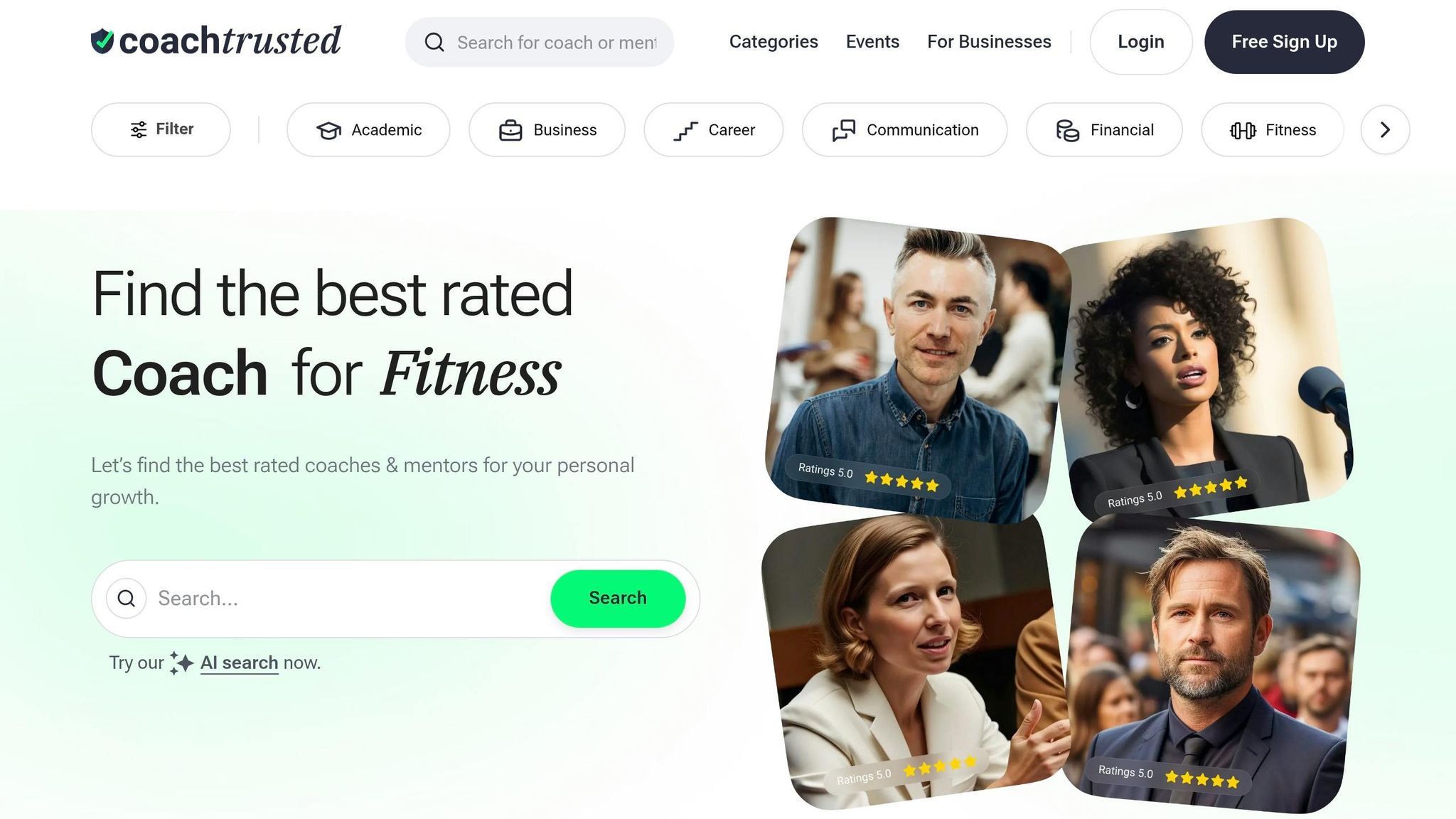
Your Coachtrusted profile is often the first place potential clients learn about you. Use persona-driven insights to refine every detail. Start with your Unique Value Proposition (UVP) - make it clear and specific. Skip vague statements like "I help people achieve their goals" and instead focus on language that reflects your personas' unique challenges and aspirations.
Coachtrusted's AI-powered matching system pairs users with coaches based on their needs and goals. To ensure you're matched with the right clients, complete the platform's onboarding questions from your ideal client's perspective. Incorporate keywords that reflect their pain points, desired outcomes, and how they describe their situations. This improves your visibility in search results and ensures you're recommended to the right audience.
Build trust by leveraging features like verified reviews and "Expert Check" status, both of which are crucial for gaining credibility. Address objections identified in your persona research directly in your profile. For example, if your ideal client worries about whether they're "coachable" or has concerns about time commitments, acknowledge these issues and explain how your approach addresses them. Premium members can enhance their profiles with tailored images, videos, and custom call-to-action buttons that align with their personas' preferred communication methods.
"A detailed client persona created from real data lets you customize the customer's journey with their specific characteristics in mind from the point they find you online, to booking their first session." – Sofia Health Staff
Step 4: Update Your Personas Over Time
Use Client Feedback and Retention Data
Client personas aren’t set in stone - they’re more like evolving blueprints that shift as your market changes and you gain more experience working with clients. Coaches who revisit and refine their personas regularly are better equipped to meet changing client needs compared to those who create them once and leave them untouched. Keeping your personas updated ensures your outreach stays relevant and effective.
Start by recording your conversations with current clients. Pay close attention to the emotional language they use to describe their struggles. For example, there’s a big difference between a client saying they feel "stuck" versus "overwhelmed." These subtle distinctions can guide your messaging. Use testimonials from platforms like Coachtrusted or LinkedIn, and pair them with AI tools to spot recurring themes and move from guesswork to data-backed insights.
Retention data is another goldmine. Look for patterns among clients who complete your programs versus those who drop out early. Identifying these trends allows you to spot potential red flags and focus your energy on clients who truly benefit from your coaching.
"An Ideal Client Profile is not a fixed declaration. It is a working hypothesis." – Coach Training EDU
Make it a habit to review your personas at least once a year, though quarterly updates are quickly becoming the norm as of 2026. Pay attention to which blog posts or emails resonate the most - things like saves or replies can reveal which persona segments are most engaged. Combining these insights with platform data ensures your outreach speaks to current client needs, not outdated assumptions.
Track Platform Insights for Ongoing Updates
While client feedback provides a personal touch, platform analytics add hard numbers to round out the picture. For example, Coachtrusted’s analytics can show you how potential clients discover and interact with your profile. Are they searching for stress management more than leadership coaching? If so, it’s time to tweak your personas and adjust your messaging.
The coaching world is evolving rapidly. Static persona documents are becoming obsolete. In 2026, effective personas act as dynamic models that adapt to real-time client behavior. Today’s consumers are more privacy-conscious and their preferences shift based on context and platform. What worked six months ago may no longer be relevant.
To stay on top of these shifts, use zero-party data - information clients willingly share through quizzes, intake forms, or preference centers. Not only does this align with modern privacy standards, but it also gives you highly relevant insights. When clients tell you directly what they need, take that feedback seriously and update your profiles.
"Iteration does not mean constant reinvention. It means structured refinement." – Coach Training EDU
Finally, track metrics like Client Acquisition Cost (CAC) and Client Lifetime Value (CLV) for each persona. If one persona consistently brings in higher value and retention, adjust your Coachtrusted profile and outreach to attract more clients like them. Interestingly, only 8% of coaches focus on niche marketing, but those who do tend to attract significantly more clients than generalists. Regularly refining your personas can help you stay ahead in this competitive space.
Step-by-Step Training: Build Your Ideal Client Persona
Conclusion: Using Client Personas to Grow Your Coaching Business
Client personas go beyond being just marketing tools - they provide a clear framework that strengthens client relationships and drives the growth of your coaching practice. By understanding your ideal clients’ specific language, challenges, and decision-making processes, you can craft messaging that feels personal and impactful. This approach draws in the right leads - clients who genuinely appreciate your expertise, actively engage with your coaching, and achieve meaningful results.
In today’s crowded coaching market, a one-size-fits-all approach no longer works. Success comes from focusing your efforts strategically. Personas allow you to allocate your marketing resources more effectively, boosting your return on investment by attracting clients who are truly ready for change.
"A client persona is a relational clarity tool rather than just a sales asset." – Coach Training EDU
The key is in applying these personas thoughtfully. Regularly refining your personas based on real-world data - like insights from client interviews - can significantly enhance your results. Updating platforms such as your Coachtrusted profile with persona-specific keywords ensures you’re reaching the right audience. These ideal-fit clients are more likely to remain engaged, complete your programs, and contribute to long-term success. Addressing core struggles, whether it’s imposter syndrome, career challenges, or work-life balance, helps clients feel seen and supported from the very beginning.
Think of personas as living, breathing tools. As you work with more clients and identify who thrives under your guidance, adjust your profiles to reflect these discoveries. The most successful coaches focus on serving the right clients exceptionally well, rather than trying to appeal to everyone. By continuously fine-tuning and using these data-driven personas, you create a coaching practice built on clarity, empathy, and intentional growth. This approach strengthens the link between targeted client outreach and lasting success in your business.
FAQs
How many personas do I actually need?
The number of personas you should create depends largely on your target audience. Generally, crafting 3 to 5 detailed personas is a good starting point. This range allows you to capture the key segments of your audience while keeping things manageable.
The goal is to focus on quality over quantity - each persona should represent a distinct and meaningful group within your market. When done right, these personas can help you fine-tune your coaching strategies to better meet the needs of different client types.
What questions should I ask in client interviews?
When speaking with clients, it's essential to ask thoughtful questions that uncover their goals, obstacles, and preferences. This approach allows you to build detailed client profiles and customize your coaching to meet their specific needs. Here are a few examples of questions you might consider:
- What are your primary goals or objectives?
- What challenges are you currently facing?
- What inspired you to seek coaching?
- How do you prefer to receive support or guidance?
By gathering this information, you can create a more tailored and meaningful coaching experience that resonates with each client.
How do I use personas to improve my Coachtrusted profile?
To make your Coachtrusted profile stand out, start by crafting detailed client personas that represent your ideal clients. Think about their demographics, goals, challenges, and motivations. By understanding who they are and what they need, you can fine-tune your profile description to speak directly to them.
This strategy does more than just make your profile relatable - it highlights how your coaching aligns with their specific needs. When potential clients see themselves in your description, they’re more likely to connect with your services. Plus, having clear personas helps you refine your messaging and positioning, making your profile even more appealing to the audience you want to attract.