Career Development
How AI Enhances Personalized Coaching Experiences
February 24, 2026
13 min read

How AI Enhances Personalized Coaching Experiences
AI is transforming the coaching industry by making personalized guidance more accessible, efficient, and precise. It helps coaches save time, improve client retention, and provide real-time, tailored feedback using tools like machine learning and natural language processing. Key advancements include:
- Smart Matching Systems: AI pairs clients with the right coach based on personality, goals, and data insights, improving accuracy by 91%.
- Automated Progress Tracking: Wearables and NLP tools monitor performance, summarize sessions, and adjust plans, saving coaches 10–15 hours weekly.
- Customized Goal-Setting: AI refines objectives using data like recovery metrics and engagement patterns, offering dynamic prompts to keep clients on track.
AI is widely used across fields like fitness, trading, and creative mentorship, offering tailored solutions such as adaptive workout plans, trading risk alerts, and emotional tone analysis during sessions. While AI excels at automating tasks and analyzing data, human coaches remain essential for handling complex emotional situations and building trust.
The future of coaching includes AI-driven tools like voice-first systems, augmented reality, and sentiment dashboards, which predict challenges and deliver proactive support. By blending AI's efficiency with human expertise, coaching is becoming more effective and available to a broader audience.
AI Impact on Coaching: Key Statistics and Benefits
AI Tools for Coaches: What’s Actually Helping Me (and What’s Not)
Key AI Features That Improve Coaching Experiences
AI is transforming coaching by adding precision and efficiency through three standout capabilities: smart matching systems, automated progress tracking, and personalized goal-setting. These tools streamline the coaching process, from the first interaction to long-term progress monitoring.
Smart Matching and Personalized Recommendations
AI-powered matching systems take onboarding to the next level. For instance, if you mention burnout during your initial intake, the system digs deeper, asking targeted questions about your stressors. This helps pair you with a coach whose expertise best suits your needs. Instead of relying on intuition, AI uses emotional tone analysis and behavioral patterns to make data-driven matches that align with your unique situation.
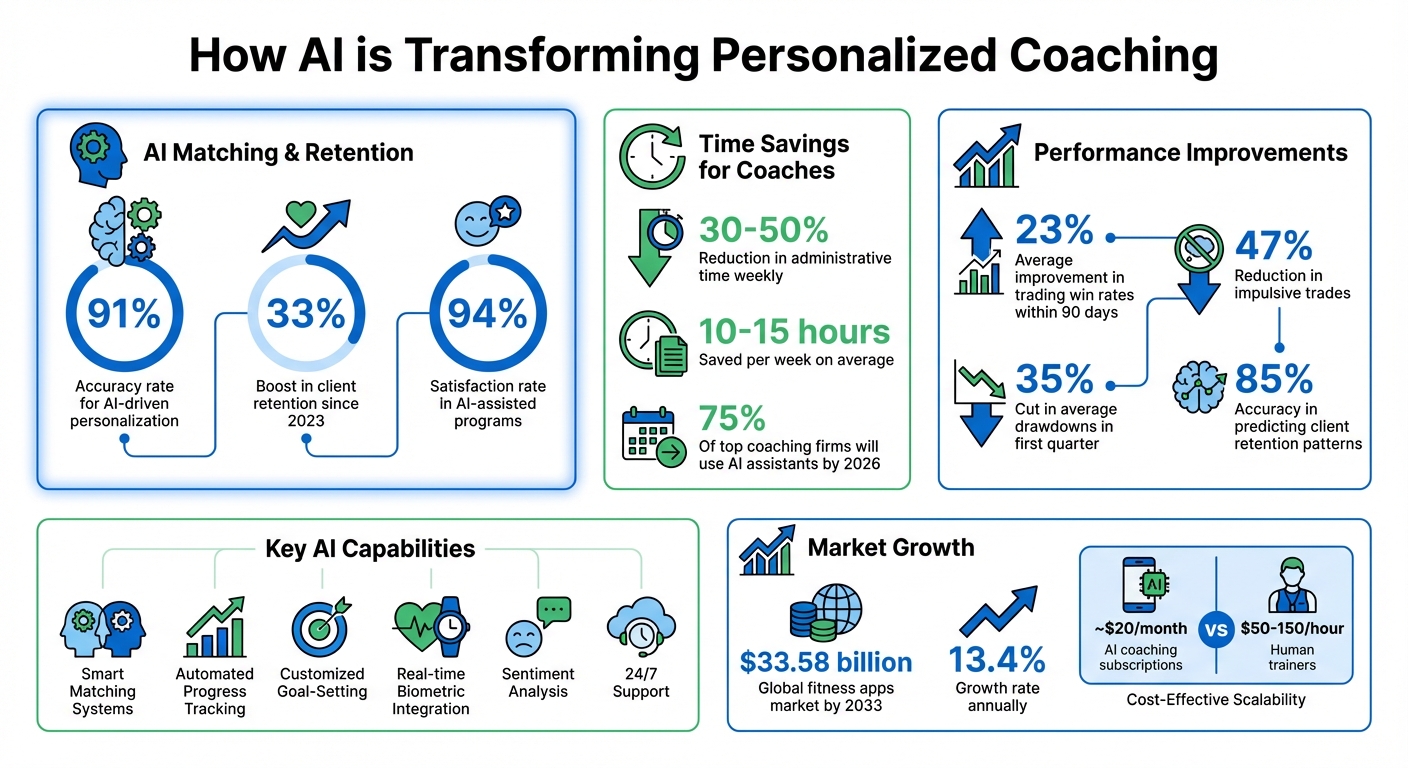
These systems are incredibly effective. AI-driven personalization can hit an accuracy rate of 91%, and coaches using these tools have seen a 33% boost in client retention since 2023. The technology interprets your onboarding data instantly, ensuring you're matched with the right coach from the start.
When evaluating platforms, look for those incorporating Natural Language Processing (NLP). These tools can summarize sessions and analyze emotional tone, which helps refine the client–coach relationship over time. Advanced systems monitor factors like mood changes, engagement levels, and response patterns to suggest tailored interventions. This ensures that even on a large scale, every client feels like they’re receiving one-on-one attention.
Automated Progress Tracking and Analytics
AI seamlessly integrates with wearables like the Apple Watch, WHOOP, and Oura, using biometric data - such as heart rate variability, sleep patterns, and recovery metrics - to adjust training plans in real time. This allows your coach to know exactly when to push you harder or when to scale back, without needing manual input.
NLP tools also streamline session management by transcribing coaching sessions and pulling out key points, action steps, and emotional insights. Reports that once took hours to compile can now be generated in minutes. Coaches using these tools save 30–50% of their time each week, giving them more bandwidth to focus on building stronger client relationships.
Beyond tracking, AI offers visual insights into long-term behavior changes. Some platforms even use sentiment tagging to highlight moments of client resistance or breakthroughs - no need for the coach to comb through every message manually.
Customized Goal-Setting and Daily Prompts
AI doesn’t just track progress - it helps refine your goals. Platforms generate tailored journaling prompts and adjust daily objectives based on your biometric data. For example, if your recovery metrics are solid, the AI might recommend a high-intensity workout.
In one notable case from January 2026, an athlete named Max broke through a bench press plateau after the AI analyzed his Rate of Perceived Exertion (RIR) data. The system prescribed a deload week and adjusted his accessory exercises, leading to a 10 kg improvement in just four weeks.
"The AI saw that I was going in circles before I noticed it myself"
Goal recognition engines also adapt goals in real time, analyzing factors like login frequency, message tone, and task completion rates. Virtual coaching assistants provide timely nudges, offering motivation when they detect dips in engagement or slow progress. Early in 2026, a professional named Lena used AI-driven scheduling to stay consistent with her fitness routine. The system dynamically adjusted her sessions based on her availability, alternating between 30-minute home workouts and full gym sessions. This flexibility helped her maintain a six-month streak for the first time ever.
How AI is Used Across Different Coaching Fields
AI's ability to tailor experiences is transforming coaching across various industries. From fitness to finance and creative fields, AI adapts its strengths to tackle specific challenges, offering personalized, data-driven support that enhances outcomes.
AI in Health and Fitness Coaching
Fitness coaching has come a long way, thanks to AI. Gone are the days of rigid workout plans - now, systems like Vora's "Daily Plan" use metrics like heart rate variability (HRV), sleep patterns, and training volume to adjust workouts in real time. For example, if recovery metrics are 15% above a user's baseline, the AI might suggest attempting a personal record (PR) on a specific lift, such as deadlifts.
Logging workouts has also become more convenient. Voice-first features let users track their progress with simple commands like, "Log three sets of 225 pounds". Fitbit's Gemini-powered personal health coach, launched in October 2025 for Premium users in the U.S., takes personalization further. It analyzes sleep data to recommend adjustments, like adding 35 minutes to a sleep schedule after a tough workout to boost recovery. Andy Abramson, Fitbit's Head of Product, highlighted the tool's adaptability:
"The coach will constantly adjust your workout plans based on real-time data and daily insights, helping meet your goals and celebrate your successes".
The numbers tell a compelling story. In 2024, only 22.6% of gym members worked with personal trainers, averaging just 21 sessions annually. AI coaching subscriptions, priced at around $20 per month, offer a budget-friendly alternative to human trainers, who often charge $50 to $150 per hour. With the global fitness apps market expected to hit $33.58 billion by 2033, growing at 13.4% annually, AI's role in fitness is only expanding.
AI in Trading and Financial Mentorship
In trading, AI is a game-changer, uncovering patterns that human mentors might overlook. By analyzing vast amounts of trading data, AI identifies optimal performance periods, leading to an average 23% improvement in win rates within just 90 days for users.
AI also helps traders manage risky behaviors like revenge trading, overtrading, and taking oversized positions. Alerts triggered by these patterns have reduced impulsive trades by 47%, significantly improving decision-making. Platforms like Thrive focus on minimizing costly mistakes rather than just improving trade selection. Their "Portfolio Heat" tool measures risk in real time, issuing warnings when portfolio correlation exceeds 0.85. Weekly AI coaching reports have been shown to cut traders' average drawdowns by 35% in the first quarter.
Sid Ratna, Head of Digital and Analytics at Vanguard's Financial Advisor Services, emphasized AI's analytical edge:
"AI erodes the advisor's advantage in analytical intelligence - data gathering, number crunching, and market monitoring are now automated and scaled beyond what any human could achieve".
AI in Creative and Design Coaching
AI isn't just about crunching numbers - it’s also reshaping creative processes. For designers and creative professionals, AI acts as a collaborative partner during the brainstorming phase. It can generate diverse perspectives, organize complex content, and even define learning objectives, freeing up coaches to focus on higher-level strategy rather than routine tasks.
AI tools go beyond the technical. Sentiment analysis, for instance, picks up subtle shifts in a client's tone, energy, or pitch during sessions, revealing emotional breakthroughs or hesitations that might otherwise slip by unnoticed. This level of personalization extends to creating tailored learning materials, such as infographics, videos, or journaling prompts, all designed to match the session's context. Virtual assistants provide ongoing support with motivational nudges and reminders, ensuring clients stay on track.
AI is also making coaching more accessible. By offering baseline skill-building for employees at all levels, it allows human experts to focus on complex, high-stakes challenges. Platforms like Coachtrusted connect clients with design and creative coaches who leverage AI tools to deliver highly personalized mentorship, blending data insights with human expertise.
Benefits and Limitations of AI-Powered Coaching
AI has reshaped coaching, making it more accessible and efficient. But it’s not without its drawbacks. Knowing where AI shines - and where it doesn’t - can help coaches and clients set realistic expectations and create balanced hybrid strategies.
One of AI’s biggest strengths is its ability to make coaching more widely available. By lowering costs, AI allows personalized coaching to extend beyond senior executives to employees at all levels. Tools like chatbots and conversational platforms provide 24/7 support, answering questions or delivering motivational reminders even outside scheduled sessions. For coaches, AI reduces time spent on administrative tasks like scheduling and reporting by 30–50%, which not only saves time but also boosts client retention by 33%. In fact, projections suggest that by 2026, 75% of top coaching firms will use AI-powered assistants to streamline their operations.
However, AI has its limits. It lacks the emotional intelligence and intuition necessary to handle complex, emotionally charged situations. While AI can mimic empathy in structured interactions, it often struggles to form the deep, trusting relationships required in high-stakes coaching scenarios. There’s also the issue of algorithmic bias - if the training data contains biases related to gender, culture, or other factors, it can affect outcomes, making human oversight essential. Privacy concerns are another significant challenge, as sensitive coaching data could be at risk without robust encryption and compliance measures.
The key lies in balance. AI works well for routine tasks, but human expertise is irreplaceable when it comes to nuanced, emotionally complex challenges. To make the most of this hybrid approach, organizations should set clear policies, obtain informed consent, and start with 30-day pilot programs to measure engagement and efficiency before committing fully. This combination ensures coaching remains both efficient and deeply personal.
sbb-itb-3c06305
How Coachtrusted Uses AI
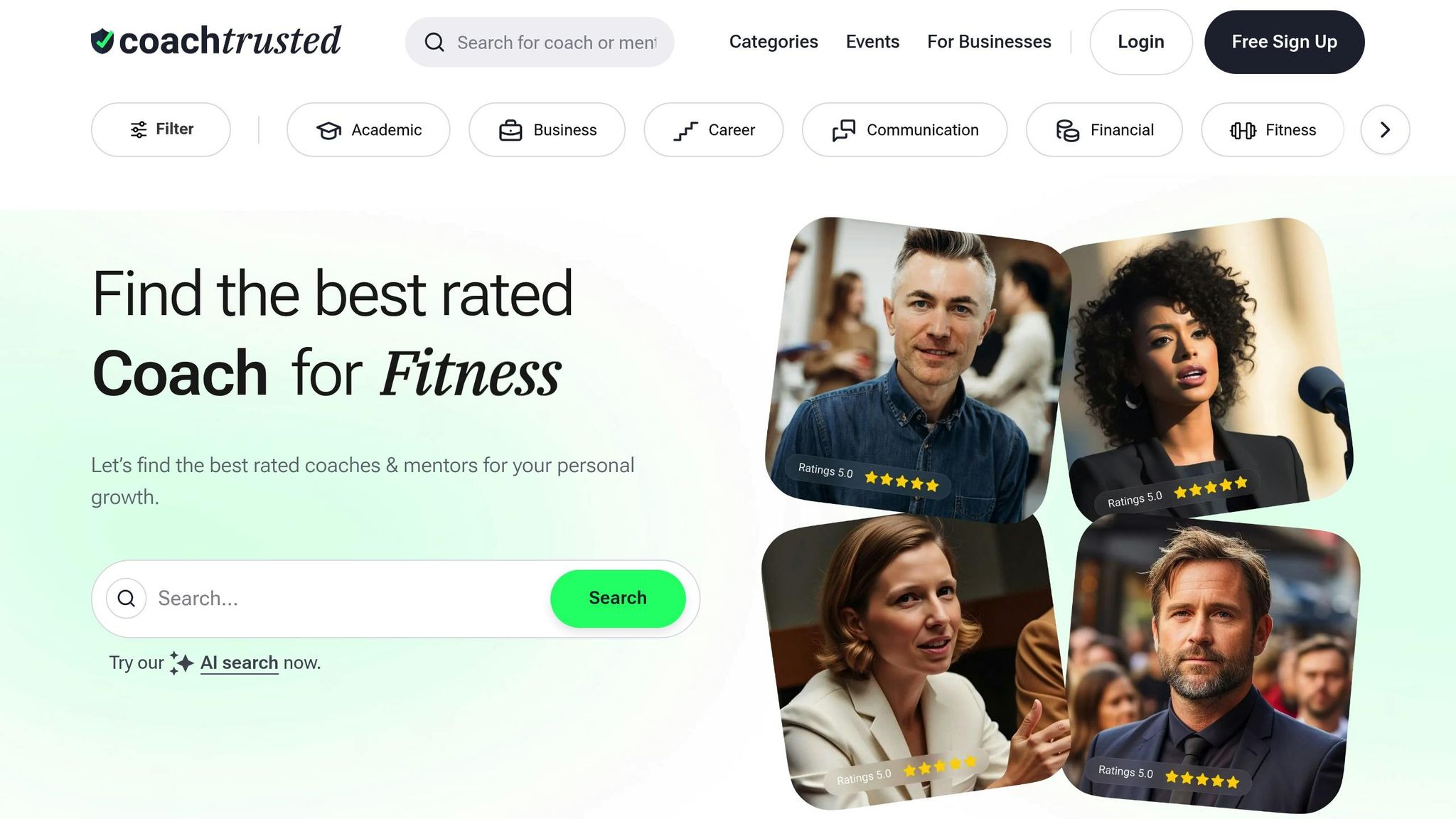
Coachtrusted taps into AI technology to make coaching more personalized and efficient, transforming the way clients and coaches connect.
AI Features on Coachtrusted
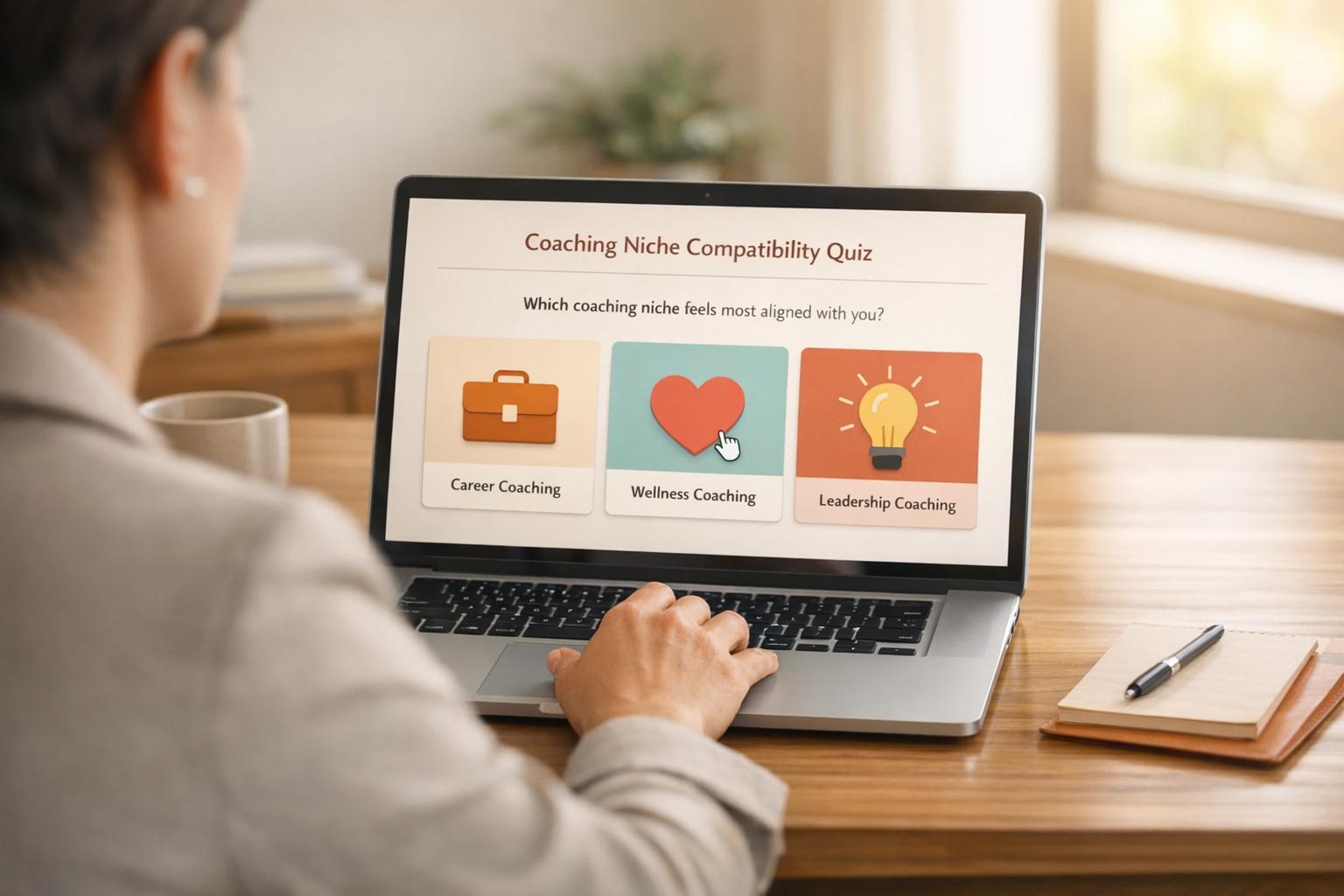
Coachtrusted uses AI to simplify the process of finding the right coach. It starts with a quick 10-minute quiz that evaluates a user's personality, strengths, interests, and challenges to create a tailored profile. Instead of scrolling through countless profiles, users get personalized recommendations that align with their specific goals.
The platform’s smart algorithms analyze career and behavioral data to ensure clients are paired with coaches who truly fit their needs. For instance, someone looking to improve their trading skills is matched with financial experts, while a designer seeking creative advice is connected to professionals in that field. This approach removes the guesswork, saving both time and effort.
Coachtrusted also offers tools to track progress effectively. By integrating data from wearables - such as heart rate, sleep patterns, and activity levels - the platform provides coaches with a detailed view of their clients' progress. These comprehensive dashboards allow coaches to make real-time adjustments, moving beyond just client feedback to data-driven insights.
Benefits for Coaches and Clients
The AI-driven features on Coachtrusted bring clear advantages for both clients and coaches.
For clients, the platform ensures they’re matched with verified experts, reducing the risk of choosing a coach who doesn’t meet their needs. With user reviews and ratings to guide decisions, plus messaging tools for seamless communication, clients can focus entirely on reaching their goals.
Coaches benefit from increased visibility and tools designed to lighten their workload. Features like customizable dashboards and marketing support (available for Premium and Professional members) help coaches manage their business more efficiently. With AI handling tasks like initial client assessments and compatibility checks, coaches can dedicate their time to delivering top-notch sessions instead of managing administrative details.
Future Trends in AI-Powered Coaching
New Technologies in Coaching
The coaching industry is evolving at a rapid pace, thanks to cutting-edge advancements. One of the most exciting developments is the rise of multi-agent AI frameworks. These systems assign specialized sub-agents to handle tasks like conversations, data analysis, and providing expert guidance. A notable example is Google's personal health coach for Fitbit Premium users, launched in October 2025. Built with Gemini models, this tool leverages physiological data and behavioral science to offer personalized advice. The project was spearheaded by Distinguished Scientist Shwetak Patel and PM Director Florence Thng.
Another breakthrough is voice-first coaching, which uses natural language processing (NLP) for real-time, hands-free updates. In January 2026, Vora introduced "AI Daily Plan", a fitness platform that connects with over 100 wearables, including the Apple Watch and Oura. This system assesses metrics like rep velocity and heart rate recovery during workouts, adjusting plans on the fly - for instance, swapping a heavy lifting session for mobility exercises if recovery indicators suggest fatigue.
Augmented reality coaching is also making waves. Stanford Professor James Landay's "Moon Story" app demonstrated how AR could bring ancient characters to life for writing feedback. This concept is now being adapted for adult coaching, using AR overlays to provide motivational cues and real-time data during activities.
Additionally, biometric and sentiment integration is becoming more advanced. AI systems can now interpret vocal tones, pitch, and physiological markers to detect signs of burnout or moments of progress. These innovations are paving the way for coaching methods that are more proactive and finely tuned than ever before.
The Potential for More Precise Personalization
AI is taking coaching to the next level by shifting from reactive support to proactive, precision-based strategies. Instead of waiting for clients to flag issues, these systems analyze long-term data to predict challenges and suggest interventions early. For example, AI tools can now forecast client retention and drop-off patterns with 85% accuracy.
One emerging concept is ambient awareness, where coaching tools use subtle prompts like device lock screens or wallpapers to deliver motivational cues throughout the day. This approach keeps users focused on their goals without requiring them to actively engage with apps, making accountability feel seamless.
Personalization is also advancing in other ways. AI models now track client progress over years, enabling long-term, evidence-based strategies. Real-time sentiment dashboards are another game-changer, analyzing micro-expressions and vocal patterns during live sessions. This instant feedback helps coaches adjust their approach on the spot, leading to a 33% boost in client retention since 2023 and an impressive 94% satisfaction rate in AI-assisted programs.
"AI isn't replacing coaches - it's upgrading them. From predictive insights to seamless automation, artificial intelligence is reshaping the coaching profession from the inside out." - Safwan Azeem, Author, ANHCO
AI is also making coaching more accessible. Companies can now offer AI-driven support to employees across all levels, reserving human coaches for complex, high-stakes situations. By automating routine tasks, coaches are saving an average of 10–15 hours per week, giving them more time to focus on the human connections that technology can't replicate.
These advancements highlight the shift toward personalized, data-driven coaching solutions that enhance, rather than replace, the value of human insight. AI is becoming an indispensable tool, enabling coaches to deliver smarter, more impactful guidance.
Conclusion
AI is reshaping the world of personalized coaching by enhancing what human coaches do best. By automating tasks like transcription, scheduling, and session summaries, coaches are reclaiming 30–50% of their administrative time each week. This extra time allows them to focus on building the meaningful connections that drive genuine change.
For clients, AI provides round-the-clock support, tailored learning paths, and instant feedback between sessions. These features have led to a 33% increase in client retention since 2023 and a 94% satisfaction rate. By identifying behavioral patterns and emotional cues, AI helps clients achieve their goals more efficiently.
"AI is not about replacing the human touch; it is about elevating your impact." - Delenta
Platforms like Coachtrusted are leading this shift by incorporating AI-driven tools that benefit both coaches and clients. Features such as smart matching algorithms, automated progress tracking, and data insights make coaching more effective and accessible across various fields, from wellness and fitness to trading and creative mentorship.
The coaching industry has embraced a hybrid model where AI plays an integral role. With 75% of top-performing coaching businesses using AI co-pilots and 81% of sessions including digital automation, AI has become a standard part of modern coaching. The challenge lies in blending the precision and efficiency of AI with the empathy, intuition, and ethical judgment that only human coaches can provide. Together, these elements demonstrate how AI not only simplifies processes but also enhances the personal connection at the heart of successful coaching.
FAQs
What data does AI use to personalize coaching?
AI takes coaching to the next level by using biometric data - like sleep quality, heart rate variability (HRV), and training volume - alongside behavioral insights such as engagement habits and personality traits. It also pulls data from wearable devices to adjust strategies on the fly. By blending all these inputs, AI crafts personalized plans that adapt over time to match an individual’s progress and specific goals.
How accurate is AI coach-client matching in real life?
AI is getting better at matching coaches with clients by analyzing factors such as goals, communication preferences, personal background, and industry knowledge. This helps streamline the onboarding process and improves results. Still, human involvement is crucial to maintain fairness and ensure the system works effectively.
How is my coaching and wearable data kept private?
Your coaching and wearable data are safeguarded with strict privacy measures. This includes using encryption to protect your information, implementing robust access controls, and following clear, transparent policies. These steps help prevent unauthorized access, misuse, or data leaks, all while ensuring compliance with established privacy standards. Keeping your information secure and confidential remains a top priority.