Career Development
How to Find the Right Coach for Your Goals
December 19, 2025
14 min read

How to Find the Right Coach for Your Goals
Finding the right coach can feel overwhelming, but it doesn't have to be. Here's how to approach it:
- Define Your Goals: Identify 2-3 areas in your life or career where you'd like to see progress. Be specific about what you want to achieve within a 3-12 month timeframe.
- Understand Coaching Types: Coaches specialize in areas like leadership, career development, wellness, or life coaching. Choose between generalists (broad focus) or specialists (niche expertise) based on your needs.
- Check Credentials: Look for certifications like ICF (ACC, PCC, MCC) and verify their experience. Be cautious of red flags like unverifiable qualifications or unrealistic promises.
- Test Compatibility: Ensure their communication style and approach align with your preferences. Use initial consultations to ask questions and clarify expectations.
- Review Logistics: Confirm pricing, session format (virtual or in-person), and policies around cancellations or refunds.
Platforms like Coachtrusted simplify the search by connecting you with verified coaches tailored to your goals. Once you’ve selected a coach, set measurable goals, track progress regularly, and adjust plans as needed to stay on track.
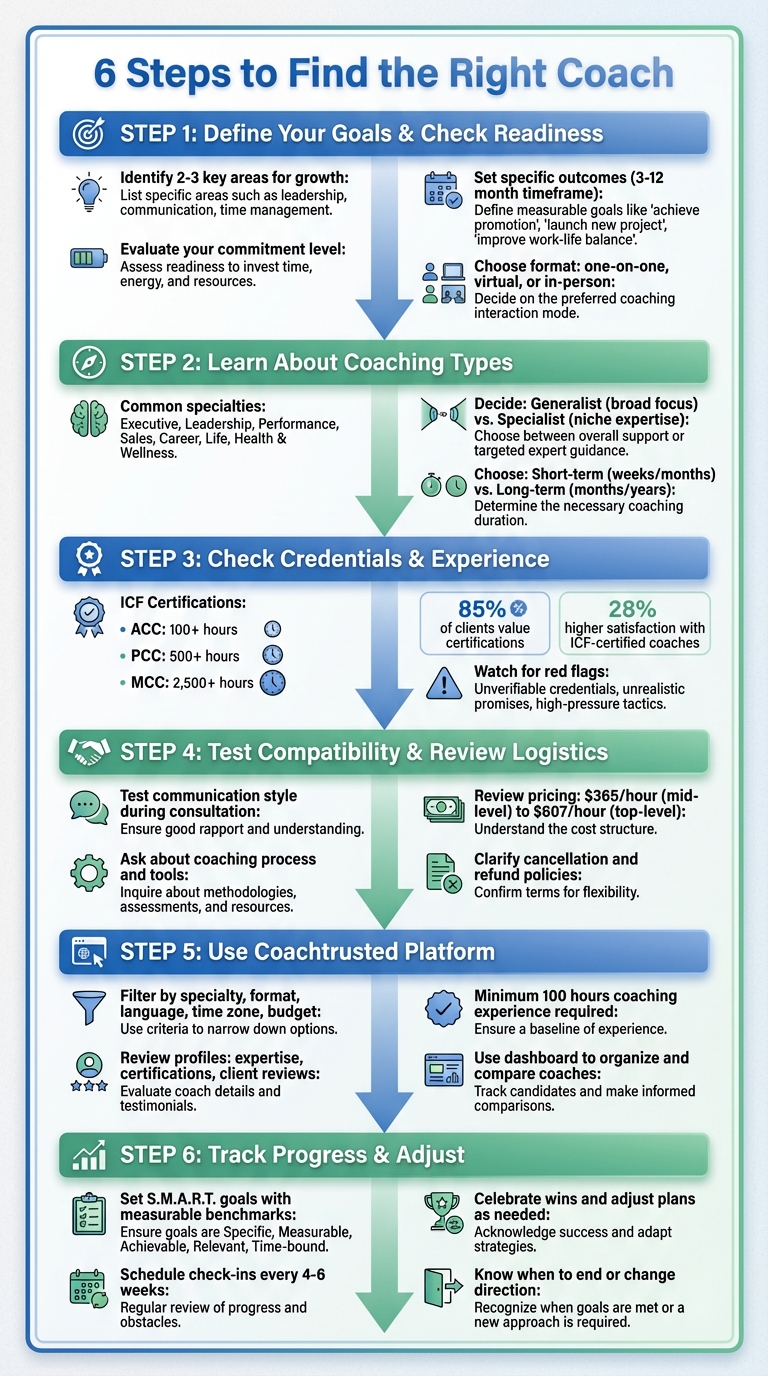
6-Step Process to Find the Right Coach for Your Goals
How To Find The Right Coach For You!
Step 1: Define Your Goals and Check Your Readiness
Before diving into the search for a coach, take a moment to define your goals. Pinpoint 2-3 key areas in your life or career where you'd like to see growth or gain deeper understanding. This step not only provides clarity but also ensures you find a coach whose skills align with your needs, saving you time and effort.
Identify What You Want to Achieve
Coaching generally focuses on four main areas: business/leadership, life vision, career development, and health/wellness. Your goals might range from professional ambitions, like improving your executive presence, preparing for a promotion, or starting a consulting business, to personal growth, such as overcoming limiting beliefs, strengthening relationships, or breaking free from fear. If you're navigating a career transition, define measurable objectives - for example, "enhance stakeholder relationships to lead the Q2 change program successfully". Setting clear, specific outcomes within a 3- to 12-month timeframe will help track progress and maintain focus during your coaching journey.
Check Your Commitment Level
Coaching requires more than just financial investment - it also demands emotional and intellectual engagement. The results you achieve will depend heavily on your willingness to commit. Clare Norman, MCC, emphasizes the importance of readiness:
"Is the individual prepared to do the hard work of thinking, feeling, sensing, and changing?"
Evaluate your readiness by considering your self-awareness, motivation, and capacity. Take an honest look at your schedule and energy levels to ensure you can fully participate in the process.
Once you've clarified your goals and confirmed your commitment, the next step is to select the coaching format that suits you best.
Choose Your Coaching Format
Decide on a format - whether one-on-one, virtual, or in-person - that fits your lifestyle, location, and preferred way of learning. Your personal circumstances and preferences should guide this choice to ensure the experience aligns with your needs.
Step 2: Learn About Coaching Types and Specialties
Once you've set your goals, it's time to explore the coaching world to find the right fit for your needs. Coaching can be personalized to address your specific challenges and aspirations.
Common Coaching Specialties
Executive coaching focuses on enhancing strategic thinking and decision-making for senior leaders, boasting an impressive 788% return on investment (ROI). Leadership development coaching equips employees with skills like delegation, conflict resolution, and strategic planning, with 67% of participants reporting higher engagement and job satisfaction after such coaching.
Performance coaching zeroes in on improving specific job-related skills, such as time management or communication. For those in sales, sales coaching can boost the performance of mid-level sales professionals by as much as 19%. Career coaching helps individuals identify their strengths and seize professional opportunities; companies that support career development are 2.6 times more likely to surpass financial targets.
Life coaching supports personal and professional growth by clarifying values, breaking through self-imposed barriers, and establishing long-term habits. Health and wellness coaching uses behavioral science to promote better physical health, nutrition, fitness, and stress management through goal-setting and accountability. Other specialties include team coaching to improve collaboration, relationship coaching to enhance communication skills, and parent coaching to navigate the complexities of raising children.
Generalists vs. Specialists
Generalist coaches provide broad insights that work well for interconnected goals, such as personal development or career transitions. On the other hand, specialist coaches focus on niche areas and are ideal when you have specific, well-defined objectives. For instance, they can help with preparing for a promotion in a particular field or mastering a unique business strategy.
"It really comes down to the client. Do your own research and figure out what people are looking for when they're looking to hire a coach. And how will you make the prospective client feel confident about your competencies as a coach?"
Short-Term vs. Long-Term Coaching
Short-term coaching, typically lasting a few weeks or months, is perfect for tackling specific challenges like preparing for a promotion or learning a particular skill. Long-term coaching, on the other hand, spans several months to years and is better suited for deeper, more transformative work. This could involve shifting mindsets, building sustainable habits, or pursuing significant personal or professional change. Your choice should align with the complexity of your goals, your preferred learning approach, your budget, and how much ongoing accountability you want.
Step 3: Check Coach Credentials and Experience
Once you've clarified your coaching needs, the next step is to ensure your potential coach has the right qualifications and experience. This is crucial for finding someone who aligns with professional standards and has the expertise to help you achieve your goals. Think of it as connecting your specific objectives with a coach who meets recognized benchmarks.
Check Training and Certifications
One reliable way to evaluate a coach is by reviewing their certifications. The International Coaching Federation (ICF) offers credentials that highlight a coach's training and ethical commitment. These include:
- Associate Certified Coach (ACC): Requires 100+ hours of coaching experience.
- Professional Certified Coach (PCC): Requires 500+ hours of coaching experience.
- Master Certified Coach (MCC): The highest level, requiring 2,500+ hours of coaching experience.
For coaches specializing in team dynamics, the ICF also provides the Advanced Certification in Team Coaching (ACTC).
"An ICF credential demonstrates proven skills and ethical commitment." - ICF
Credentials matter to clients, too. Research shows that 85% of clients value coaches with certifications, and those working with ICF-certified coaches report being 28% more satisfied with their experience. To confirm a coach's credentials, use tools like the ICF Credentialed Coach Finder. For niche coaching, look for certifications tied to specific fields, such as ACSM (American College of Sports Medicine) for fitness coaching or CIF/NFHS for sports coaching.
While certifications are a solid foundation, practical experience is just as important.
Review Background and Expertise
Take a close look at a coach’s education, professional background, and hands-on experience to see if they align with your goals. For example, an executive coach with leadership roles or corporate experience will likely be more effective in a business context. Similarly, a wellness coach with health-related certifications and experience in the field is better equipped to guide you in that area.
Ask about their client history and coaching hours. Here’s a quick breakdown of ICF credential requirements:
- ACC: 100 hours with at least 8 clients.
- PCC: 500 hours with at least 25 clients.
- MCC: 2,500 hours with at least 35 clients.
These milestones reflect increasing levels of expertise, giving you a clearer picture of their capabilities.
Watch for Red Flags
Not all coaches are created equal, so it’s important to stay alert for warning signs. Be wary of coaches who:
- Lack verifiable credentials or endorsements from reputable organizations.
- Promise instant results or claim to "cure" conditions like depression, ADHD, or addiction - this is a major red flag.
- Use high-pressure sales tactics, such as creating artificial urgency to make you sign up quickly.
A trustworthy coach will clearly explain their methods and give you time to make an informed decision. If they can’t articulate how they’ll work with you or what evidence supports their approach, it’s best to keep searching. Transparency and ethical practices are non-negotiable when choosing the right coach.
sbb-itb-3c06305
Step 4: Test Compatibility and Review Logistics
After verifying a coach's credentials, the next step is to figure out if their approach and logistics align with your personal needs. This is where you move beyond qualifications to assess whether the partnership will actually work for you in practice.
Test Communication and Coaching Style
Pay attention to how the coach communicates during your initial conversations. Do they speak confidently, directly, and respectfully? Are they actively listening - not just to what you say, but also to how you say it? Look for someone who asks thoughtful, open-ended questions that encourage self-reflection. A strong coach will adjust their communication style to ensure mutual understanding and create a process that feels tailored to your needs, not just a generic approach. Most importantly, trust your instincts. The right coach should make you feel supported, comfortable, and safe to open up. Use the first consultation to clarify their methods and set expectations for the coaching journey.
Ask the Right Questions
Dive deeper by asking specific questions about their coaching process. How are sessions structured? What’s their plan for helping you achieve your goals? Find out what tools or platforms they use and how they handle changes in your commitment, such as missed sessions or periods when you need extra support. It’s also important to ask how they personalize their approach to address your unique objectives and challenges.
Review Pricing and Policies
Once you’re confident in their communication and methods, it’s time to examine the logistics. Carefully review the coaching agreement, which should cover roles, pricing, cancellation, and refund policies. Coaches generally charge in different ways - hourly rates, package deals, or monthly retainers. For reference, coaches earning $100,000 to $150,000 annually typically charge an average of $365 per hour, while those earning over $150,000 charge around $607 per hour.
Understand the cancellation policy in detail. How much notice is required - 24, 48, or 72 hours? Are there penalties for late cancellations or no-shows? What about refunds? Some coaches offer no refunds, while others provide partial or full refunds under specific conditions. Also, confirm practical details like session frequency and duration (e.g., weekly 60-minute video calls) and the timeframe for using any bundled sessions. Many clients encounter issues with cancellations or refunds, so make sure you’re clear on these terms before committing.
Step 5: Use Coachtrusted to Find Your Coach
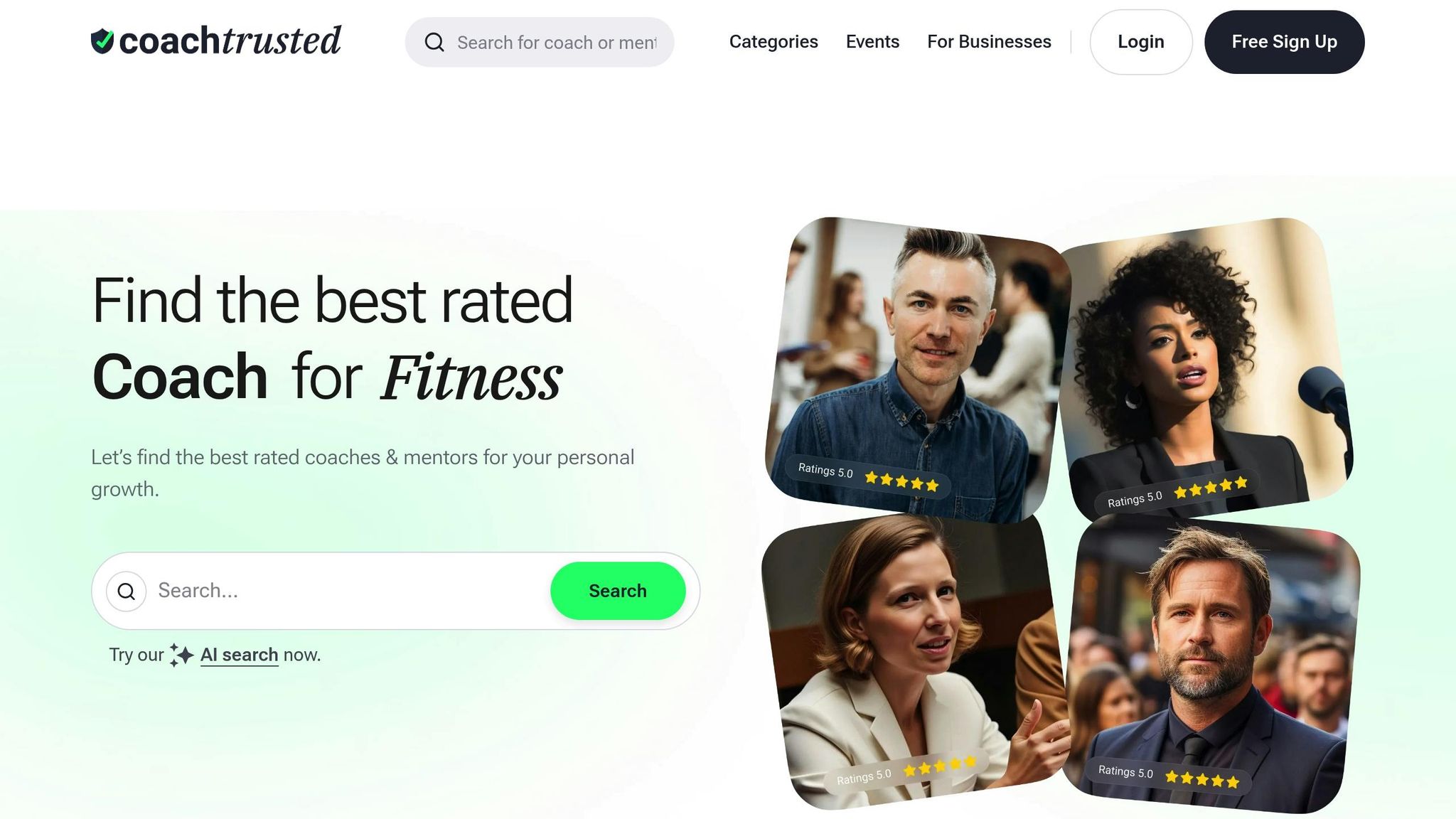
Once you’ve evaluated coaching styles, logistics, and credentials, it’s time to put Coachtrusted to work in finding your perfect match. With your goals and criteria in hand, Coachtrusted simplifies the process of connecting with verified coaches. Whether you’re looking for help with leadership, health, career growth, business strategies, sales, or personal development, this platform offers a wide range of options to organize your search and make informed decisions.
Search and Compare Coaches
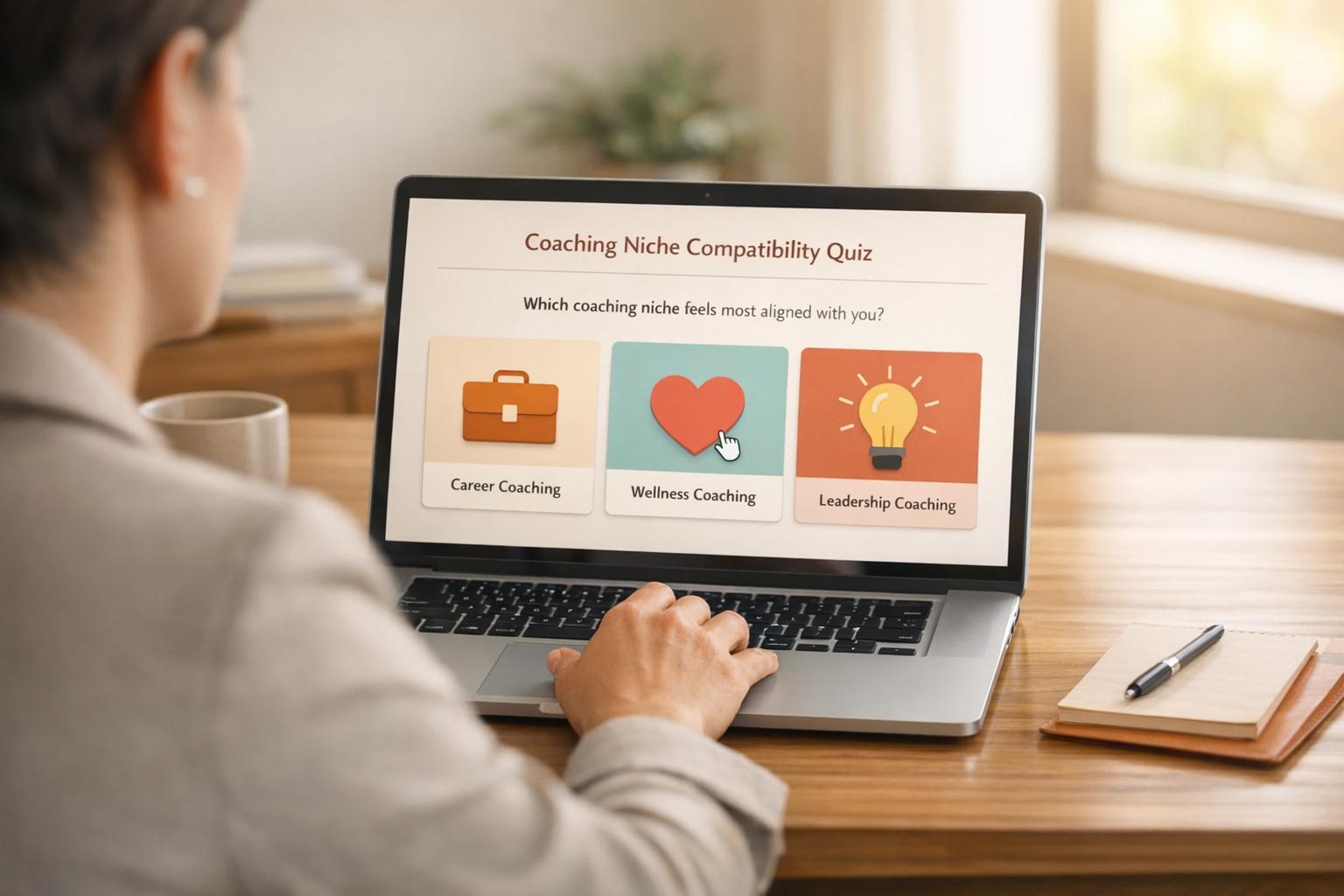
Coachtrusted’s search filters make it easy to find the right coach for your specific needs. You can narrow down your options by specialty, session format, language, time zone, or budget. Whether your focus is on improving leadership skills, advancing your career, building better habits, or fostering team success, you can filter by specialty to find coaches who align with your goals. The platform even offers quiz-based recommendations to guide your decision-making process. For added convenience, you can refine your search based on practical considerations like online versus in-person sessions or time zone compatibility.
Explore Coach Profiles
Each coach profile on Coachtrusted provides detailed information to help you assess whether they’re the right fit. You’ll find insights into their areas of expertise, coaching methods, certifications (like ICF or EMCC), and professional background. Coach profiles also confirm important qualifications such as industry memberships, reference checks, supervision, and insurance coverage. To ensure quality, all listed coaches must have at least 100 hours of formal coaching experience, giving you confidence in their expertise. Additionally, client reviews and ratings offer a transparent look into their approach and effectiveness.
Keep Your Search Organized
Coachtrusted’s dashboard and messaging tools make it simple to manage your shortlist of potential coaches. You can keep track of discovery calls, make notes, and compare profiles side by side. The platform’s messaging system allows you to ask coaches about their methods, availability, or pricing. If you’re struggling to decide between a few top contenders, the Coach Matching Service is available to provide personalized recommendations based on your needs. These tools help you stay organized and prepare for initial consultations with confidence.
Step 6: Track Progress and Adjust as Needed
Once you've chosen your coach, the next step is all about keeping tabs on your progress and making adjustments along the way. This process is crucial to ensure you're moving toward your goals effectively. Start by working with your coach to set clear S.M.A.R.T. goals - those that are Specific, Measurable, Achievable, Relevant, and Time-bound. For instance, John aimed to complete two online leadership courses and secure a team leader position within six months. These specific targets gave him a clear roadmap instead of vague ambitions.
Set Starting Benchmarks
Begin by establishing measurable starting points. If career advancement is your focus, one benchmark might be successfully leading a team project within a defined timeframe, like six months. For sales coaching, you could track concrete outcomes such as increased revenue or new client acquisitions. In health coaching, measurable changes might include improvements in weight or fitness levels. Take the example of a software engineer who improved on-time project delivery by 20% in three months after adopting time-management techniques introduced during coaching sessions. Setting these benchmarks provides a baseline to measure meaningful progress over time. From there, schedule regular reviews to stay aligned with your goals.
Schedule Regular Check-Ins
Plan to meet with your coach every 4–6 weeks to review progress, tackle challenges, celebrate achievements, and adjust your action plan if needed. As Lisa Fain, an International Executive Coach, explains:
"Establishing clear goals and objectives laid out from the start of the coaching journey ensures alignment in the coaching process, helping both coach and client measure progress, including when objectives should be revised".
These check-ins are an opportunity to reassess whether your goals still match your current priorities and circumstances. Regular evaluations help you decide if it's time to stay the course, make adjustments, or even wrap up the coaching relationship.
Know When to End or Change Direction
At some point, you may need to conclude or shift your coaching engagement. This could happen when you've achieved your initial goals or if progress has stalled. According to Catalyst 14:
"One of the hallmarks of successful coaching is when clients become more self-reliant and confident in their ability to solve problems without further support from the coach".
If you've hit your targets or feel ready to handle challenges on your own, it might be time to end the coaching relationship. On the other hand, if you're consistently falling short of your milestones or if your priorities have changed, discuss with your coach whether it's time to adjust your goals or take a new approach. The Co-Active Training Institute highlights this flexibility:
"Goals should evolve as the client progresses or circumstances change".
Staying open to these shifts allows your coaching journey to grow with you.
Conclusion
Finding the right coach doesn’t have to be complicated. Start by pinpointing your goals - whether it’s advancing your career, improving work–life balance, or tackling specific challenges. Once you’re clear on what you need, explore the different types of coaching to decide if you’d benefit more from a generalist or someone with expertise in your industry. Take the time to verify their credentials and experience to ensure they have the skills to guide you. And don’t overlook the importance of compatibility - choosing someone whose style and communication align with your preferences can make all the difference.
To make the process easier, platforms like Coachtrusted allow you to search, compare, and narrow down coaches based on budget, reviews, and areas of specialization. You can browse profiles, send messages to potential coaches, and even book trial sessions to see if they’re the right fit for you.
Once you’ve chosen a coach, stay actively involved by regularly tracking your progress and being open to adjustments along the way. Honest conversations about the coaching relationship can lead to better results. With the right coach and a strong commitment, you’ll be well on your way to reaching your goals.
FAQs
How can I decide between a generalist coach and a specialist coach?
To decide whether a generalist or specialist coach is right for you, start by clarifying your goals and challenges. If you're aiming to tackle a specific area - like advancing in your career or improving your physical fitness - a specialist coach might be the way to go. They bring focused expertise tailored to that particular field.
On the flip side, if you're seeking guidance across multiple areas of life or navigating broader transitions, a generalist coach could be a better match. They offer a broader perspective and can assist with a variety of needs.
Think about what matters most to you, reflect on your past experiences, and consider the results you’re hoping to achieve. This self-assessment will help you choose a coach who aligns with your goals and provides the right kind of support.
What qualifications should I look for in a coach?
When selecting a coach, start by checking for certifications from well-known organizations like the International Coaching Federation (ICF). Credentials such as ACC, PCC, or MCC indicate their dedication to maintaining professional standards. It's also important to assess their experience in your area of focus, whether that's personal development, career growth, or leadership skills.
Take a close look at their coaching methods. Do they rely on proven, evidence-based techniques? Look for references or testimonials that showcase their success in helping others reach their goals. A quality coach will also invest in ongoing training or supervision to stay updated in their field. Finally, make sure their coaching style aligns with your goals and communication preferences - compatibility can make all the difference.
How do I find a coach whose style fits my needs?
To choose a coach that suits you, begin by thinking about your goals and the type of support you respond to best. Do you work well with someone who is team-focused, driven by results, or compassionate? When meeting potential coaches, discuss their techniques, background, and how they adapt to individual needs. This can give you a sense of whether their approach matches what you’re looking for and complements your personality.