Customer Experience
How Real-Time Messaging Improves Coaching
April 21, 2026
11 min read
How Real-Time Messaging Improves Coaching
Real-time messaging has transformed coaching by making communication faster, more efficient, and accessible. It bridges the gaps left by traditional weekly sessions and emails, allowing coaches to provide immediate feedback, reminders, and support. This approach keeps clients engaged, motivated, and accountable while simplifying the coaching process.
Key benefits of real-time messaging in coaching:
- Instant Communication: Clients get quick answers, preventing delays from disrupting progress.
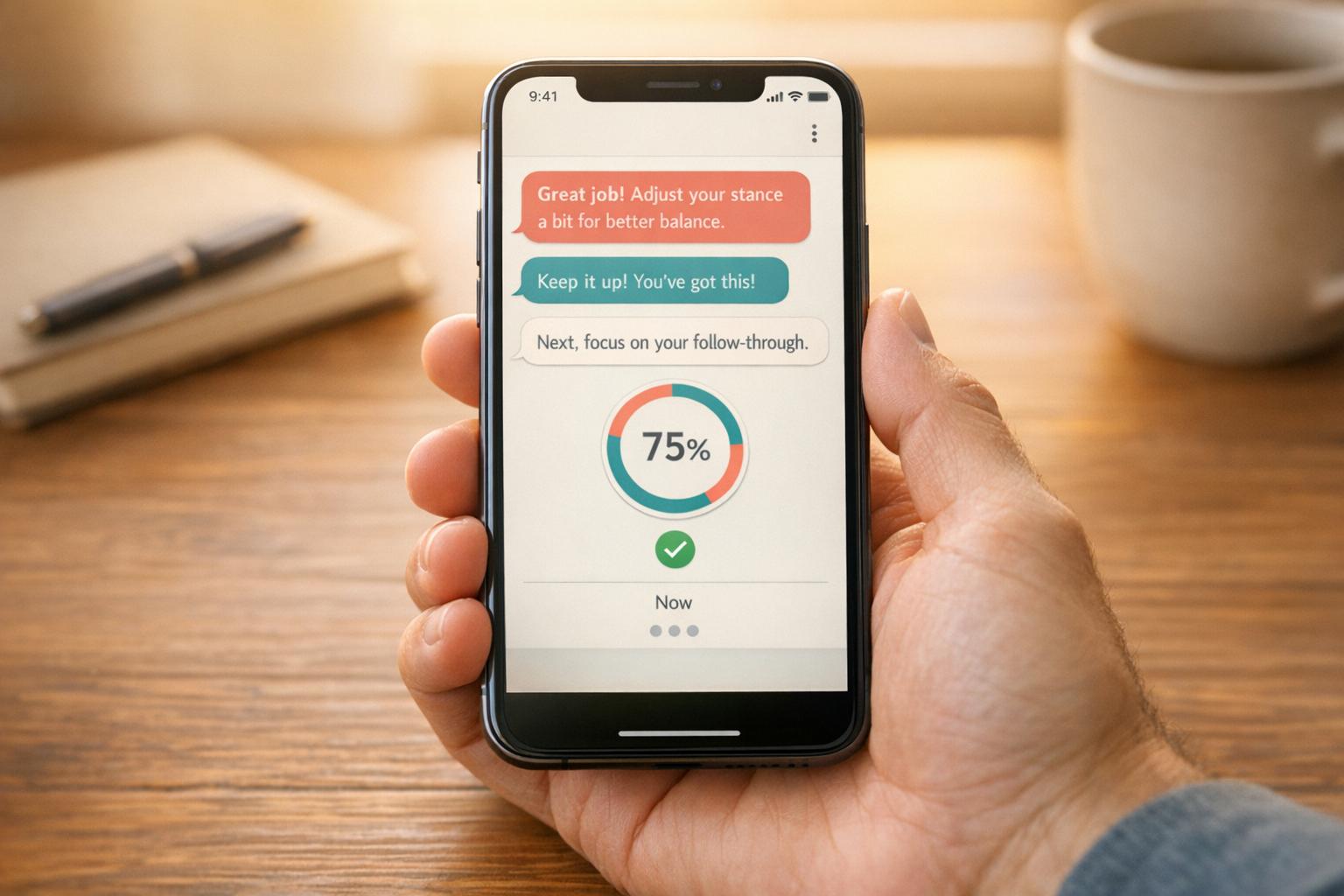
- Higher Engagement: Coaches can send reminders, motivational messages, and celebrate achievements in real time.
- Better Organization: Centralized tools streamline communication, eliminating the need for multiple apps or emails.
- Stronger Relationships: Consistent interaction fosters trust and keeps goals on track.
- Flexible Support: Combines live responses with asynchronous updates, making it adaptable to busy schedules.
Real-time messaging tools like Coachtrusted enhance these benefits by offering features such as live chat, automated reminders, and multimedia sharing. This new communication method ensures clients feel supported and valued, leading to better results and lower drop-off rates.
CoachRx Just Released the FASTEST Way to Communicate with Clients
sbb-itb-3c06305
How Real-Time Messaging Improves Communication
Real-time messaging has revolutionized the way coaches and clients interact by cutting out frustrating delays. Instead of waiting hours - or even days - for a response, clients can get the answers they need right away. This kind of instant communication keeps the momentum going and stops minor issues from escalating into major setbacks.
Centralizing messaging also simplifies things dramatically. No more juggling multiple apps, emails, or scattered files. FNH-CRM, a management tool designed for fitness studios, explains it well:
"When trainers must flip between devices, PDFs, and separate apps, work becomes tedious and time-consuming. A unified CRM that stores leads, client records, and program details in one place simplifies day-to-day tasks."
With everything stored in one place, tracking conversations, reviewing past feedback, and keeping clear records becomes effortless. This organized approach enhances communication and makes the coaching experience smoother for both coaches and clients.
Faster Responses and Higher Client Satisfaction
Quick responses are the backbone of client satisfaction. Real-time messaging ensures that questions - whether about a workout routine or a nutrition adjustment - are addressed before they disrupt progress. Delays can lead to skipped sessions or incomplete tasks, but instant communication keeps everything on track.
Clients often prefer messaging over emails or phone calls because it’s accessible without being intrusive. Messaging apps, SMS, and centralized tools make it easy for coaches to connect on the go. Plus, broadcast features allow coaches to send group updates - like holiday schedules or new resources - while still offering private follow-ups for individual concerns .
Building Motivation and Trust
Real-time messaging does more than just speed up responses; it strengthens the relationship between coach and client. Consistent communication fosters trust and shows clients that their coach is genuinely invested in their success. Small gestures, like quick check-ins or celebrating achievements, make clients feel supported and valued.
"A coaching conversation doesn't end when the meeting or call does." - Raluca Mocanu, Copywriter, Textmagic
This constant connection also helps normalize challenges. For example, if a client misses a deadline, a coach can immediately reach out with empathetic, reflective questions like, "What got in the way?" instead of something accusatory like, "Why didn't you...?". Daily check-ins through chat hold clients accountable and keep their goals front and center. Some platforms even encourage coaches to contact new clients within 24 hours to set the tone for progress. This level of attentiveness reassures clients they’re a priority, boosting adherence and reducing drop-off rates.
Tracking Progress and Setting Goals
Real-time messaging isn’t just about communication - it transforms how progress is tracked and goals are managed. Instead of waiting for scheduled meetings, coaches and clients can share updates, celebrate achievements, and tweak strategies as needed. This constant feedback loop ensures no valuable insight gets overlooked between sessions.
Sharing Updates and Action Items
With messaging, updates and feedback can happen instantly. Coaches can remind clients about upcoming tasks, recognize completed milestones, and offer encouragement during critical moments. Automated reminders, like notifications for overdue tasks, help clients stay on track between live interactions . Celebrating milestones as they happen not only boosts motivation but also makes progress feel more concrete.
Making Quick Adjustments
One of the biggest advantages of real-time messaging is the ability to adapt plans on the spot. If a client struggles with a particular exercise or faces an unexpected schedule change, the coach can revise the plan immediately instead of waiting for the next session.
"Digital coaching introduces feedback, timely suggestions, and ongoing guidance through sport and wellness technology - making programs more motivating and easier to follow even when human interaction is limited." – E Kettunen
This adaptability ensures that coaching programs remain aligned with the client's unique needs. By using messaging to track both measurable milestones and shifts in mindset, coaches gain a deeper understanding of what’s driving success - or creating obstacles. This creates a collaborative, supportive environment where clients feel empowered, not burdened by a one-size-fits-all plan.
Flexible Coaching Approaches
Real-time messaging doesn't mean coaches need to be available around the clock. A mix of live interactions and delayed responses strikes an ideal balance, allowing coaches to maintain the personal touch of live sessions while providing ongoing support through shorter updates between scheduled calls. This hybrid model combines the immediacy of live conversations with the convenience of asynchronous communication, keeping clients engaged and supported.
Using real-time messaging for quick exchanges can maintain momentum without requiring lengthy meetings. Clients can ask pressing questions or share successes in the moment, while more in-depth reflections or updates can be handled asynchronously at a more convenient time.
This approach is especially helpful for clients in different time zones or those with packed schedules. By identifying overlapping availability, live check-ins can be scheduled during those windows, while asynchronous messaging takes care of communication during off-hours. In fact, 87% of respondents in a 2021 report believed that the rise of digital coaching sessions would continue in the future.
Combining Live Chat with Other Tools
Flexible communication becomes even more effective when paired with additional tools. By integrating real-time messaging with features like task trackers, video feedback, and automated reminders, coaches can create a well-rounded support system that doesn’t rely solely on live availability. For instance, a coach might use messaging for brief daily updates, send personalized video feedback for detailed guidance, and track client progress through task management tools - all within one platform to avoid overwhelming clients with too many apps.
A study published by Lyra Health in February 2023 highlights the potential of this approach. The study involved 121 adults with moderate anxiety who participated in a blended messaging program. This program combined 45-minute live messaging sessions with digital activities like video lessons and cognitive behavioral therapy exercises. The results were impressive: 86% of participants showed reliable improvement or reduced symptoms to subclinical levels, and 92.5% of those who provided feedback said they would recommend their live messaging coach. According to Lyra Health:
"Coaching that is grounded in evidence-based interventions and delivered via synchronous (ie, live) text-based messaging could potentially increase the reach of mental health services among populations who select this modality instead of other services".
To ensure this hybrid model remains manageable, setting clear boundaries is essential. For example, coaches can establish "office hours" - such as Tuesdays and Thursdays from 12:00 PM to 2:00 PM - for responding to messages, while communicating a standard response time of 24–48 hours for non-urgent messages. This prevents burnout and provides clients with the flexibility they need. Spencer Dennis, Founder of CoachNow, underscores this balance:
"In the Connected Coaching model, you still reap the benefits of the occasional live interaction, while also integrating periodic 'micro touch points' between coaching sessions".
Using Real-Time Messaging on Coachtrusted
Coachtrusted makes it easy for coaches to connect with clients through instant messaging, simplifying communication and enhancing engagement. Getting started with real-time messaging on the platform is straightforward. First, coaches need to fill out a sign-up form on the website. Accounts are activated after a quick manual review to ensure quality and trust. Once approved, you can create a profile that includes direct contact options like a contact form or links to your booking systems, making it easy for clients to reach out.
To adjust your communication settings, log into your account and navigate to the profile settings. Here, you can update your service descriptions, add contact details, and keep your information up to date. Features like the review response system and direct contact options allow you to connect with clients actively searching for coaching services [26, 27]. Plus, the Coachtrusted support team typically responds to inquiries within 24 hours. Next, let’s look at how to activate these messaging features based on your chosen plan.
Steps to Activate Real-Time Messaging
Your access to real-time messaging depends on your plan. The free basic profile includes standard contact buttons and a dashboard, while the Premium plan ($30/month) offers features like custom buttons and enhanced visibility tools. For full live chat functionality, the Professional plan is required. This plan also includes expert verification, marketing support, and individual blog posts.
After selecting the plan that aligns with your needs - from the free profile to the Professional plan with live chat - focus on building an engaging profile. Use high-quality images, concise service descriptions, and clear contact details that reflect your coaching style and highlight your unique value. Make sure your contact information is easy to find. With your messaging tools activated and your profile ready, you can follow best practices to maximize the impact of your client interactions.
Best Practices for Real-Time Communication
Once your profile and messaging features are set up, these best practices can help you engage effectively with clients. Responding quickly - ideally within 24 hours - shows your commitment and helps clients start making progress. To stay on top of incoming messages, enable email or app notifications.
Make interactions personal by addressing clients by name and referencing details from their messages or progress updates. As Marcia Reynolds, MCC at the International Coach Federation, explains:
"the effectiveness of online conversations depends more on the quality of your presence than the careful words you choose".
Using reflective statements like "So you are saying…" ensures clients feel heard and valued.
It’s also important to set boundaries to avoid burnout. Before diving into coaching, check in with clients to gauge their readiness. For sensitive or complex topics, consider moving the conversation to a private channel like email or phone [27, 29]. Framing discussions around "challenges" instead of "problems" fosters a more positive and proactive environment. Additionally, you can use broadcast features to send updates to all active clients about schedule changes or new services.
Messaging Features Across Coachtrusted Plans
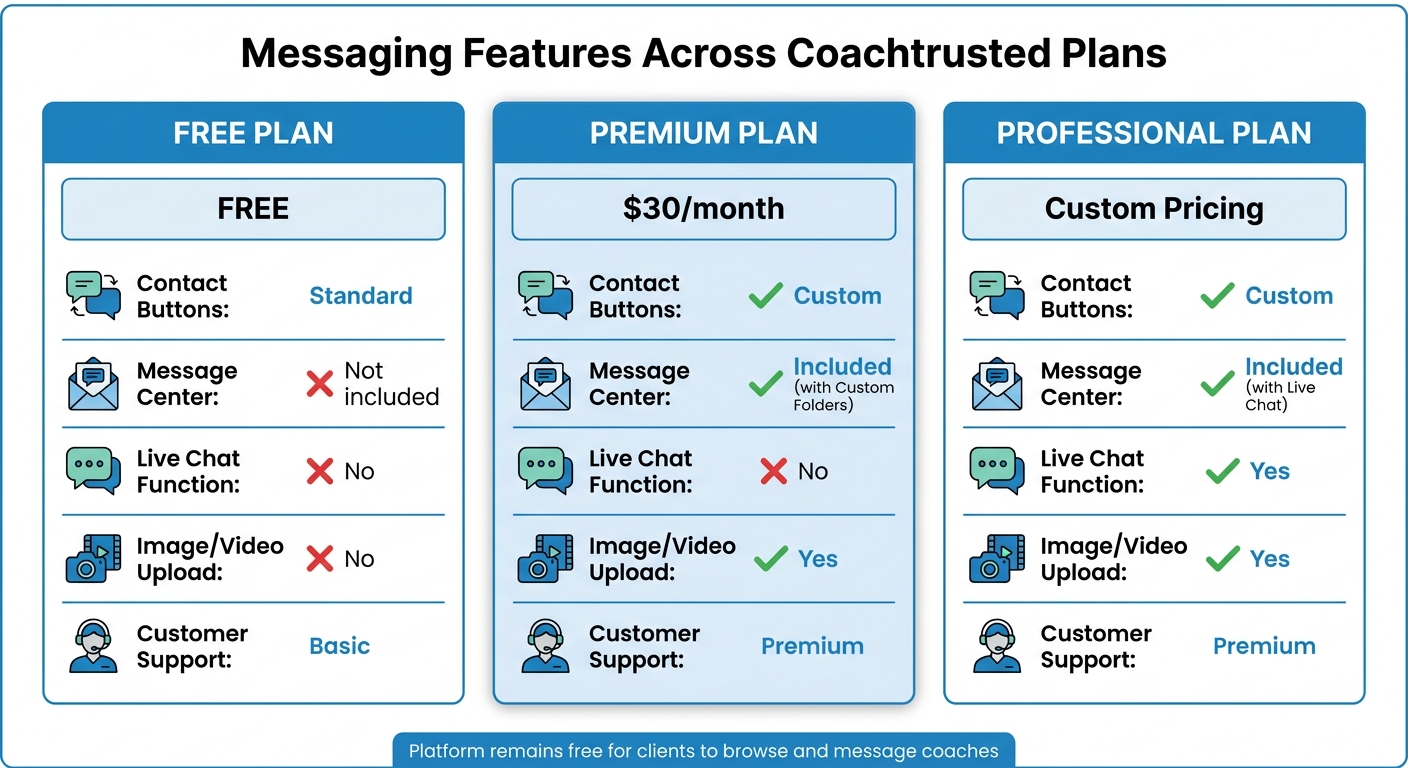
Coachtrusted Messaging Plans Comparison: Free vs Premium vs Professional
Coachtrusted offers a range of plans designed to enhance how coaches communicate with their clients. Whether you're just starting or managing an established coaching practice, there's a plan tailored to your needs.
The Free plan is a great starting point, providing basic visibility with standard contact buttons for client outreach. This plan is perfect for coaches new to the platform. The Premium plan, priced at $30 per month, adds a dedicated Message Center where you can organize conversations with custom folders and share images or videos. It also includes custom contact buttons and dashboard widgets to help you manage a growing client list.
For those seeking a more robust communication setup, the Professional plan includes a Live Chat feature within the Message Center. This plan, available at custom pricing, also offers advanced tools like expert verification, marketing support, and blog posts to help expand your practice.
Messaging Features by Plan
To help you decide which plan suits your needs, here’s a comparison of the messaging features available at each level:
| Feature | Free Plan | Premium Plan ($30/month) | Professional Plan (Custom Pricing) |
|---|---|---|---|
| Cost | Free | $30 per month | Custom Pricing |
| Contact Buttons | Standard | Custom | Custom |
| Message Center | Not included | Included (with Custom Folders) | Included (with Live Chat) |
| Live Chat Function | No | No | Yes |
| Image/Video Upload | No | Yes | Yes |
| Customer Support | Basic | Premium | Premium |
No matter which plan you choose, the platform remains free for clients to browse, compare coaches, and send messages. This ensures that potential clients can connect with you easily, without any restrictions.
Conclusion
Real-time messaging transforms how coaches and clients interact by enabling faster feedback, building trust, and ensuring clients stay engaged and accountable between sessions. Instead of waiting for email replies or scheduling phone calls, coaches can offer timely support when it matters most. This constant availability helps clients feel valued and understood, improving their commitment to the program while reducing drop-off rates.
In fact, 60% of people prefer messaging because it’s fast, personal, and easy to use. The global instant messaging market reflects this preference, with projections showing it will hit $128.20 billion by 2024 and grow at an annual rate of 17.67% through 2030. These numbers highlight a clear industry trend: people are moving toward communication that feels immediate and supportive.
"The best coaching conversations don't end when the session does. They're that special ingredient that brings everything together, keeping clients interested, accountable, and pushing forward." - Raluca Mocanu, Copywriter, Textmagic
Coachtrusted simplifies this approach by centralizing how you manage client communication. Whether it’s using the Message Center to keep track of conversations or relying on the Live Chat feature for instant responses, the tools are designed to reduce admin tasks and let you focus on what you do best - helping clients reach their goals. Best of all, these features are available across all plans, making it easy for coaches at any stage to maintain strong client relationships.
With Coachtrusted’s messaging tools, you can set clear response times, schedule regular check-ins, and even incorporate multimedia like voice notes or video messages to make interactions more personal. Celebrate small victories with your clients in real time to keep them motivated, and use automated reminders for routine tasks so you can dedicate your energy to meaningful coaching moments. Real-time messaging isn’t just about speed - it’s about building a collaborative partnership that drives better results for everyone.
FAQs
How fast should a coach reply to messages?
Coaches should strive to reply within 30 seconds to 2 minutes, depending on the situation and their industry. When using AI-assisted tools, response times under 5 seconds are ideal for keeping clients happy. Fast responses not only build trust but also make communication smoother between coaches and their clients.
How do coaches set messaging boundaries without losing clients?
Coaches can maintain messaging boundaries by setting clear, professional limits and adopting effective communication strategies. This means outlining specific working hours, setting realistic expectations about how often communication will occur, and steering clear of becoming overly emotionally involved. By creating structured scripts and systems for these boundaries, coaches can ensure ethical practices, safeguard client progress, and build trust - all while maintaining a balance between professionalism and client satisfaction.
When should messaging switch to a call or email?
Switch to a call or email when the situation demands more detail, immediacy, or a personal connection. This approach works best for clarifying complicated topics, engaging in deeper conversations, or handling sensitive issues that can't be resolved through brief messages.