Career Development
Checklist For Your First Coaching Consultation
February 5, 2026
10 min read
Checklist For Your First Coaching Consultation
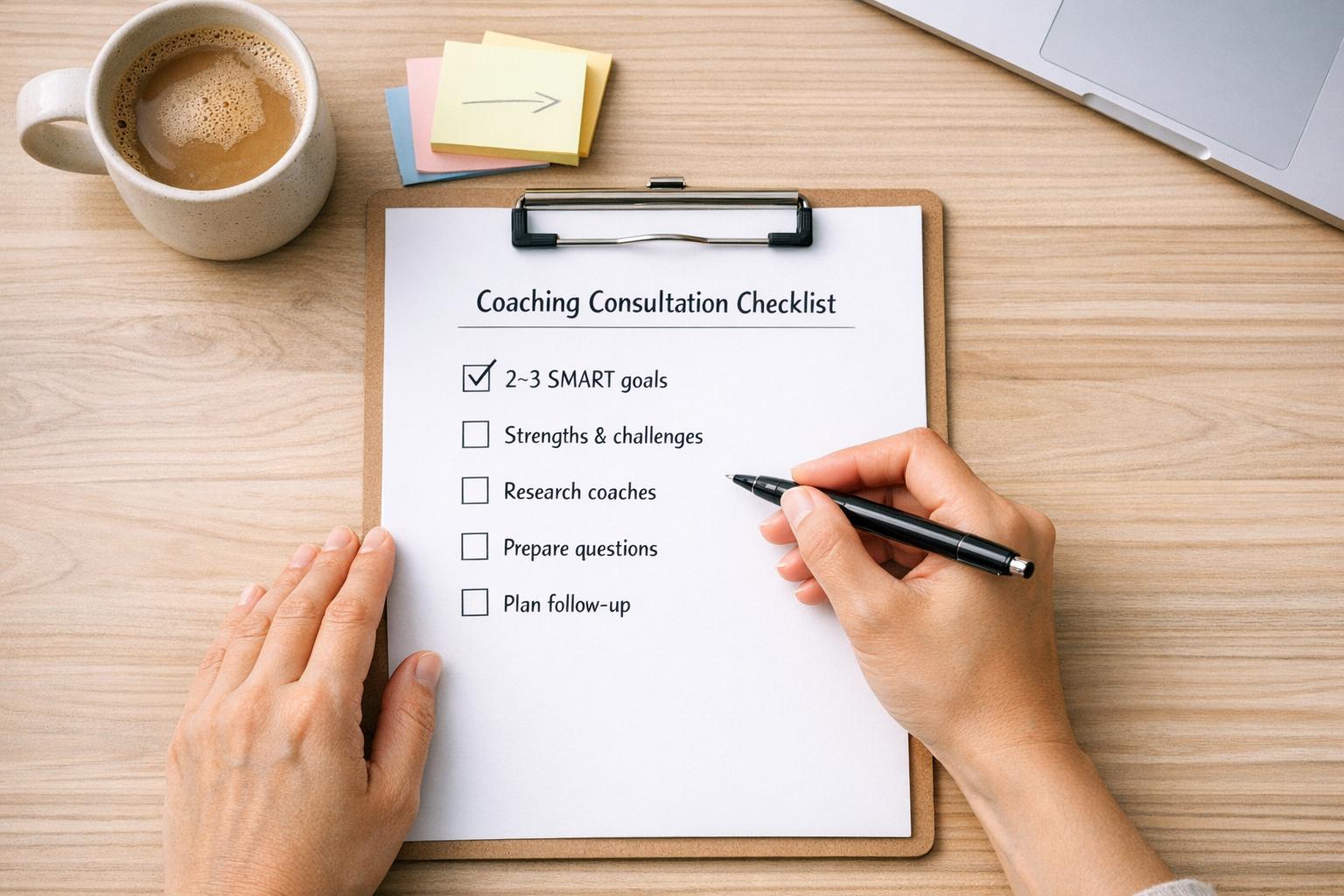
Your first coaching consultation is your chance to set the tone for a productive partnership. Preparing ahead can make your session smoother, more focused, and help you get the most value from your time. Here's how:
- Define Your Goals: Identify 2–3 specific objectives. Use frameworks like SMART goals to make them actionable and clear.
- Reflect on Strengths and Challenges: Think about recent successes, struggles, and patterns in your behavior to share with your coach.
- Research Your Coach: Review their credentials, expertise, and approach to ensure they align with your needs.
- Prepare Questions: Write down key questions about their methods, experience, and logistics like fees or session frequency.
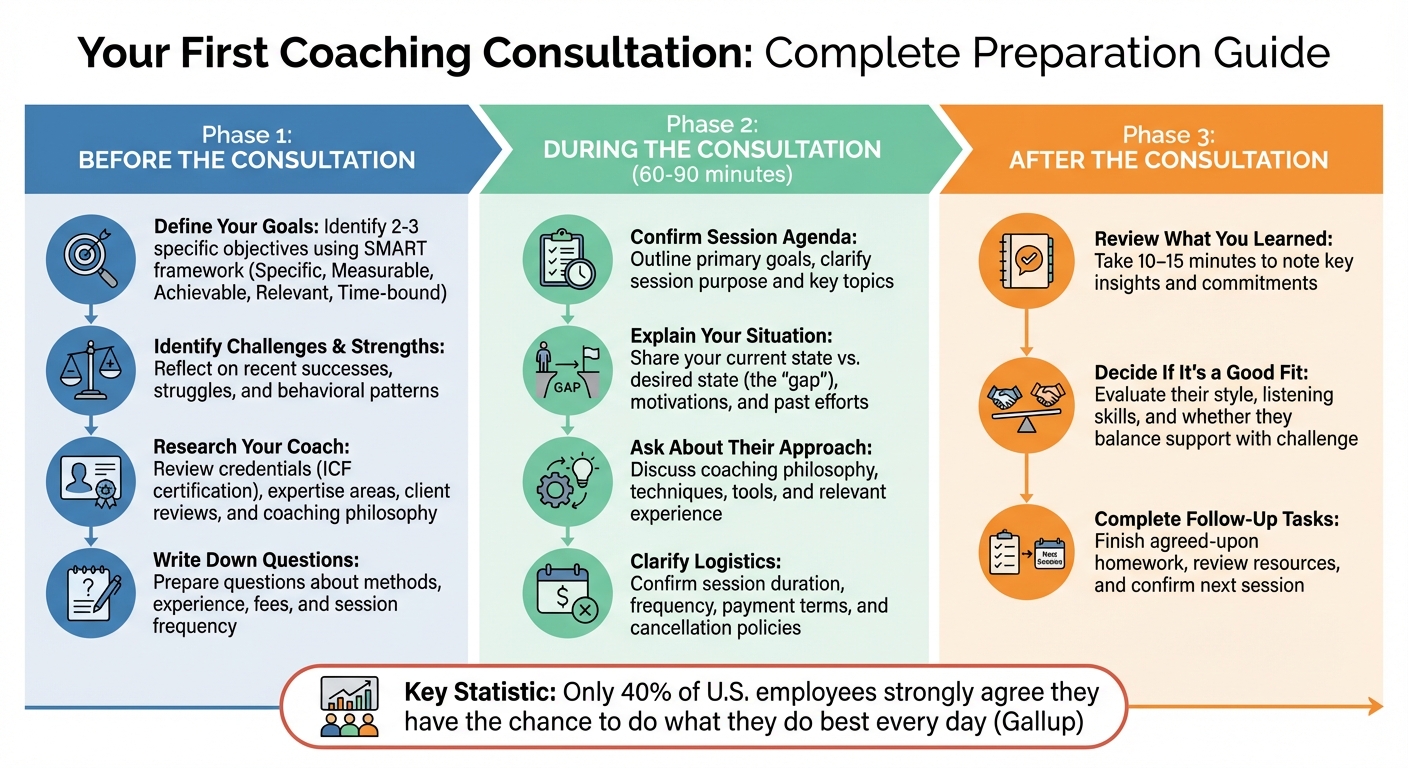
During the session, confirm the agenda, explain your goals, and ask about their coaching style. Afterward, review what you learned, decide if they’re the right fit, and complete any follow-up tasks. Preparation ensures your first coaching session is productive and sets a solid foundation for progress.
First Coaching Consultation Preparation Checklist: Before, During, and After
What to Do Before the Consultation
Define Your Goals
Start by identifying 2–3 specific coaching objectives. This step helps your coach evaluate whether they’re a good match for your needs and provides a clear foundation for your work together.
John L. Bennett poses an essential question: "What do you expect from coaching?". Using the SMART framework can make your goals more actionable - ensure they are Specific, Measurable, Achievable, Relevant, and Time-bound. For instance, instead of saying, "I want to improve my career", try something like, "I aim to secure a leadership role within 12 months by improving public speaking and team management skills."
Another helpful tool is the Wheel of Life, which highlights areas where you’re thriving and where you might need support. This visual exercise evaluates facets like career, health, relationships, and personal growth. A visualization exercise can also be insightful: picture your life a year from now after completing coaching. What specific changes would make this experience worthwhile?
"What would successful coaching look like to you?"
– Jami Delaney, Chief Care Officer at Assemble HR Consulting
Prepare your own answer to this question, along with a "why" statement that explains your deeper motivation for seeking coaching right now. Clear goals set the stage for a productive consultation.
Identify Your Challenges and Strengths
Take time to reflect on your recent struggles and successes. Identify external challenges and note how you’ve emotionally responded to them. This can help you understand the kind of person you are in both difficult and successful moments.
Your to-do list can also provide clues. Tasks you repeatedly postpone may highlight areas of difficulty, while those you complete quickly often point to strengths. Additionally, think about the last few compliments you received - what were they for? These insights might reveal talents you’ve overlooked.
"Fixing weaknesses prevents failure, but building strengths leads to success."
– Gallup
Interestingly, only 40% of U.S. employees strongly agree that they have the chance to do what they do best every day. Recognizing patterns in your challenges - such as recurring obstacles in work or life - can offer valuable insights for your coach. If you find yourself stuck, take a moment to sit with the silence; sometimes, the most meaningful realizations appear after that initial pause.
Research the Coach's Background
Before your consultation, dig into the coach’s profile on platforms like Coachtrusted to learn about their credentials, areas of expertise, and client reviews. Confirm whether they hold certifications from respected organizations like the International Coach Federation (ICF).
Make sure their specialization aligns with your needs. Coaches often focus on areas such as executive leadership, career transitions, life vision, relationships, business, sales, or wellness. As John L. Bennett advises, look into their experience, communication style, and availability to ensure they’re a good fit.
It’s also helpful to understand their coaching philosophy. For instance, do they use frameworks like Co-Active coaching? Knowing their approach can clarify whether their style complements your preferences for learning and growth.
Don’t forget practical details, like their availability, response times, and preferred communication methods (e.g., phone, video call, or in-person). If they provide pre-session forms or intake questionnaires, complete them thoughtfully - this helps you articulate your background and goals before the meeting.
Thorough research ensures you’re well-prepared for your consultation.
Write Down Your Questions
Prepare a list of specific questions to keep the session focused and productive. Consider asking about their coaching methods, how they track progress, or practical details like session frequency and fees. You might also inquire about their experience working with clients who have faced challenges or pursued goals similar to yours.
Having your questions written down ensures you don’t forget important points during the conversation. It also shows that you’ve come prepared, setting a professional tone for your relationship.
sbb-itb-3c06305
What to Do During the Consultation
Confirm the Session Agenda
Once your consultation begins, it's essential to set the tone and keep the discussion on track. Start by outlining your primary goals for the meeting so the coach can focus on your most critical concerns. Confirm the session's purpose, expected length (usually 60–90 minutes for an initial consultation), and key topics like fees, methodology, and timelines.
Take a moment to clarify what coaching entails. Coaching is a forward-driven, action-oriented process that differs from therapy or consulting.
"The first coaching session serves as that map by aligning the coach and the client."
– Co-Active
You should also agree on how progress will be measured, using clear benchmarks. Define roles as well - your coach will provide support, challenge you, and offer constructive feedback, while you are expected to embrace change and take responsibility for your actions.
Finally, provide context for the session by giving a brief overview of your situation and what you aim to achieve.
Explain Your Situation and Goals
Be upfront about where you are now versus where you'd like to be - this is often referred to as the "gap". Share what motivates you and what drains your energy in your personal or professional life. This helps the coach grasp not just your goals, but the deeper reasons behind them.
Talk about any past efforts you've made to address your challenges and why they succeeded or fell short. If you have several topics to discuss, focus on the most pressing ones first to make the best use of your time. Don’t shy away from discussing personal obstacles, fears, or self-limiting beliefs, as tackling these can often lead to breakthroughs.
Ask About Their Approach and Experience
Take the opportunity to understand the coach’s methods and background. Ask about their coaching philosophy, techniques, and tools (like core values assessments or visualization exercises) to see if their approach aligns with your needs. Confirm their expertise in areas relevant to your challenges and whether they’ve worked with clients in similar situations. For example, the Co-Active Training Institute has trained over 150,000 coaches with evidence-based models.
You might ask questions like, "How do you provide feedback in a way that keeps clients open and curious rather than defensive?".
Here’s a quick look at some coaching types and their focus areas:
| Coaching Type | Primary Focus Areas |
|---|---|
| Executive | Leadership growth, decision-making, strategic thinking |
| Career | Transitions, new roles, professional growth |
| Life Vision | Personal development, balance, overcoming mental blocks |
| Business | Scaling, leadership for entrepreneurs, decision-making |
It’s also helpful to ask how they maintain accountability with clients. Request examples of how they’ve supported others in staying on track. Use this time to evaluate whether their personality and approach feel like a good fit for your needs.
Once you’re comfortable with their methodology, move on to practical details.
Clarify Logistics and Fees
Iron out the logistics to avoid surprises later. Confirm session details like duration, frequency, and whether they take notes during meetings. Discuss their response times and policies for missed or late appointments.
Review payment terms, cancellation policies, and any other administrative points upfront. Make sure their communication style and availability align with your preferences and schedule.
What to Do After the Consultation
Review What You Learned
Right after your session, take 10–15 minutes to jot down the most important insights and commitments while they're still fresh in your mind. Pay attention to the biggest takeaway - something that can genuinely push you forward. Did your coach help you see a challenge in a new light or help you uncover something you hadn’t noticed before? Use this time to reflect on those moments.
Decide If the Coach Is Right for You
Your notes can also help you figure out if this coach is the right fit. Think about whether their style and approach match your needs. Did they strike the right balance between pushing you to grow and offering support? A good coach should spend most of the session listening to you.
"Finding the right fit in coaching is critical to the success and satisfaction of both parties involved. A mismatched relationship can lead to frustration, stagnation, and disappointment."
– Noelle Cordeaux, CEO, Lumia
Consider practical details too - like their availability, plans, and pricing. Do these align with your lifestyle? Be on the lookout for warning signs, such as pressure to commit immediately or promises that seem too good to be true. Trust your instincts about whether you can build an honest, open relationship with this coach.
Complete Any Follow-Up Tasks
Once you’ve made your decision, take action. If you’re moving forward with the coach, complete at least one agreed-upon task to maintain momentum. Review any homework, assessments, or resources they provided, and confirm the date and time for your next session.
If you’re still unsure, don’t hesitate to reach out with additional questions or feedback. Staying engaged between sessions can make a big difference in your overall progress.
How to prepare for your first coaching session
Conclusion
Your first consultation sets the stage for progress. By preparing ahead - clarifying your goals, researching your coach, and jotting down key questions - you can transform what might feel like an awkward introduction into a purposeful conversation. As the International Coaching Federation explains, "Working with a coach can help you tune in to the right frequency, allowing you to focus on the insights and actions that truly matter".
This preparation ensures your session is productive. Skip the small talk and dive straight into meaningful discussions about your challenges and objectives. Being prepared not only eases any initial nerves but also fosters a space for open and honest communication from the outset.
Finding the right coach is just as important as being prepared. With so many options available, not every coach will align with your specific needs. Platforms like Coachtrusted can help you connect with verified professionals in areas such as health, fitness, and career development, ensuring you're working with someone trained to high standards of quality and ethics.
Ultimately, coaching is a partnership. The effort you invest in preparation and active participation directly impacts the value you gain. By taking charge of your progress and staying engaged, you’ll get the most out of each session.
FAQs
How do I set effective SMART goals for my first coaching session?
To create effective SMART goals for your coaching session, focus on five essential components: Specific, Measurable, Attainable, Relevant, and Time-bound. These elements work together to make your goals clear, realistic, and actionable.
Start by pinpointing exactly what you want to accomplish (Specific) and figure out how you’ll track progress or success (Measurable). Ensure the goal is reasonable based on your current resources and situation (Attainable), and confirm it aligns with your personal or professional priorities (Relevant). Lastly, establish a deadline to keep yourself accountable (Time-bound).
Setting SMART goals ahead of time provides a strong framework for a focused coaching session and a clearer path toward reaching your objectives.
What should I consider when evaluating a coach's qualifications?
When assessing a coach's qualifications, pay close attention to their education, certifications, and experience. Check if they’ve completed accredited training programs or hold certifications from well-known organizations like the International Coaching Federation (ICF).
It’s also worth reviewing their professional memberships and overall track record. Coaches with solid experience and a commitment to ethical practices are more likely to offer guidance that aligns with your specific goals.
How can I tell if a coach is the right fit after my first consultation?
To figure out if a coach is a good match for you, think about a few important things. Did the coach genuinely listen and grasp what you were looking for? Was the conversation smooth and natural, with a sense of connection? Also, consider if their methods align with your goals and whether you trust their ability to guide you toward achieving them.
Go with your gut and take a moment to reflect on how supported and at ease you felt during the session. Building trust and mutual understanding is key to a successful coaching partnership.