Career Development
5 Signs You Need a Professional Coach
January 6, 2026
12 min read

5 Signs You Need a Professional Coach
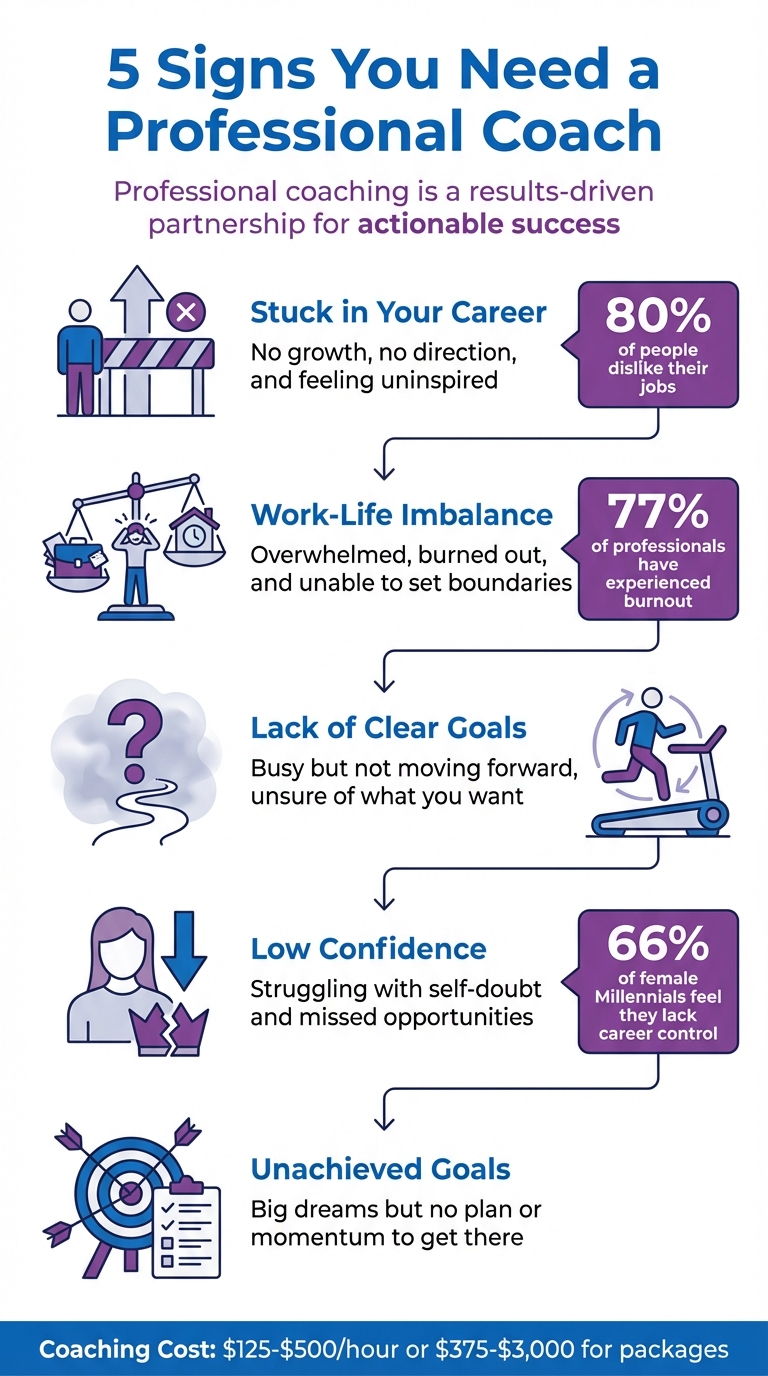
A coach helps you identify challenges, set clear goals, and create actionable plans. Whether you're dealing with self-doubt, burnout, or unclear direction, a coach provides accountability and tools to help you make progress. Here’s a quick breakdown of the five key signs coaching could help:
- Stuck in your career: No growth, no direction, and feeling uninspired.
- Work-life imbalance: Overwhelmed, burned out, and unable to set boundaries.
- Lack of clear goals: Busy but not moving forward, unsure of what you want.
- Low confidence: Struggling with self-doubt and missed opportunities.
- Unachieved goals: Big dreams but no plan or momentum to get there.
Professional coaching isn’t therapy - it’s a results-driven partnership that helps you focus on the future and take actionable steps toward success. If any of these challenges sound familiar, it might be time to consider finding a coach.
5 Signs You Need a Professional Coach
1. You Feel Stuck in Your Career
Recognizing Challenges in Growth
Ever feel like you're spinning your wheels at work, unable to move forward? Maybe you’ve hit a ceiling with no clear path for advancement, or you’re constantly falling short during interviews despite having the qualifications. You’re not alone. A Deloitte report reveals that 80% of people dislike their jobs, and for female Millennials, 66% feel they lack the control they need to shape their careers.
This frustration often creates a kind of tunnel vision - you struggle to see any way out of your current rut. Maybe you have untapped potential but no direction, or perhaps you’re skilled but lack focus. The result? You end up working just for the paycheck, feeling drained and uninspired. This is where coaching can make a real difference.
How Coaching Can Help You Move Forward
A professional coach offers an outside perspective, helping you break out of that tunnel vision. Nicole Wood, CEO and Co-Founder of Ama La Vida, puts it perfectly:
"A coach will help you figure out if there are creative ways to advance or if a career change is what you need to feel 'un-stuck' and excited about your future".
Coaches help you figure out whether you’re in the wrong role or just missing key tools - like negotiation strategies or an updated resume. They guide you in identifying your transferable skills and highlighting your strengths (what some call your "zones of genius") to create a well-thought-out career plan. This approach helps you avoid jumping from job to job without direction. It’s especially valuable in a competitive job market, where 80% of female Millennials have taken jobs that didn’t align with their core career values.
Practical Tools Coaches Provide
Career coaches don’t just offer advice - they equip you with actionable tools to regain momentum. These might include:
- Optimizing your resume for Applicant Tracking Systems (ATS)
- Updating your LinkedIn profile with relevant keywords
- Crafting a compelling elevator pitch
- Practicing with mock interviews
- Developing salary and benefits negotiation strategies
The cost of career coaching varies, typically ranging from $125 to $500 per hour, with package deals priced between $375 and $3,000, depending on the level of service.
Coaching isn’t just about finding a new job - it’s about creating a strategy that aligns with your goals and values, so you can move forward with clarity and confidence.
sbb-itb-3c06305
2. You're Struggling with Work-Life Balance
Recognizing the Struggles of Juggling Work and Life
Does it feel like you're constantly running on empty, trying to manage everything on your plate? Maybe you're drained, with work creeping into every corner of your personal life. It's not just about being busy - it’s feeling like you’re stuck in an endless loop, watching life pass you by. Research shows that 77% of professionals have experienced burnout in their current roles, and more than half have gone through it multiple times.
Burnout isn't just mental - it can show up physically too. Headaches, trouble sleeping, or feeling perpetually worn out are common signs. And it doesn’t stop there. Your personal relationships might also take a hit because, even when you're with loved ones, your mind is still tethered to work. Joelle K. Jay, Principal at the Leadership Research Institute, captures it perfectly:
"If you often think it would take two of you to pull off everything you're trying to do in your work and life, you may need a coach".
These signs are more than just bumps in the road - they’re signals that it's time to hit pause and rethink your approach.
How Coaching Can Help Restore Balance
Work-life imbalance often stems from deeper issues than just a packed schedule. A professional coach can help you uncover what’s really going on. Are you overcommitting? Struggling with unclear boundaries? Equating your worth with how busy you are? These are common patterns that can leave you feeling stuck. A coach provides a fresh perspective, helping you figure out whether you’re chasing your own goals or simply meeting the demands placed on you by others.
Practical Solutions Coaches Bring to the Table
Coaches don’t just talk - they offer actionable steps to help you reclaim control of your time and energy. They can guide you in setting clear boundaries around work hours, learning to say "no" without guilt, and treating personal time as non-negotiable - just like a business meeting. Accountability is key, and coaches ensure you stick to these boundaries while making your well-being a priority.
This isn’t about doing more; it’s about doing what truly matters.
3. You Lack Clear Goals
Recognizing the Problem: Stuck Without Progress
Ever feel like you're constantly busy but not actually moving forward? That’s what happens when you don’t have clear goals - it’s like running on a treadmill: lots of effort, no real progress. Without a defined direction, you end up going through the motions, unsure of where you're headed.
The signs are easy to spot once you’re aware of them. The future feels hazy, and you might realize you’re in the same place as last year, despite telling yourself things would change. There’s often a lingering sense that you’re meant for “more,” but you can’t quite put your finger on what that “more” is. This lack of clarity can be frustrating, and it’s where coaching becomes a game-changer.
How Coaching Helps You Find Direction
A professional coach can help you uncover what truly drives you. As Leadership Coach Susan Cramm explains:
"A coach helps a person do things, rather than doing things for them. A great coach believes their clients have the answers within them".
Coaches often use tools like the 70/30 rule - asking reflective questions that guide you to define your own goals. They don’t hand you a roadmap; instead, they help you create one that’s uniquely yours.
Turning Vague Ideas Into Actionable Goals
One of the biggest benefits of coaching is transforming unclear ambitions into specific, achievable targets. For example, instead of saying, “I want to be a better leader,” a coach might help you focus on something more tangible, like “strengthen relationships with senior leadership” or “develop a clearer strategic plan for my team”. They break down big-picture goals into manageable steps, making them easier to tackle.
Daniel Stewart, President of Stewart Leadership, explains it well:
"Coaching works best when you have a clear target in mind, but that doesn't mean you need to start with a specific target. The right executive coach will guide you through a process that helps you get clarity".
Coaches help you prioritize what truly matters, aligning your goals with your core values. They also teach you how to differentiate between being busy and being productive. The focus shifts to actions that genuinely contribute to your long-term objectives. Whether it’s breaking through career roadblocks or finding balance in your life, setting clear goals is a critical step toward meaningful progress.
4. You Experience Constant Self-Doubt or Low Confidence
Recognizing Obstacles in Personal or Professional Growth
Self-doubt often reveals itself through thoughts like, "I'm not good enough" or "I could never do that." When faced with interviews or performance reviews, you may struggle to articulate your strengths, leading to indecision and missed opportunities. This mindset can hold you back, both emotionally and professionally.
Research shows that many professionals feel disconnected from their career paths, frequently settling for roles that don't align with their personal values or aspirations.
How Coaching Can Help You Overcome These Challenges
Addressing self-doubt is a critical step toward realizing your full potential. A professional coach acts as a guide, helping you see your strengths and behaviors more clearly - something that can be difficult to do on your own. Eloïse Eonnet, Founder of Eloquence, describes the role of a coach this way:
"A career coach supports professionals by giving them the specific tools, structures, vocabulary, and action plans they need to engage in their careers with agency."
Coaches are skilled at identifying self-limiting beliefs and helping you reframe them into actionable strategies. Many use the 70/30 approach: you spend 70% of the time talking and reflecting, while the coach uses the remaining 30% to ask thoughtful questions and provide feedback. This dynamic not only helps you uncover your own solutions but also fosters genuine confidence in your abilities.
Through this reflective process, coaches also introduce exercises designed to turn insights into tangible progress.
Practical Tools and Support Offered by Coaches
Coaches provide hands-on strategies, such as role-playing important conversations, to improve your communication skills and boost your confidence. They often assign real-world tasks between sessions, gradually increasing their difficulty to help you build momentum and see measurable progress. These exercises are tailored to reconnect you with your core values and motivators.
Nicole Wood, CEO and Co-Founder of Ama La Vida, explains how coaches support their clients:
"A coach is also there as your professional wingman/woman, keeping you on track and reminding you why you are pursuing these goals. With them by your side, you feel more confident in decisions and skills."
While coaches excel at helping you shift your mindset and build confidence, it's important to remember that they are not licensed therapists. Issues like depression or severe anxiety require the expertise of mental health professionals.
5. You Can't Reach Your Specific Goals
Why Progress Feels Out of Reach
Setting goals is one thing - achieving them is another. You might aim for a promotion, plan a career change, or dream of starting a side hustle, yet find yourself stuck in neutral. What’s holding you back? Often, it’s a mix of unclear planning and psychological roadblocks. Without a structured plan, even the best intentions can fizzle out. On top of that, self-doubt (like thinking, "I'm not good enough") can creep in, while habits like procrastination or overthinking stop you from moving forward.
This pattern is common and highlights how hard it can be to turn aspirations into real progress.
How Coaching Can Help You Move Forward
A coach does more than cheer you on - they guide you with purpose. By helping you see your blind spots, sticking to deadlines, and holding you accountable, a coach ensures your ideas don’t just stay ideas. They also provide tailored advice for specific challenges, like negotiating a raise, perfecting your resume, or preparing for interviews.
Kathy Goller, a Life Coach, explains it best:
"Big goals require consistent action and support. A coach offers accountability, helping you break down your big ambitions into manageable steps and stay motivated to follow through".
This kind of support turns daunting goals into smaller, achievable milestones, making it easier to track your progress and build momentum.
Turning Ambitions into Actionable Plans
Coaches help you get specific. Instead of a vague goal like "improve my career", they’ll help you define something concrete, such as "strengthen relationships with senior leadership". From there, they create a step-by-step action plan tailored to your needs. Between coaching sessions, you’ll practice new techniques and review what’s working to ensure measurable progress. For big changes, they often suggest testing the waters first - like trying a freelance gig or volunteering - before making a major leap.
Don't Miss Out! Top 10 Signs You Need an Executive Coach Now!
Conclusion
Acknowledging the need for support is often the first step toward meaningful change. Whether you're feeling stuck in your career, struggling to balance life’s demands, wrestling with self-doubt, or falling short of your goals, professional coaching can provide the guidance you need to move forward.
A coach doesn’t just guide you - they hold you accountable, offer an unbiased perspective, and provide tailored support to help build your confidence. Nicole Wood, CEO and Co-Founder of Ama La Vida, sums it up perfectly:
"One of the greatest benefits of having a coach is that you are now accountable to another person to do the things you said you would and in the timeframe you said you wanted to do them."
Finding the right coach is just as important as deciding to work with one, and our platform makes that process simple and reliable. At Coachtrusted.com, you can browse verified profiles to review a coach’s certifications, professional background, and industry experience before making a choice [12, 14]. Each coach undergoes a thorough review process to confirm their formal training, verified coaching hours, and commitment to professional ethics.
We also offer flexible pricing options to suit different needs, starting with free basic profiles and extending to premium plans beginning at $30 per month. You can search for coaches who specialize in your unique challenges, compare their expertise, and even schedule a chemistry session to ensure a perfect match.
If any of this resonates with you, don’t wait. Visit Coachtrusted.com today to find a coach who can help you transform stagnation into momentum and turn your goals into tangible achievements.
FAQs
How can a professional coach help me move forward in my career?
Feeling stuck in your career often means you're unsure about the next steps or facing challenges that feel tough to navigate. This is where a professional coach can step in to help. By taking a closer look at your current situation, they can pinpoint obstacles - like self-doubt or unproductive habits - and guide you toward creating a clear vision of where you want to go.
Coaches don’t just stop at identifying the problem; they work with you to set practical, achievable goals. Whether it's fine-tuning specific skills, broadening your professional network, or gearing up for a promotion, they help you create a plan that works. Plus, they keep you accountable, making sure you stay focused and adjust your strategy when necessary. With their support, you can gain momentum, avoid unnecessary missteps, and make steady progress toward the career you’ve been striving for.
How do professional coaches help you improve work-life balance?
Professional coaches are there to help you figure out what work-life balance looks like for you. They begin by helping you pinpoint your core values, personal priorities, and the ways your work might be spilling over into your home life. Once that's clear, they assist in setting boundaries - like defining work hours or designating "no-work" zones - and crafting schedules that are realistic and protect those boundaries.
These coaches also offer practical tips to make your life easier. This might include planning regular breaks, delegating tasks, or grouping similar activities to save time and reduce stress. They keep you on track by checking in on your progress and tweaking your plan as needed. On top of that, they may suggest tools like stress-management exercises or journaling to help you stay grounded and lead a more intentional, balanced life.
How can a professional coach help me set and achieve my goals?
A professional coach helps transform your aspirations into clear, actionable goals by guiding you through a process of self-discovery. They engage you in thoughtful conversations to uncover what truly matters - whether it’s advancing in your career, finding a better work-life balance, or mastering new skills. By helping you pinpoint your priorities, values, and desired outcomes, they set the stage for meaningful progress.
Once your goals are clear, a coach collaborates with you to map out a step-by-step action plan, complete with realistic milestones and timelines. They act as a supportive partner, asking insightful questions, helping you foresee potential obstacles, and holding you accountable along the way. Regular check-ins ensure you stay focused, adapt as needed, and move steadily toward achieving your goals with confidence.