Career Development
Ultimate Guide to Personalized Mentorship
January 20, 2026
15 min read

Ultimate Guide to Personalized Mentorship
Personalized mentorship is a tailored approach to mentoring that prioritizes the unique needs, goals, and challenges of the mentee. Unlike rigid, one-size-fits-all models, this method fosters a collaborative partnership where both mentor and mentee actively contribute to career and personal growth.
Key takeaways:
- Why it works: Personalized mentorship boosts trust, emotional bonds, and long-term success by addressing individual needs rather than relying on generic frameworks.
- The 4 C's of mentorship: Communication, Connection, Clarity, and Commitment are essential for building strong mentoring relationships.
- Benefits: Mentees with personalized mentors are promoted five times more often, report 91% job satisfaction, and are twice as likely to stay with their organizations.
- How to start: Understand the mentee’s needs, match effectively, set clear goals, and maintain regular feedback.
Personalized mentorship is a proven way to improve career outcomes, and modern tools like Coachtrusted make it easier to create meaningful mentor-mentee connections.
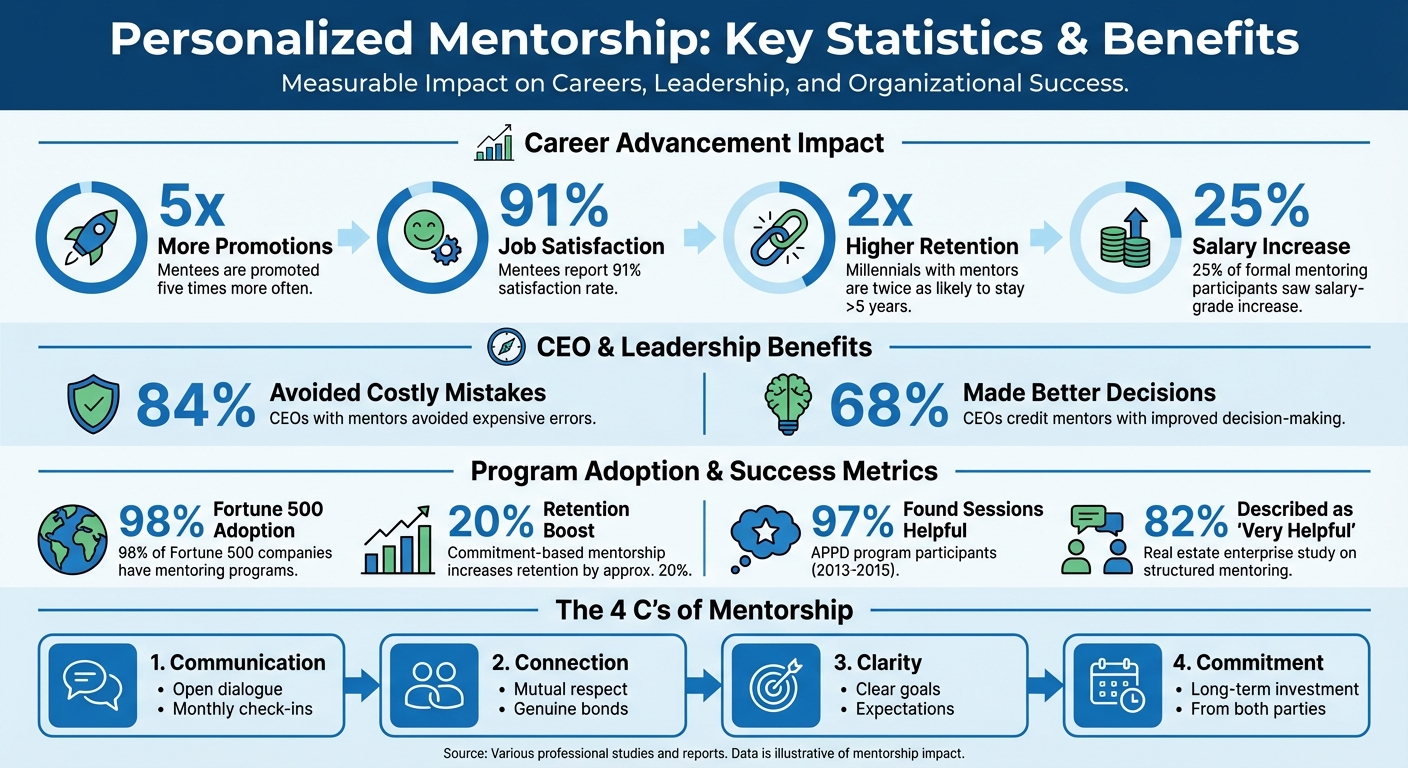
Personalized Mentorship Benefits: Key Statistics and Impact Data
The Importance of Personalised Mentorship in Professional Development
Why Personalized Mentorship Works Better
Personalized mentorship creates stronger connections because it focuses on the unique needs of each individual rather than applying a standard, one-size-fits-all approach. These relationships thrive when they address personal, career, and developmental goals, making them more meaningful and impactful for everyone involved.
Here’s the key difference: generic programs often operate on exchange norms, which feel transactional - think "you scratch my back, I’ll scratch yours." Personalized mentorship, on the other hand, adopts communal norms, where support is offered based on genuine need, not immediate payback. This approach builds trust, emotional bonds, and long-term benefits that far surpass generic alternatives.
Another critical element is psychological safety. When both mentor and mentee feel safe to share challenges and grow together, the relationship becomes a space for real learning and collaboration for new developers. This is especially important considering that over half of workplace mentees report at least one negative mentoring experience, often due to mismatched styles or values - an issue personalization directly addresses.
The professional benefits are hard to ignore. Research shows that individuals in strong mentoring relationships perform better, contribute more effectively, and even earn higher salaries compared to those without mentors. For example, mentees are promoted five times more often than those without mentorship, and 91% of them report job satisfaction. Among millennials, those with mentors are twice as likely to stay with their organization for over five years compared to their peers without mentors. Clearly, personalized mentorship is more than just guidance - it’s a game-changer.
The 4 C's of Mentorship
Personalized mentorship is built on four essential principles: Communication, Connection, Clarity, and Commitment.
- Communication: Open and honest dialogue is the foundation of personalized mentorship. Regular check-ins, ideally once a month, help maintain accountability and foster trust. The focus should be on meaningful conversations, not lectures.
- Connection: Strong relationships go beyond professional networking. A genuine bond, built on mutual respect and a sense of belonging, creates a "working alliance" that helps both parties tackle challenges together.
- Clarity: Clear goals and expectations are essential. Starting with tools like mentoring compacts - written agreements outlining communication frequency, goals, and boundaries - ensures both mentor and mentee are aligned from the beginning.
- Commitment: Effective mentorship requires long-term investment from both sides. This isn’t just a casual coffee chat; it’s an ongoing relationship that adapts to evolving needs. Studies show this kind of commitment can boost retention rates by about 20%.
Personalization vs. One-Size-Fits-All Approaches
The 4 C's highlight the strengths of personalized mentorship, but the contrast with generic models makes its benefits even clearer.
The biggest difference lies in control. Traditional mentorship often follows a rigid "teacher-student" structure, where the mentor is the expert and the mentee passively absorbs knowledge. Personalized mentorship flips this script, creating a collaborative partnership where both parties learn and grow together.
"High-quality mentoring relationships are close relationships characterized by trust, disclosure, vulnerability, and commitment."
- Belle Rose Ragins, Professor and Mentoring Scholar
Generic programs frequently rely on random pairings, which can lead to weak, unproductive relationships. In fact, poorly executed mentorship can sometimes do more harm than good. Personalized mentorship avoids these pitfalls by focusing on the mentee’s specific needs and goals. This flexibility allows the relationship to evolve over time, addressing what’s most relevant at any given moment.
The results speak for themselves. CEOs with mentors report that 84% avoided costly mistakes, and 68% made better decisions thanks to personalized guidance. Formal mentoring programs also show measurable success - 25% of participants experienced a salary-grade increase. Personalized mentorship provides a direct path to learning from real-world experiences, helping mentees navigate complex challenges with greater confidence.
| Feature | Generic Mentorship | Personalized Mentorship |
|---|---|---|
| Knowledge Flow | One-way (mentor teaches) | Two-way (both learn) |
| Power Dynamic | Hierarchical "power over" | Collaborative "power with" |
| Focus | Fixed curriculum | Tailored to changing goals |
| Mentee Role | Passive recipient | Active partner |
| Flexibility | Rigid schedule | Adaptable to individual needs |
How to Build a Personalized Mentorship Program
Creating a mentorship program tailored to individual needs can make all the difference between a fruitful experience and what Harvard Business Review terms "marginal mentoring" - mentorship that barely scratches the surface. A well-structured approach ensures the relationship thrives from the very beginning.
Here’s a five-step framework to help you build a mentorship program that truly resonates with each mentee.
Step 1: Understand Your Mentee's Needs
Start with a structured needs assessment that covers areas like professional growth, career direction, and personal well-being. A good way to begin is by asking your mentee to reflect on their current needs with a self-assessment, such as, “Why do you need mentorship now?” This can uncover whether they’re navigating a career shift, addressing a skills gap, or dealing with personal challenges.
Go beyond generic questions. Instead of asking, “Tell me about your career,” try something more specific like, “Did you plan this career path, or did it evolve naturally?” This helps reveal motivations and goals. For mentees from underrepresented groups, consider including questions that touch on workplace belonging, such as, “Do you feel you need to separate parts of your identity at work?”.
Another useful tool is an Expectations Scale. Both mentor and mentee independently rate their expectations for roles and responsibilities, then compare results to identify any mismatches early on.
Step 2: Match Mentors and Mentees Effectively
The success of a mentorship often comes down to pairing the right people. Poor matches can do more harm than good, with research showing that mismatched mentoring can actually set mentees back.
To ensure effective matches, include interviews or video calls as part of the screening process. Also, training mentors for at least two hours before pairing them significantly boosts the quality of the relationship.
Platforms like Coachtrusted make this process easier by offering smart search filters and quiz-based recommendations. These tools align mentors and mentees based on shared goals, expertise, and communication preferences. Plus, their verification process ensures that mentors are experienced professionals, reducing the risk of poor pairings.
Step 3: Select the Right Mentorship Format
Choosing the best format is key to meeting your mentee’s needs. While one-on-one mentorship is the most tailored approach, other formats can be just as effective, depending on the situation.
- One-on-one mentorship: Ideal for highly personalized guidance, especially during career transitions or when addressing specific challenges.
- Group mentoring: Use a rotation strategy where each session focuses on one mentee’s needs while allowing others to learn from the discussion. This works well when mentees share similar goals but have individual challenges.
- Peer mentoring: Pairs individuals at similar career stages to provide mutual support and accountability.
- Reverse mentoring: Puts junior professionals in the mentor’s seat, guiding senior leaders on topics like technology or emerging trends. This approach recognizes that learning can flow in both directions.
Step 4: Set Clear, Customized Goals
Without clear goals, mentorship can lose focus. Work with your mentee to define 1–3 SMART goals (Specific, Measurable, Achievable, Relevant, and Time-bound) as part of a Mutual Expectations Agreement Plan.
Let the mentee take the lead in setting these goals. When they define their own aspirations, they’re more likely to stay committed and accountable. Document these goals in a written agreement that also outlines expectations for communication, confidentiality, and progress tracking. Include milestones to celebrate achievements along the way.
A great example of this in action comes from the Association of Pediatric Program Directors (APPD). Between 2013 and 2015, they introduced a mentor toolkit that emphasized structured goal-setting. In post-session surveys, 97% of participants found the sessions helpful, thanks to the clarity provided by the toolkit.
Step 5: Build in Flexibility and Regular Feedback
Mentorship isn’t a one-size-fits-all process, and it requires ongoing adjustments. Schedule regular check-ins - at least once a month - to review progress and reassess priorities. These meetings ensure that the mentorship evolves alongside the mentee’s growth.
Between formal sessions, stay in touch through emails, texts, or brief check-ins. This keeps the relationship dynamic and allows for real-time support when challenges arise. Use these moments to deepen your understanding of the mentee as a person, not just a professional.
Aim for a 12-month timeframe to allow meaningful progress toward significant milestones. The focus should be on achieving developmental goals rather than sticking to a strict calendar date. When the mentee’s goals are met or when the relationship transitions into a collegial partnership, it’s a natural time to conclude.
sbb-itb-3c06305
Practical Tips for Personalizing Mentorship
Listen Actively and Communicate Openly
The foundation of effective mentorship is listening - spending about 70% of the time listening and 30% guiding. This balance helps you truly understand your mentee's needs and concerns.
From the very beginning, creating a safe and open environment is critical. When mentees feel comfortable sharing their challenges, doubts, and even mistakes without fear of judgment, trust begins to grow naturally. One way to encourage this is by modeling vulnerability yourself. For instance, sharing a brief story about a time you failed can set the tone for openness.
"The most transformational mentors have figured out something counterintuitive: their job isn't to have all the answers. They've mastered the art of unlocking potential rather than just downloading decades of experience into someone's brain." – Rob Hwang, Science of People
Using a structured approach like the GRACE Framework can give your mentoring sessions a clear purpose. Start with a personal check-in, review progress since your last meeting, discuss a specific challenge in depth, commit to actionable steps, and end with affirming and encouraging words. When your mentee shares a challenge, resist the urge to immediately offer solutions. Instead, ask thoughtful questions like, "What is your initial instinct about this situation?" or "Can you tell me more about that?" This method encourages deeper reflection and insight.
A study within a large real estate enterprise found that 82% of participants described their mentoring conversations as "very helpful" or even "breakthrough" when structured prompts like these were used. Beyond regular meetings, staying engaged by sharing relevant articles, sending quick encouragement texts, or providing useful resources can reinforce your commitment to their growth.
This kind of open communication naturally sets the stage for appreciating and valuing diverse perspectives.
Respect Different Backgrounds and Perspectives
Active listening builds trust, and recognizing and honoring diverse experiences strengthens the connection between mentor and mentee.
Every mentee brings a unique blend of experiences, identities, and perspectives that shape their career journey. A successful mentor understands the importance of cultural competence - being aware of and navigating differences with sensitivity and skill.
Start by reflecting on your own unconscious biases, stereotypes, or privileges that might color your perspective. This isn’t about being perfect; it’s about being mindful of how your background might differ from your mentee’s.
Showing professional humility is key. Admit when you’re wrong or when your mentee’s knowledge surpasses your own in a particular area. This kind of honesty fosters genuine dialogue.
"In every supervisory relationship I've had, I've been treated as an equal despite the power differential." – Kalyani Gopal, PhD, President, Mid-America Psychological and Counseling Services
Acknowledging power dynamics - whether related to seniority, race, gender, or other differences - can create a safe space for open and honest conversations. If you make a mistake, addressing it directly can help rebuild trust. At the same time, respect your mentee’s privacy by letting them decide what aspects of their identity they want to share. By staying mindful and adapting your communication style as needed, you can create a mentoring experience that feels inclusive and supportive.
Adjust to Different Learning Styles
Adapting your approach to match your mentee’s learning style is another way to make mentorship more personalized and effective.
People learn in different ways, so it’s important to tailor your methods to suit your mentee’s preferences. Some individuals thrive on hands-on practice, while others need time to process and reflect before taking action. Early on, have an open conversation about how they best absorb information. Do they prefer step-by-step instructions, or do they benefit more from a big-picture overview?
For technical skills, try a "show-and-do" approach: demonstrate the task first, then let your mentee practice with coding exercises while you provide real-time feedback. For more conceptual topics, shift from giving direct solutions to asking questions that guide them toward understanding the principles behind the issue. This approach encourages independence and critical thinking.
Encourage your mentee to seek additional expertise when necessary, and be flexible with how you communicate - whether through video calls, phone conversations, emails, or in-person meetings, depending on their preference. Finally, balance your roles as both a coach offering career guidance and a role model providing emotional support, adjusting as their needs evolve over time.
Using Technology to Personalize Mentorship
Technology has reshaped how mentors and mentees interact, breaking down geographic barriers and simplifying administrative tasks. This shift allows both sides to focus more on growth and less on logistics.
Modern platforms pair mentors and mentees based on skills, goals, and learning preferences, creating matches that feel more intuitive than traditional methods. These tools don’t just connect people - they also streamline communication and make tracking progress seamless. Features like video calls, messaging, and calendar syncing keep the relationship on track and ensure regular interaction.
Digital dashboards are a game-changer, offering real-time insights into progress. Mentors can monitor session frequency, review past notes, and refine their guidance. Automated reminders help keep everyone accountable. A telling statistic: 84% of CEOs credit mentors with helping them avoid costly mistakes and accelerating their professional growth.
"Mentoring might not be an obvious area to apply software, but it could help your organisation be more effective and help with ROI of a mentoring initiative." – Charlie Duff, Editor, HRzone.co.uk
The best platforms blend technology with human connection. They handle the "low-touch" tasks - like scheduling, tracking, and resource sharing - so mentors and administrators can focus on building meaningful relationships and offering tailored support.
Coachtrusted Features for Personalization
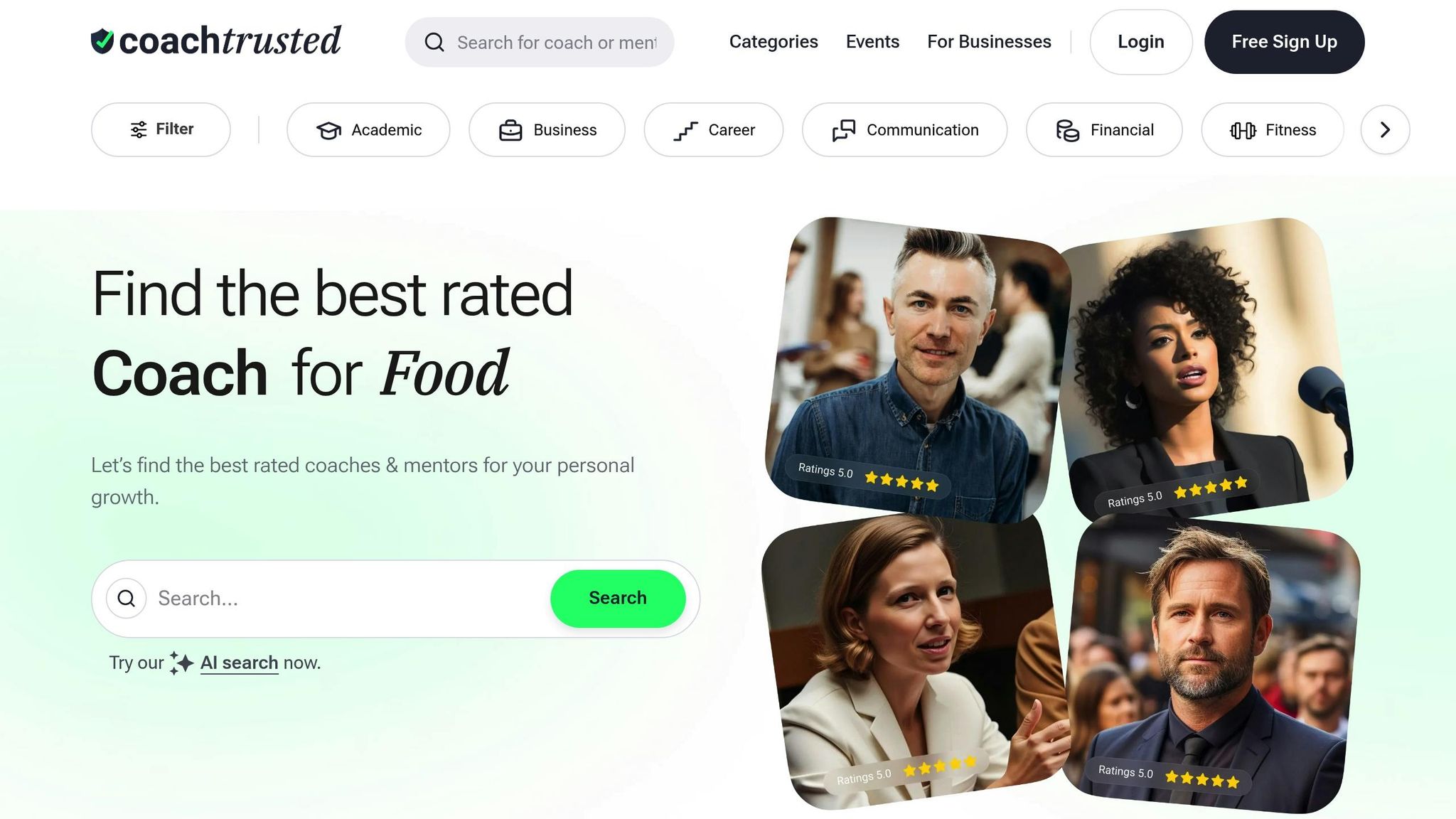
Coachtrusted stands out as a prime example of how technology can enhance mentorship by combining smart matching with robust support tools.
Verified profiles provide transparency, showcasing mentors’ backgrounds, expertise, and user reviews. This helps mentees make informed decisions. The platform’s smart search and quiz-based recommendations guide users toward mentors whose skills align with their aspirations - whether it’s excelling in fitness, learning trading strategies, or advancing in design.
Both mentors and mentees benefit from customizable dashboards that track session history, goal progress, and shared resources. Mentors can upload videos, articles, and tailored learning materials to address specific development areas. Meanwhile, messaging and communication tools facilitate flexible, ongoing interaction outside formal sessions.
For mentors looking to expand their reach, premium and professional plans offer added perks like increased visibility through ads, custom contact options, and marketing support. The platform’s review verification process ensures feedback is genuine and helpful for future users.
Case Study: Personalized Mentorship Through Coachtrusted
Coachtrusted’s personalized approach shines in real-life scenarios, such as Sarah’s career transition journey.
Sarah, a graphic designer from Portland, Oregon, wanted to pivot into UX/UI design but lacked experience in user research and prototyping. In February 2025, she used Coachtrusted’s quiz-based recommendation tool and was matched with Marcus, a senior UX designer in Austin, Texas, who specializes in guiding career changers.
During their first video call, Marcus reviewed Sarah’s portfolio using the platform’s dashboard. He pinpointed three areas for improvement: user testing methodology, wireframing in Figma, and creating design systems. Together, they set clear goals: complete two user research projects within 90 days and develop a portfolio case study showcasing an end-to-end UX process.
Marcus leveraged Coachtrusted’s resource library to share articles, video tutorials, and templates tailored to Sarah’s needs. Between their bi-weekly video sessions, they stayed connected via the platform’s messaging tool, where Marcus provided feedback on her wireframes and answered questions about industry practices.
Conclusion
Personalized mentorship plays a key role in driving meaningful growth. People who receive customized guidance often excel in their careers, make greater contributions to their industries, and enjoy higher earnings compared to those without such support.
To get started, focus on a tailored needs assessment and follow the 3 Rs: Respect boundaries, Respond to individual needs, and Reflect on progress regularly. Set clear, specific goals, but stay adaptable as the mentoring relationship develops. It's worth noting that 98% of Fortune 500 companies have mentoring programs in place, demonstrating that personalization is a defining factor in successful initiatives.
"Mentorship isn't a one-size-fits-all. It's versatile and should be tailored to meet both the mentors' and mentees' needs."
– Mentoring Trends
Technology can make personalized mentorship even more effective. Platforms like Coachtrusted simplify the process by handling administrative tasks, such as matching mentors and mentees based on verified expertise, tracking progress through user-friendly dashboards, and enabling easy communication. Features like quiz-based recommendations, resource libraries, and messaging tools allow mentors to focus their energy on building impactful relationships and providing customized guidance, without getting bogged down by logistics.
FAQs
What makes personalized mentorship different from traditional mentorship?
Personalized mentorship is all about adapting the experience to suit what each mentee truly needs and aims to achieve. It involves creating tailored plans, selecting specific activities, and offering guidance that aligns directly with the mentee's unique aspirations and circumstances.
On the other hand, traditional mentorship tends to follow a more standardized approach. While it offers general support and advice, it doesn't always cater to the individual needs of the mentee. Personalized mentorship stands out by providing a more focused and impactful experience, helping mentees work toward their goals with greater precision and success.
How does technology enhance personalized mentorship?
Technology has transformed mentorship, making it more accessible and effective than ever. Digital platforms break down geographic barriers, allowing mentors and mentees to connect from anywhere at any time. These tools also simplify the process of finding the right match by focusing on specific goals and needs. Features like built-in scheduling, video calls, and instant messaging ensure regular communication, which helps foster stronger, more meaningful relationships.
Beyond convenience, technology brings a personalized edge to mentorship through data-driven insights. Progress tracking, goal-setting tools, and analytics empower mentors to adjust their strategies in real time and evaluate outcomes more effectively. Platforms such as coachtrusted take this a step further by offering verified mentors, personalized matching, and integrated tools for communication and progress tracking. This creates a streamlined and customized mentorship experience tailored to users across the U.S.
How do I find the right mentor to help me achieve my goals?
To find a mentor who truly aligns with your needs, start by defining your goals and identifying the specific skills or knowledge you want to develop. Consider factors like their communication style, availability, and experience in your industry. This self-reflection will give you a solid foundation for narrowing down your search.
From there, explore trusted platforms like coachtrusted to connect with potential mentors. These platforms often let you filter profiles based on specialties, years of experience, and client reviews, making it easier to find someone who matches your criteria. Take time to review their coaching approach, testimonials, and past achievements to see if they align with your objectives. Once you’ve identified a few promising candidates, send a clear and concise message explaining your goals and asking specific questions to assess compatibility.
Before making a final decision, schedule a quick introductory call or trial session to ensure the connection feels right. After selecting your mentor, establish clear expectations - like how often you’ll meet and the milestones you aim to achieve. Regularly revisit your goals and adjust your plan as needed to keep the mentorship effective and tailored to your personal growth.