Career Development
Coach Verification Checklist: What to Look For
January 8, 2026
17 min read
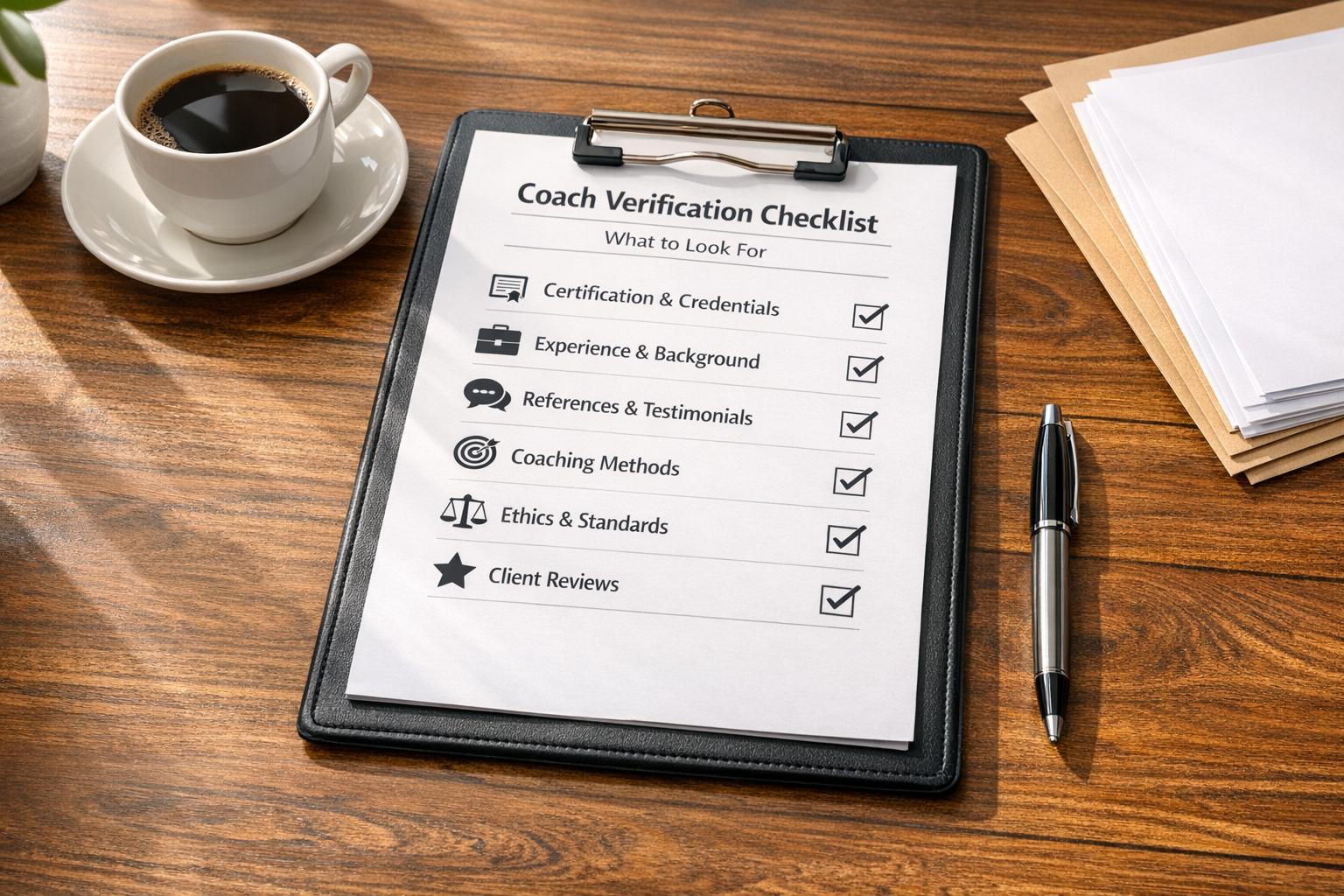
Coach Verification Checklist: What to Look For
Choosing the right coach can make a big difference in your personal and professional growth. But with little regulation in the coaching industry, verifying a coach's qualifications is essential to avoid wasting time and money. Here's a quick guide to ensure you're making the right choice:
- Check Certifications: Look for credentials from respected organizations like the International Coaching Federation (ICF). Verify their certification level (ACC, PCC, MCC) and ensure it's current.
- Review Experience: Confirm their coaching hours, number of clients, and recent practice. For example, an MCC coach must have 2,500+ hours with 35+ clients.
- Ask for References: Speak with past clients to understand the coach's methods and results.
- Read Verified Reviews: Focus on specific, measurable outcomes rather than vague claims.
- Confirm Ethical Standards: Ensure they follow a code of ethics, have a clean background check, and, if applicable, SafeSport training.
- Understand Their Methods: Ask about their coaching philosophy and whether they use evidence-based approaches like neuroscience or behavioral psychology.
- Look for Red Flags: Avoid coaches who can't verify credentials, use high-pressure sales tactics, or make unrealistic promises.
Tools like coachtrusted simplify this process by providing pre-vetted coaches with verified credentials, experience, and reviews. Taking these steps ensures you're working with a qualified professional and sets the stage for a productive coaching relationship.
Certifications and Training
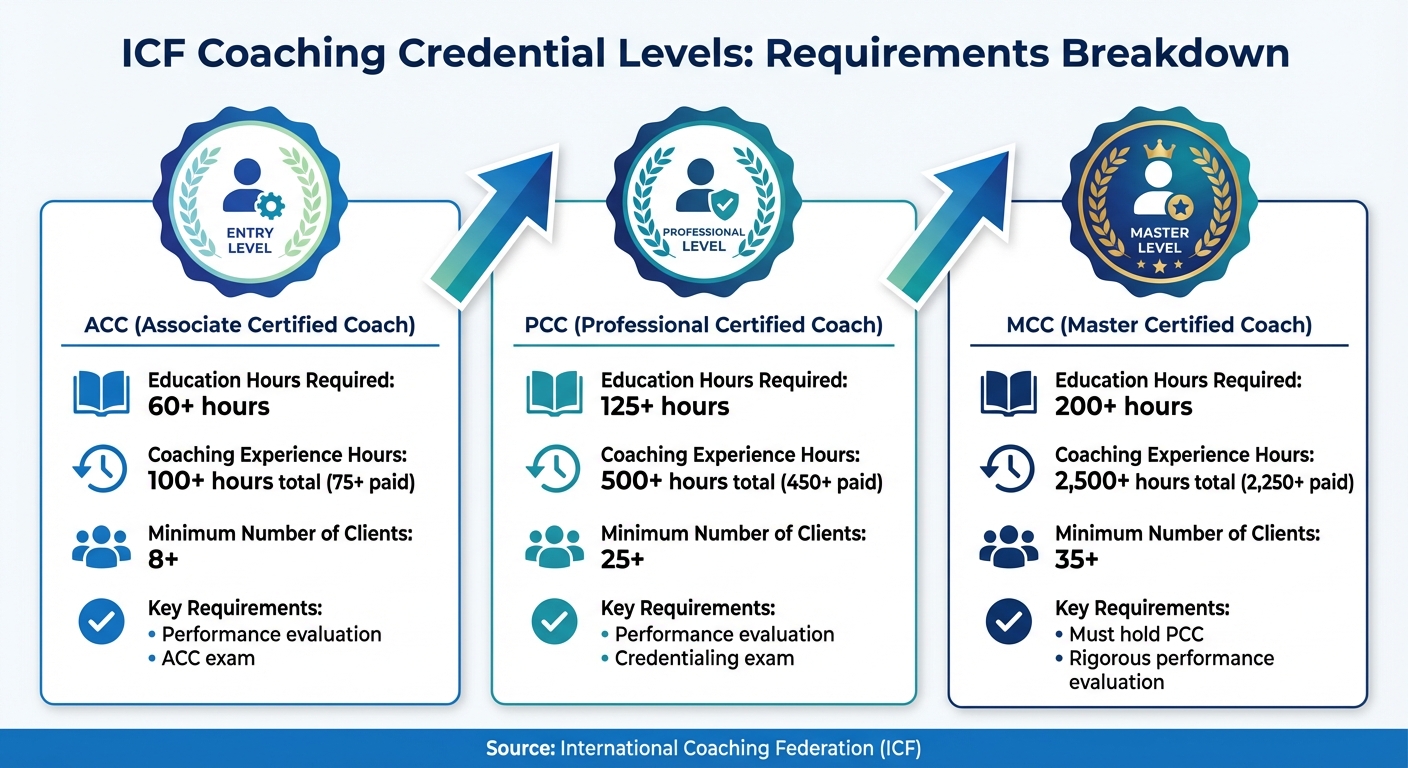
ICF Coaching Credential Levels: Requirements and Experience Hours Comparison
Certifications serve as a testament to a coach's dedication to professional growth and adherence to ethical, evidence-based practices. As the International Coaching Federation (ICF) emphasizes:
"Earning an ICF credential is a pledge to uphold the highest level of professionalism, ethical standards, and continuous development."
The numbers back this up. 85% of coaching clients value professional credentials, and clients working with credentialed coaches report being 28% more satisfied with their experience. In an industry where regulations are sparse, certifications help set qualified professionals apart.
Among these certifications, the International Coaching Federation credentials stand out as the most respected.
Recognized Coaching Certifications
The International Coaching Federation (ICF) is widely regarded as the benchmark for coaching credentials. With over 57,519 members globally as of early 2026, it is the most recognized accrediting body in the field. ICF offers three main levels of credentials, each with specific requirements for education, hands-on coaching experience, mentorship, and performance evaluation:
| Credential Level | Education Hours Required | Coaching Experience Hours | Key Requirements |
|---|---|---|---|
| Associate Certified Coach (ACC) | 60+ hours | 100+ hours | Performance evaluation and ACC exam |
| Professional Certified Coach (PCC) | 125+ hours | 500+ hours | Performance evaluation and Credentialing exam |
| Master Certified Coach (MCC) | 200+ hours | 2,500+ hours | Must hold PCC; rigorous performance evaluation |
To confirm a coach's credentials, check the ICF directory for their status. You can also request their digital badge or certificate and verify it against the issuing body's records. Legitimate ICF-accredited programs include at least 5–6 observed coaching sessions with detailed written feedback.
Be cautious of programs that offer credentials based solely on payment without requiring substantive training. With over 500 training and "certification" programs worldwide, some provide questionable credentials. Author Umesh Venkatesh highlights this issue:
"The biggest challenge facing coaches today is that untrained and incompetent Coaches are damaging the reputation of the industry. The coaching field is unregulated. No license is required. Consequently, anyone can call themselves a Coach."
Specialized Training Programs
For coaches looking to deepen their expertise, specialized training is key. The ICF Advanced Certification in Team Coaching (ACTC), for instance, requires 60+ hours of specialized education, five or more team coaching engagements, and supervised coaching hours. This certification goes beyond individual coaching to demonstrate skills in team dynamics.
Additionally, coaches trained in tools like the Myers-Briggs Type Indicator (MBTI), DiSC, or Gallup Strengths bring data-driven approaches to their work. Training grounded in neuroscience, behavioral psychology, or emotional intelligence offers more structured frameworks compared to methods based solely on motivational theories.
Some professionals pursue dual credentials, combining areas like health and life coaching. Others opt for intensive programs, such as the Certified Life Coach Institute's 3-day course, which provides 70 hours of accredited training. Coaches who earn ICF Continuing Coach Education (CCE) units demonstrate a commitment to staying current in their skills and knowledge.
When considering specialized training, always verify that programs are ICF-accredited. As Oregon State University PACE advises: "If it's not ICF-accredited, think twice."
Coaching Experience and Performance Evidence
Certifications are a great starting point for understanding a coach's qualifications, but real-world experience and proven performance are what truly set exceptional coaches apart. While certifications confirm that a coach has undergone training, verified coaching hours and performance evaluations demonstrate their practical expertise and effectiveness.
The International Coaching Federation (ICF) has clear standards to ensure coaches gain meaningful, diverse experience. For example, ACC-level coaches must log at least 100 hours of coaching (75 of which are paid) with a minimum of 8 clients. PCC-level coaches need 500 hours (450 paid) with 25 clients, and MCC-level coaches must complete 2,500 hours (2,250 paid) with 35 clients. These requirements ensure that coaches have sustained professional relationships and work with a variety of clients, rather than focusing on just one or two individuals. Additionally, the ICF requires recent experience - 25 hours within the last 18 months for ACC and 50 hours for PCC - to ensure coaches stay current with their skills.
Verified Coaching Hours
When assessing a coach's experience, ask for a breakdown of their total coaching hours, the number of clients they've worked with, and the timeframe of their practice. Credentialed coaches are required to maintain detailed, confidential records of their sessions, including client information, dates, and payment status. These records may be subject to random audits by the ICF to confirm their accuracy.
For coaches working within organizations or under third-party contracts where client confidentiality is a concern, you can request a reference letter on official company letterhead. This letter should confirm the number of coaching hours, the number of clients served, and the duration of the engagement. The ICF enforces strict standards, and providing false information during the credentialing process can result in penalties, including a five-year ban on credentialing.
To clarify, one coaching hour equals 60 minutes of live, real-time coaching. This applies regardless of whether the session happens in person, over the phone, or via video conferencing. Shorter sessions count as partial hours (e.g., a 30-minute session equals 0.5 hours). However, activities like training sessions, workshops, mentoring, or consulting - even if they involve coaching skills - do not count toward verified coaching hours.
Once you've reviewed the quantity of coaching hours, the next step is to assess the quality of the coach's performance through formal evaluations.
Performance Evaluations
While coaching hours provide a measure of experience, performance evaluations focus on skill and effectiveness. Coaches pursuing PCC or MCC credentials must submit unedited recordings of coaching sessions (20–60 minutes) along with verbatim transcripts. These are assessed against the ICF's PCC Markers, which evaluate core competencies such as active listening, evoking awareness, and maintaining presence.
The evaluation process goes beyond simply checking off skills - it examines how well the coach engages with clients and creates meaningful impact. As the ICF explains:
"The PCC Performance Evaluation lets you showcase your ability to deliver high-quality coaching that creates meaningful impact."
If you're considering hiring a coach, ask whether they've undergone a formal performance review that included recorded session evaluations. This will help you determine if their skills have been independently validated by trained evaluators, rather than being self-assessed. For team coaches, specifically, it's important to look for evidence of at least five team coaching engagements within the last five years.
| Credential Level | Required Coaching Hours | Minimum Paid Hours | Minimum Number of Clients |
|---|---|---|---|
| ACC | 100+ | 75 | 8+ |
| PCC | 500+ | 450 | 25+ |
| MCC | 2,500+ | 2,250 | 35+ |
Reviews, Testimonials, and References
Certifications and coaching hours tell you what a coach has studied and how much experience they've gained. But testimonials? They give you a glimpse into actual client outcomes. As Keystone Partners puts it:
"Honest feedback from direct client experiences is invaluable".
This kind of feedback shows if a coach’s methods lead to meaningful results, how they handle challenges, and whether their style aligns with what you’re looking for.
Verified Reviews and Ratings
Not all reviews are created equal. The Federal Trade Commission cautions:
"Read success stories and testimonials with skepticism. They might not be true or typical. Glowing success stories may be misleading, and positive reviews can be fabricated".
So, what should you look for? Specificity over generalities. Reliable testimonials focus on measurable changes - like shifts in mindset, improved behaviors, or career growth - rather than vague claims of "life-changing" experiences.
Verifiable identities are another key factor. Check if reviewers can be traced back to professional profiles like LinkedIn, and cross-check testimonials on third-party platforms, such as Google or the ICF Credentialed Coach Finder. Genuine feedback often highlights tangible aspects of a coach’s approach, like their questioning techniques, accountability systems, or strategic tools.
To uncover potential issues, do a quick "scam" search. Type the coach's name or company alongside terms like "review", "scam", or "complaint". If you’re considering a business or investment coach, your state attorney general’s office can help you check for any consumer complaints. These simple steps can help you spot red flags that polished marketing might hide.
Once you’ve reviewed online feedback, the next step is conducting thorough reference checks.
Detailed Reference Checks
Verified reviews are helpful, but direct reference checks provide the clearest picture of a coach’s effectiveness. Ask the coach for contact information of past clients - keeping confidentiality in mind - so you can hear firsthand about their methods and results. A trustworthy coach should have no problem with this. As Louisa Savva, founder of Savva Coaching, explains:
"A qualified coach will welcome these questions and respond transparently without defensiveness".
When speaking with references, ask pointed questions: How did the coach help you reach your goals? What accountability methods did they use? Were their strategies tailored to your needs? What measurable changes did you experience? These conversations can help you determine if the coach’s style and results match your expectations.
Additionally, you can confirm a coach’s credentials through directories from respected organizations like the ICF, EMCC, or Association for Coaching. These registries ensure a coach upholds professional standards and ethical practices. Don’t forget to tap into your own network, too - colleagues may have firsthand recommendations or warnings about coaches who overpromise and underdeliver.
Background Checks and Ethical Compliance
Credentials and testimonials highlight a coach's qualifications and experience, but background checks and ethical standards are what safeguard you from potential misconduct. The United States Olympic and Paralympic Committee underscores this in their Coaching Ethics Code:
"The primary goal [of the Ethics Code] is the welfare and protection of the individuals and groups with whom coaches work."
- United States Olympic and Paralympic Committee
This step becomes even more critical when working with vulnerable groups, such as minors or individuals navigating high-stakes transitions. When combined with verified credentials, a thorough background check ensures you're covering all bases.
Criminal Background Checks
Always request documentation of a criminal background check from a trusted provider. For coaches working with students or athletes, many states mandate fingerprinting and clearance through local school boards or governing organizations. In California, for instance, this is enforced under Education Code sections 33190-33192 and 45125.1.
Annual screenings are equally important. Coaches should undergo these checks every year to maintain safety and compliance. If a coach cannot or will not provide proof of a background check, consider this a serious warning sign.
Ethics and SafeSport Training
Legal clearances are just one part of the equation. Adherence to ethical guidelines further solidifies a coach's credibility. Coaches should align with established codes of conduct, like the ICF Code of Ethics or the USOPC Coaching Ethics Code [31,34]. For instance, ICF credential-holders not only pass an ethics exam but are also subject to oversight by the ICF's Independent Review Board.
For those working with minors, SafeSport training is non-negotiable. This includes completing Minor Athlete Abuse Prevention Policies, which you can verify through the SafeSport Ready™ App or other provided documentation.
The International Coaching Federation reinforces the value of these standards:
"ICF's ethical standards ensure that every ICF member and credential-holder acts with integrity, honesty, and fairness."
- International Coaching Federation
When a coach can provide evidence of a clean background check and up-to-date ethical training, it’s a strong indicator that they take their professional responsibilities seriously.
sbb-itb-3c06305
Coaching Philosophy and Methodology
Credentials can validate a coach’s training, but their philosophy and methodology are what truly determine if they can help you achieve your goals. The International Coaching Federation (ICF) defines coaching as:
"Coaching is partnering with clients in a thought-provoking and creative process that inspires them to maximize their personal and professional potential." - International Coaching Federation
A coach’s philosophy should align with how you learn and grow, ensuring their approach resonates with your needs.
Coaching Methodology
Ask for a written statement outlining the coach’s philosophy. Look for terms like "co-creation" and "client-centered growth", which suggest a collaborative approach rather than one focused on dispensing advice. This type of language indicates a commitment to empowering clients rather than dictating solutions.
Check if their methodology reflects the ICF Core Competencies: Foundation, Co-Creating the Relationship, Communicating Effectively, and Cultivating Learning and Growth. Coaches referencing these areas are adhering to well-established industry standards.
It’s also important that their methods are grounded in evidence. Approaches based on neuroscience, behavioral psychology, or emotional intelligence are particularly effective. A coach should be able to explain the science behind their techniques in clear terms. If they can’t, that’s a warning sign.
Ask how they turn moments of inspiration into lasting changes. A strong methodology includes structured systems for accountability and clear steps to translate insights into action. Without these, coaching sessions may feel energizing but fail to deliver long-term results.
While a solid methodology is critical, having expertise in your specific industry can make coaching even more impactful.
Industry Expertise and Flexibility
A coach with industry-specific knowledge can better understand your professional challenges, terminology, and pressures. Their insights and strategies will feel more relevant, and they’ll be able to use examples and analogies that immediately make sense in your context.
For instance, companies like Intel and TD Bank Group have shown how tailored coaching can lead to measurable improvements. These examples highlight how specialized expertise can directly contribute to achieving meaningful results.
Additionally, assess whether the coach adapts their approach to your unique circumstances. Effective coaching requires flexibility and a willingness to adjust methods to suit each client’s needs. A rigid, one-size-fits-all approach - no matter how credentialed the coach - is unlikely to be effective.
Finally, confirm the coach’s commitment to ongoing professional development. Participation in masterclasses, alumni networks, or industry-specific coaching groups shows they’re staying current and refining their methods based on feedback. Verify that their claimed specialization aligns with their credentials. Certifications like ACC, PCC, or MCC require documented coaching hours in specific areas, so these designations should match their stated expertise.
Red Flags to Avoid
Not every coach you come across is truly qualified. In fact, nearly 40% of coaching clients never check their coach's credentials before starting sessions. With no federal or state regulations on who can call themselves a coach, it's easy for anyone to adopt the title without proper training or experience. This makes it crucial to identify warning signs early.
Lack of Verifiable Credentials
A trustworthy coach should be able to provide clear and specific details about their training. Be wary of vague statements that can't be verified with recognized organizations like the ICF, EMCC, or AC. Claims of using a "proprietary system" or a "proven method" that lack ties to established coaching principles or scientific frameworks, such as behavioral psychology or neuroscience, are major red flags.
Always ask for their certification details - such as the certification number, issuance date, and credential level (e.g., ACC, PCC, or MCC) - and cross-check this information using official resources like the ICF's Credentialed Coach Finder or the EMCC's Find a Coach database. If a coach claims a credential but isn’t listed in these registries, it’s likely the claim is false. As Louisa Savva, Founder of Savva Coaching, explains:
"A qualified coach will welcome these questions and respond transparently without defensiveness".
Be cautious if a coach becomes evasive when asked for verification.
Additionally, check if their credentials are up to date. Many reputable certifications require periodic renewal and continuing education. Coaches practicing with expired credentials might not be aligned with current industry standards. Another warning sign is a complete lack of professional online presence - no LinkedIn profile, website, or published work. In today’s world, this could suggest the individual is an "imposter" or an "Insta-coach".
Aside from credentials, pay attention to the coach’s behavior and sales practices.
Ethical or Professional Violations
Once you've verified a coach’s credentials, take a closer look at their ethical conduct. One major red flag is high-pressure sales tactics. Be cautious of coaches who push you to make quick decisions, use "buy now or lose out" strategies, or request credit card information without providing clear business details. The Federal Trade Commission warns:
"If it promises guaranteed income, large returns, or a 'proven system,' it's likely a scam".
True coaching focuses on guiding clients through self-discovery and personal growth, not offering cookie-cutter solutions or guaranteeing specific results.
It’s also a good idea to search for the coach or their business name alongside terms like "scam", "review", or "complaint" on the FTC website or your state attorney general's office. Check if the coach adheres to a code of ethics, such as the ICF Code of Ethics, which includes an Ethical Conduct Review (ECR) process for handling complaints. Violations of ethical standards can result in penalties, including additional training, mentoring requirements, or even the loss of credentials and membership.
Another common issue is the "upsell" trap. Some coaches lure clients in with low-cost or "free" offers, only to pressure them into spending thousands of dollars on "advanced" mentoring or "exclusive" success strategies. Be wary of coaches who don’t provide a clear written agreement, fail to respect confidentiality, or impose their own advice rather than facilitating client-driven solutions. These behaviors indicate unethical practices.
Using coachtrusted for Verification
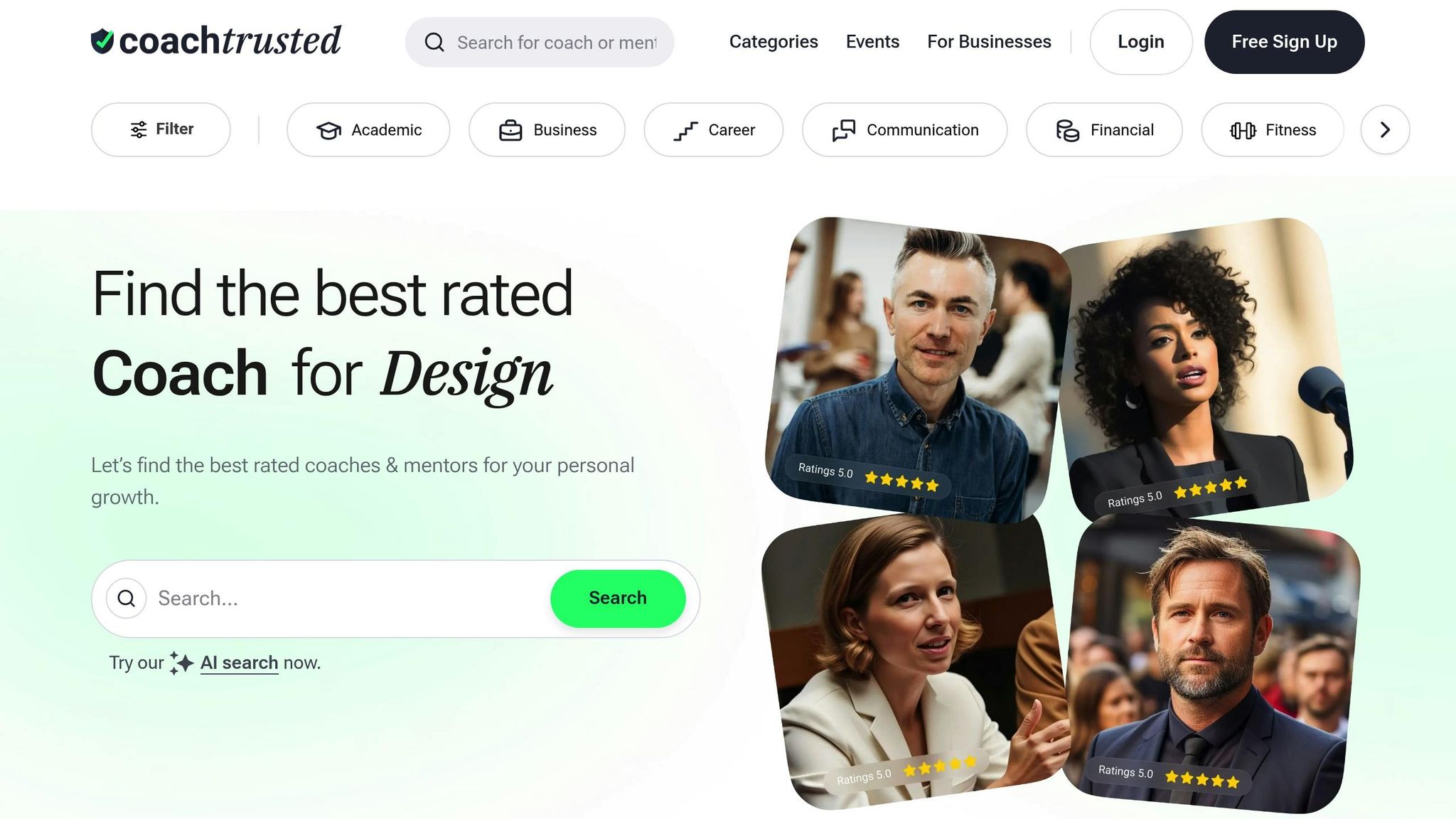
Once you've identified potential red flags and understood the essential verification steps, it's time to explore vetted coaching plans that make the process easier. coachtrusted offers a streamlined solution by providing a directory of pre-vetted coaches who meet strict verification standards.
Verified Profiles and Reviews
Every coach listed on coachtrusted undergoes a thorough vetting process, including reference checks and credential validation. To qualify, coaches must have:
- A minimum of 100 hours of formal coaching experience.
- Recognized credentials from respected organizations like ICF, EMCC, or AC.
- Active memberships in professional coaching bodies.
This ensures you’re not connecting with someone who merely claims to be a coach without the proper qualifications. As the platform explains:
"When you choose a TCD coach or coach supervisor, you can feel confident in the knowledge that they have been personally verified and reference checked".
Additionally, all coaches are required to carry valid insurance and commit to regular coaching supervision, reinforcing their commitment to maintaining high professional and ethical standards.
Smart Search and Filters
coachtrusted makes it simple to find the right coach for your needs with smart search filters. You can narrow your search based on coaching specialties - like Leadership, Executive, Team, Performance, Career coaching, or Coaching Supervision - as well as by credential levels, years of experience, and location.
For an even more tailored experience, the platform offers a Coach Matching Service. This service helps you quickly identify a coach who aligns with your specific goals and meets all the verified criteria, saving you time and effort in your search.
Conclusion
Choosing the right coach can influence your personal growth, career trajectory, and financial well-being. However, with the coaching industry being mostly unregulated - where anyone can call themselves a "coach" regardless of their qualifications - verification becomes crucial.
Skipping this step can lead to wasted time and money, as many clients fall into the trap of hiring unqualified individuals. That’s why following a thorough verification process is so important. This article’s checklist highlights key steps: look for recognized credentials, ensure the coach has substantial experience, review verified testimonials and references, and make sure their methodology aligns with your goals. As professional coach Louisa Savva puts it:
"The coaching relationship is ultimately built on trust. By verifying credentials at the outset, you establish a solid foundation for that trust to flourish throughout your work together."
Taking these steps not only protects your investment but also sets the stage for a productive coaching partnership. Platforms like coachtrusted make this process easier by consolidating verification steps into one streamlined system. Every coach listed on their platform has undergone rigorous checks, including reference validation, credential confirmation, and meeting professional standards like minimum experience, active memberships, and valid insurance. This approach ensures you can focus on building trust and achieving your goals with confidence.
FAQs
How can I verify that a coach is qualified and trustworthy?
To determine if a coach is qualified and trustworthy, start by looking into their certifications from well-known organizations such as the International Coaching Federation (ICF) or other reputable accrediting bodies. Don’t hesitate to ask for their certification details and verify these directly with the organization that issued them.
It’s also important to dig into their training and experience. Ask about the coaching programs they’ve completed, the number of clients they’ve worked with, and the tools or methods they rely on. Request professional references and read through client testimonials to gauge their effectiveness and the satisfaction of those they’ve worked with.
Be mindful of warning signs, like unclear claims about their qualifications or a lack of verifiable details. Taking these steps will help you evaluate whether a coach aligns with your goals and can genuinely support your personal or professional development.
What warning signs should I watch for when selecting a coach?
When selecting a coach, it's important to stay alert for certain warning signs. Be cautious of vague promises like "life-changing results" that lack clear strategies or actionable plans. Another red flag is the absence of credentials or affiliations with well-known organizations, which could point to insufficient qualifications.
Watch out for high-pressure sales tactics, such as "limited-time offers" or demands for large upfront payments - these often hint at unethical practices. Similarly, unclear pricing or refund policies can indicate a lack of transparency, making it difficult to trust the coach's intentions. If a coach has no verifiable testimonials or references, it becomes challenging to gauge their credibility or track record.
Lastly, steer clear of anyone making bold guarantees, like "you’ll double your income in 30 days." These claims are typically unrealistic and designed to mislead. Staying mindful of these red flags will help you choose a coach who is genuinely committed to supporting your personal growth.
Why are certifications like those from the ICF important when choosing a coach?
Certifications from organizations such as the International Coaching Federation (ICF) indicate that a coach has completed rigorous training and adheres to strict standards in areas like education, experience, ethics, and essential skills. This ensures they’re equipped to support clients effectively and with professionalism.
Research highlights that clients often feel more confident and satisfied when working with certified coaches. These credentials serve as a trusted marker of quality, signaling the coach’s dedication to maintaining high standards and continuing their professional growth.