Career Development
How Much Does Personal Coaching Cost in 2025?
January 5, 2026
12 min read
How Much Does Personal Coaching Cost in 2025?
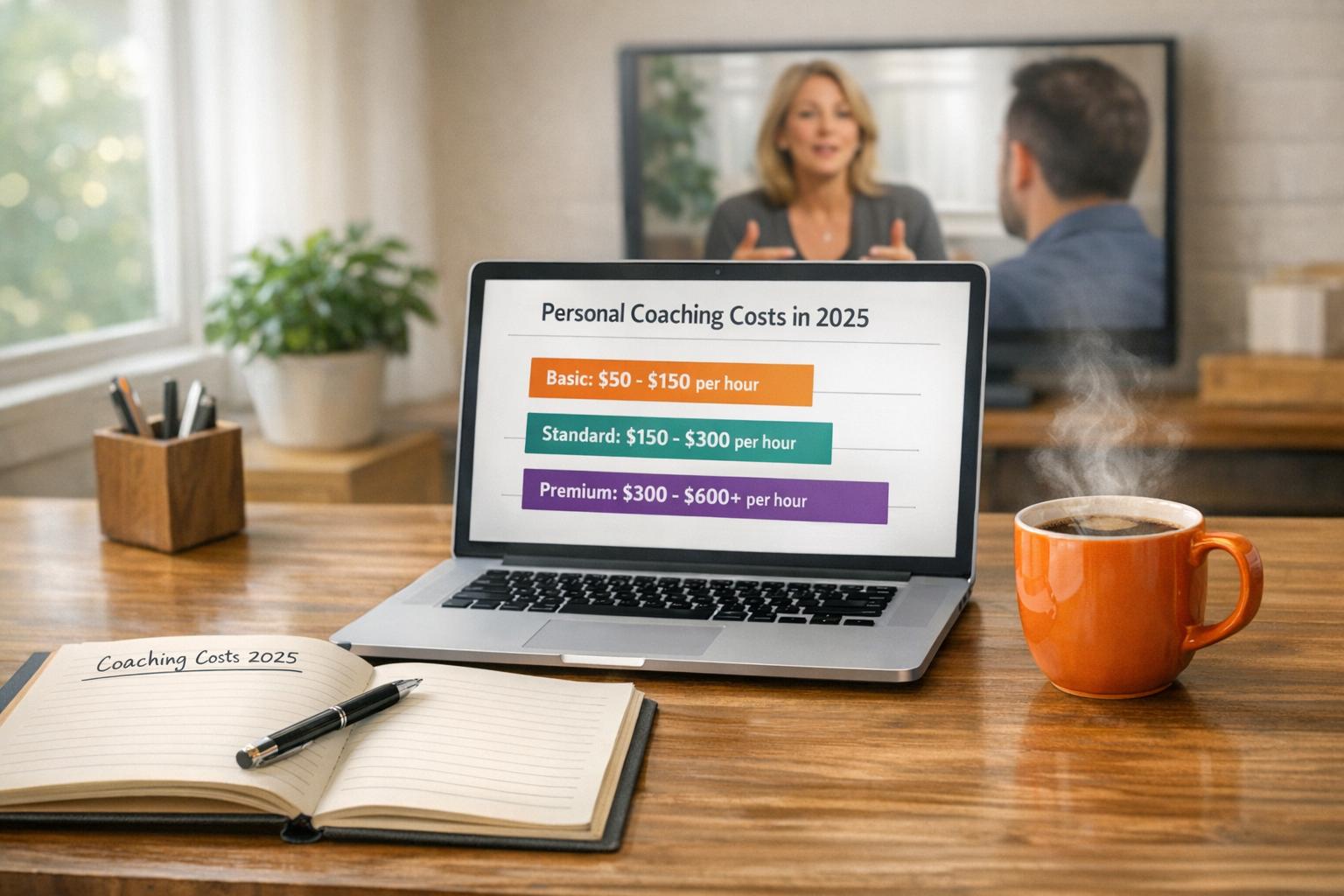
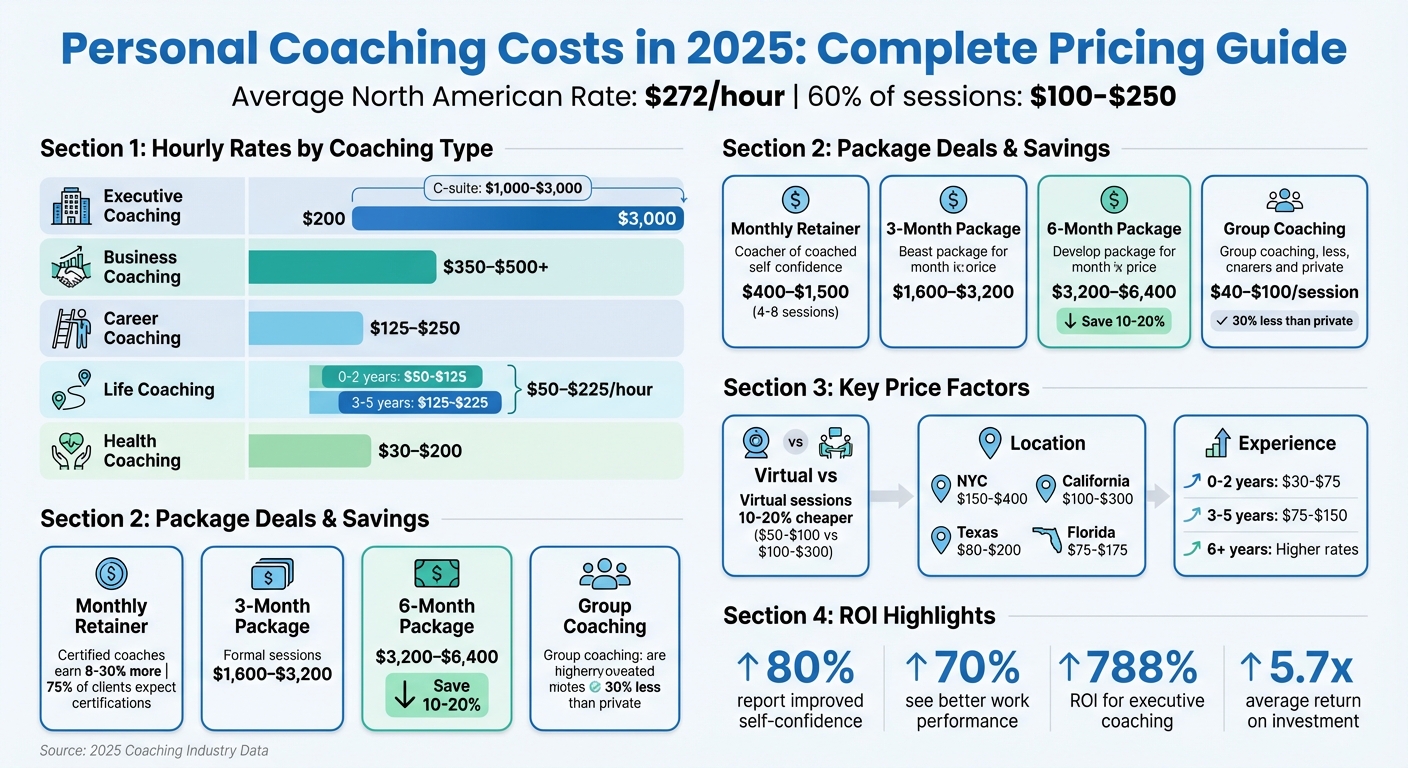
Personal coaching in 2025 ranged from $30 to over $3,000 per session, depending on the coach’s expertise, service type, and delivery format. On average, clients in North America paid $272 per hour, with 60% of sessions priced between $100 and $250. Here’s a quick breakdown:
- Executive Coaching: $200–$3,000 per hour (highest rates for C-suite clients).
- Career Coaching: $125–$250 per hour.
- Business Coaching: $350–$500+ per hour.
- Life Coaching: $50–$225 per hour, depending on experience.
- Health Coaching: $30–$200 per hour.
Many coaches offered packages to reduce costs, such as:
- Monthly retainers: $400–$1,500 for 4–8 sessions.
- Six-month programs: $3,200–$6,400, often saving 10–20% compared to individual bookings.
- Group coaching: $40–$100 per session.
Factors like certifications, niche expertise, and session format (virtual vs. in-person) significantly influenced pricing. Virtual sessions were generally 10–20% cheaper, making them a budget-friendly option. When choosing a coach, weigh their qualifications, client reviews, and pricing models against your goals.
Personal Coaching Costs by Type in 2025: Hourly Rates and Package Pricing
How Much Does Coaching REALLY Cost? ($60 vs $50K in 2025)
sbb-itb-3c06305
What Personal Coaching Costs in 2025
The cost of personal coaching in 2025 depends largely on the type of service provided. In North America, the average coaching fee is $272 per hour. Around 60% of clients pay between $100 and $250 per session, which is a typical range for mid-level coaching. Here’s a closer look at rates across different coaching categories.
Hourly Rates by Coaching Type
Executive and leadership coaching commands some of the highest rates, ranging from $200 to $800 per hour. For specialized C-suite coaching, prices can climb to $1,000–$3,000 per hour. Companies investing in these services often see a return of 788% through improved productivity and employee retention.
Career coaching is more moderately priced, typically between $125 and $250 per hour. Business and corporate coaching averages $350 to $500 or more per hour. On the other hand, health and wellness coaching can range from $30 to over $200 per hour, depending on the coach’s qualifications. For life coaching, rates vary by experience: entry-level coaches charge $50 to $125 per hour, while mid-level practitioners charge $125 to $225.
"2025 is a separation year. Clients don't buy 'sessions'; they buy predictable outcomes, backed by credentials, proof, and friction-free delivery." – Safwan Azeem, Author, ANHCO
Virtual coaching sessions tend to be more affordable, costing between $50 and $100, while in-person sessions typically fall between $100 and $300. Certification plays a significant role in pricing, with certified coaches earning 8% to 30% more than their uncertified counterparts. Additionally, 75% of clients now expect their coach to hold certifications.
Package Deals and Subscription Pricing
Many coaches now offer package deals that focus on delivering specific outcomes. These packages often provide more value compared to hourly rates. For example, monthly retainers with 4 to 8 sessions typically cost between $400 and $1,500, though executive-level packages can exceed $5,000. A 3-month package generally ranges from $1,600 to $3,200, while a 6-month program costs between $3,200 and $6,400, often saving clients 10% to 20% compared to booking individual sessions.
Mary Battista, owner of Prairie Health Companion, offers a six-month health coaching program for $1,500. This includes two 60-minute sessions per month, email check-ins, healthy recipes, a natural food store tour, and a two-hour cooking class.
Merlin Coaching in Melrose, MA, provides tiered six-month life coaching packages: one session per month for $630 (saving $120), bi-weekly sessions for $1,170 (saving $330), or weekly sessions for $1,950 (saving $1,050).
Group coaching is a more budget-friendly option, with individual rates between $40 and $100 - roughly 30% less than private coaching. A six-session virtual group package might cost between $200 and $650.
What Affects Coaching Prices in 2025
Coaching prices in 2025 are shaped by several key factors. Knowing what influences these rates can help you decide if a coach's pricing matches their expertise and the results you’re aiming for. These elements come together to create a pricing structure that balances value for both clients and coaches.
Experience and Certification
A coach’s level of experience and professional certifications directly impact their fees. Entry-level coaches with little experience (0–2 years) typically charge between $30 and $75 per hour as they work to establish their practice. Those with moderate experience (3–5 years) often set rates between $75 and $150 per hour, while seasoned experts with over six years of experience command even higher fees. Executive coaches - who cater to top-level clients like CEOs - can charge anywhere from $1,000 to $3,000 per hour due to their advanced training in leadership psychology and their proven ability to deliver results.
Certifications from reputable organizations like the International Coaching Federation (ICF), NASM, or ACE also play a big role in pricing. Coaches with these credentials often attract clients who are willing to pay more for the assurance of quality.
"Your price should reflect your expertise, not just your time. The value you provide as an online personal trainer goes beyond workouts - it's about guidance, accountability, and transformation." – FitBudd
When comparing coaching options, these factors are essential to consider.
Specialization and Niche Focus
Specialization is another major factor in determining coaching fees. Coaches who focus on specific niches often charge higher rates due to the specialized knowledge and training they bring to the table. For instance, business and executive coaches who specialize in areas like digital transformation or leadership psychology often set their rates well above average, reflecting the higher financial returns their clients anticipate.
In the health and wellness space, coaches with expertise in areas like nutrition, emotional well-being, or tailored diet planning tend to charge more than general fitness trainers. For example, Prairie Health Companion charges $110 per hour for health coaching, compared to $95 per hour for standard personal training. Similarly, career coaching rates vary depending on the complexity of the services offered. General resume assistance might cost between $75 and $200 per hour, while executive career transition coaching can range from $200 to $500 per hour.
This focus on niche expertise not only justifies higher rates but also emphasizes the value of aligning costs with expected outcomes.
Session Length and Delivery Format
The length and format of coaching sessions also influence pricing. While the standard session is 60 minutes, variations like shorter 30-minute check-ins or extended 90-minute deep dives can alter the cost. Virtual coaching tends to be more affordable than in-person sessions, as it eliminates expenses related to office space or travel.
Group coaching is another cost-effective option, typically priced at $40 to $100 per person - about 30% less than private one-on-one sessions.
"In-person sessions cost extra due to office rent or travel fees." – Lessons.com
These differences in session structure and delivery format add flexibility to pricing, allowing clients to choose options that best fit their budget and needs.
How Location and Platforms Affect Pricing
Where a coach is located and how they deliver their services can greatly influence their pricing. Urban areas tend to command higher fees compared to rural locations, and the growing popularity of online platforms has introduced more budget-friendly options for clients.
Regional Price Differences
Coaching fees across the United States vary widely, driven by differences in the cost of living and local demand. For instance, in New York, life coaching sessions range from $150 to $400 per hour, while in California, rates typically fall between $100 and $300. In the Midwest, Illinois coaches charge between $90 and $250, while in Texas, rates are generally lower, averaging $80 to $200 per hour. Over in Florida, the cost is even more affordable, with sessions priced between $75 and $175.
These regional differences aren’t just about demand - they also reflect the operational costs coaches face in urban hubs. Expenses like office rent, transportation, and other overhead costs all play a role in shaping the final price clients pay.
Online coaching has introduced a more cost-effective alternative. Virtual sessions are generally 10% to 20% cheaper than in-person meetings, primarily because they eliminate expenses like travel and office rentals. On average, online coaching costs between $70 and $80 per session, compared to about $90 for face-to-face sessions. This shift has been particularly beneficial for clients in rural areas, giving them access to specialized coaches who might otherwise be unavailable locally - and often at a more affordable rate than urban, in-person options. Platforms like Coachtrusted leverage these trends to offer value-driven solutions for both clients and coaches.
How Coachtrusted Pricing Works

Coachtrusted takes the cost-saving benefits of online coaching a step further with its tiered membership model, designed to support coaches at all stages of their careers. The platform offers three membership plans, each tailored to different needs:
- Free Plan: Includes essential features like a basic profile, contact buttons, a standard dashboard, and social media integrations - perfect for coaches just starting out.
- Premium Plan: At $30 per month, this plan enhances visibility with tools like custom buttons, image and video uploads, and access to the platform's advertising system.
- Professional Plan: This custom-priced option is geared toward coaches aiming for significant growth. It includes advanced features like live chat, expert verification, marketing and sales support, and even personalized blog posts.
This flexible structure allows coaches to choose a plan that aligns with their current business stage. New coaches can start with the free plan to build their client base, upgrading as their practice expands. Importantly, Coachtrusted doesn’t set client pricing; instead, it equips coaches with tools to showcase their expertise and attract the right clients.
For clients, the platform offers verified profiles, user reviews, and smart search features to help them find coaches that align with their goals and budget - no matter where they’re located. This approach bridges the gap between clients and coaches, making it easier for both to connect and succeed.
How to Assess Coaching Value
Evaluating coaching value goes beyond just comparing prices. It’s about balancing the cost with the potential benefits - both measurable and less tangible. Here’s how to make that assessment.
Weighing Cost Against Benefits
Think about the cost of doing nothing. For instance, avoiding a career change might mean missing out on a $10,000+ annual salary increase. Prolonged stress could also lead to increased health-related expenses. As Don N. Markland, Co-CEO of Noomii.com, asks, "What's the cost of staying stuck?".
The numbers speak for themselves: 80% of coaching clients report improved self-confidence, 70% see better work performance, and companies often experience a return of 5.7 times their coaching investment. Individual success stories include promotions that bring $10,000+ salary hikes or stress reductions saving over $2,000 annually, with many clients seeing a return on investment in just a few weeks.
For example, compare a six-month coaching package priced at $3,600 to outcomes like a promotion increasing annual earnings by $10,000 or cutting $2,000 in yearly stress-related expenses. When coaching goals are tied to financial improvements, the investment often feels more justified.
Once you’ve identified the potential value, the next step is to carefully compare coaches based on these criteria.
How to Research and Compare Coaches
Take advantage of free consultations - usually 15 to 30 minutes long - to gauge whether a coach’s personality and approach align with your needs. Use this time to ask about their client success stories, ongoing training, and the type of support they provide between sessions.
Verify that the coach holds certifications from respected organizations like the International Coach Federation (ICF) or the National Board for Health & Wellness Coaching (NBHWC). Seek out independent reviews and real success stories, particularly from clients with goals similar to yours, instead of relying solely on testimonials featured on the coach’s website.
When comparing pricing models, consider the options. Hourly rates offer flexibility, but monthly packages spanning three to six months often come with 10% to 20% discounts and better accountability. If budget constraints are a concern, group coaching sessions - typically costing $40 to $100 per meeting - can be a more affordable alternative.
Be mindful of warning signs such as vague promises or unverified testimonials. Trust your instincts; a strong personal connection is essential. By taking the time to evaluate carefully, you’ll increase your chances of finding a coach whose expertise and style align with your goals. Platforms like Coachtrusted can make this process easier by providing verified profiles, user reviews, and smart search tools to help you find the best match for your needs and budget.
Conclusion
Coaching fees in 2025 vary widely, starting at around $30 per hour for health coaching and climbing to over $3,000 for high-level executive sessions. The cost often hinges on the coach's expertise and how the sessions are delivered. While hourly rates offer flexibility, longer-term packages (typically three to six months) often include a 10%–20% discount and encourage better accountability for achieving lasting results.
"Every dollar you spend on a coach is a signal that you are serious about your growth, your goals, and your future".
The benefits of coaching speak for themselves. With 80% of clients reporting improved self-confidence and 70% experiencing enhanced work performance, coaching can lead to meaningful returns - whether through career advancement, reduced stress, or a clearer sense of purpose.
When choosing a coach, it’s essential to weigh the cost against the value they bring. Look for credentials like those from the International Coach Federation and take advantage of free consultations to ensure the coach is a good match for your needs. Ultimately, focus on the quality of results rather than opting for the lowest price.
FAQs
What affects the cost of personal coaching in 2025?
The cost of personal coaching in 2025 will vary based on several important factors. One of the biggest influences is the coach's experience and qualifications - coaches with extensive expertise or specialized skills often charge higher fees. The coaching niche you’re interested in, whether it’s career advancement, wellness, or leadership development, also plays a significant role. Additionally, the session format - whether it’s in-person, virtual, group, or one-on-one - can affect pricing.
Other elements to consider include the length of each session, the demand in your region, and your location. Some coaches might offer added services, such as customized plans or travel accommodations, which could increase the overall cost. Pricing models typically include hourly rates, bundled packages, or subscription plans, giving clients flexibility to choose what aligns with their goals and budget. By understanding these factors, you’ll be better equipped to find a coaching service that meets your needs.
Are virtual coaching sessions more affordable and effective than in-person ones?
Virtual coaching sessions offer a level of convenience that's hard to beat. They let clients connect with coaches from virtually anywhere, eliminating the need to travel. This setup also opens the door to working with a broader range of specialists, no matter where they’re located.
As for costs, coaching fees in the U.S. for 2025 typically fall between $75 and $300 per session, with the average hovering around $90 per session. These rates apply whether you choose virtual or in-person sessions.
When it comes to effectiveness, research hasn’t shown a big difference between virtual and face-to-face coaching. Both formats can deliver strong results, but much depends on the coach’s skills and how engaged the client is. In the end, the best choice often boils down to what works best for your schedule, location, and personal preferences.
Should I choose individual coaching sessions or a package deal?
Deciding between individual coaching sessions and package deals comes down to your goals, budget, and how much commitment you’re ready to make.
Individual sessions work well if you’re new to coaching or need flexibility. These sessions generally run between $75 and $200 each, depending on the coach’s expertise and focus area. They’re a great way to dip your toes in without committing to a long-term plan.
On the flip side, package deals are often a better fit for those seeking ongoing support. For instance, a three-session bundle might cost anywhere from $225 to $500. If you’re looking at a more intensive program, like an 8–12-week package, expect to pay between $600 and $1,500. Packages often come with extras like progress tracking, additional resources, or support between sessions, making them a smart choice for bigger goals like a career change or personal growth.
Ultimately, your decision should align with your budget and the type of support you need. If you want consistent guidance and a structured plan, a package deal could be the way to go. If you’re after short-term advice or prefer to keep things flexible, individual sessions might be your best bet.