Career Development
Top Coaching Specialties: Which One Fits You?
January 12, 2026
13 min read

Top Coaching Specialties: Which One Fits You?
Looking for the right coaching specialty? Here's a quick breakdown:
- Life Coaching: Focuses on personal growth, navigating transitions, and achieving balance. Average rates: $75–$300/hour.
- Executive Coaching: Targets leadership skills for senior professionals. High ROI for businesses, with rates often exceeding $200/hour.
- Career Coaching: Helps with resumes, interviews, and career transitions. Rates range from $75–$500/hour.
- Health Coaching: Aims at lifestyle changes like weight loss and stress management. Costs: $100–$300/hour.
Each specialty caters to specific needs and goals. Whether you're pursuing personal development, leadership growth, career advancement, or wellness, there's a coaching path for you. Choose based on your interests and the challenges you want to help others tackle.
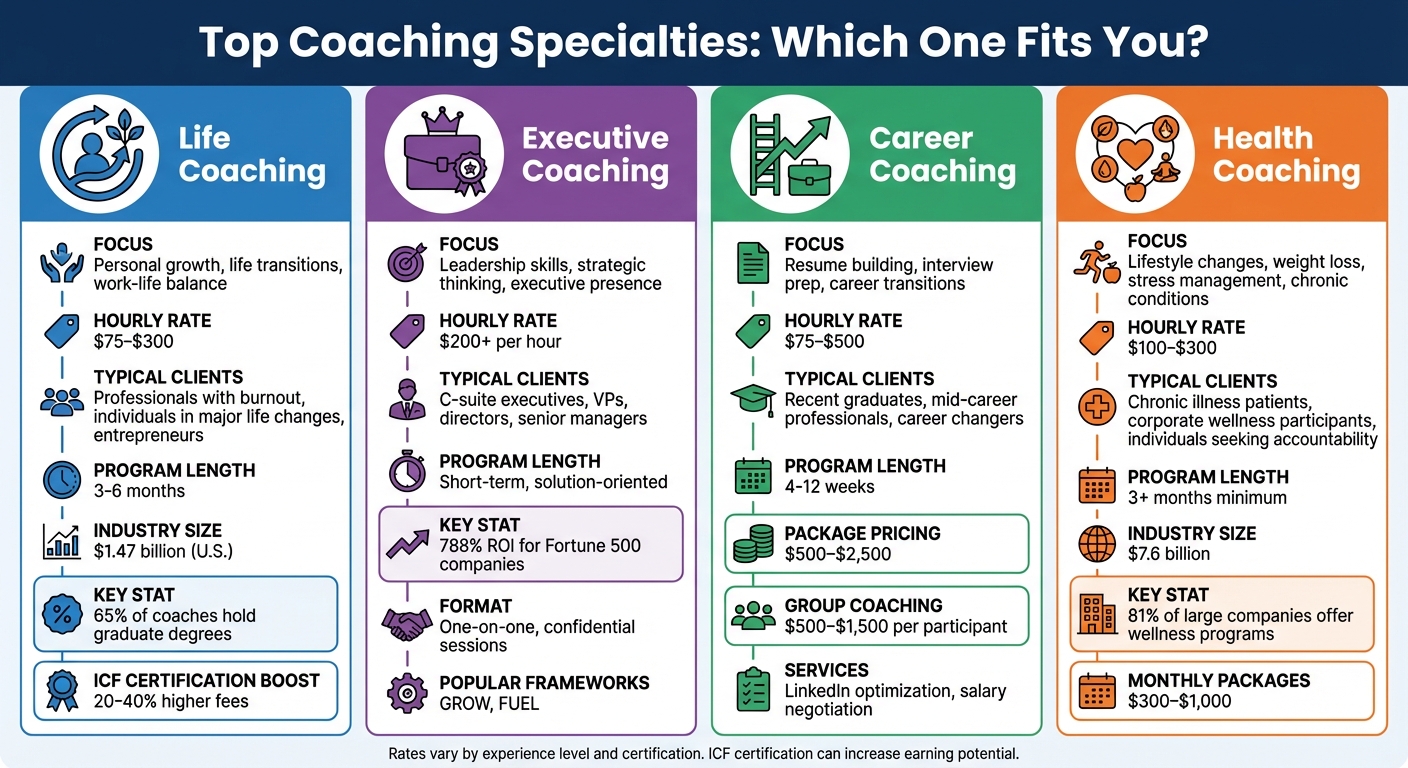
Coaching Specialties Comparison: Rates, Clients, and Key Features
1. Life Coaching
Life coaching helps individuals who feel stuck or are eager to grow personally and professionally. Unlike therapy, which often delves into past experiences, life coaching focuses on future goals and actionable steps.
Primary Client Goals
Clients typically seek life coaching to clarify their core values, create a vision for their future, and navigate significant life transitions like divorce, relocation, or career changes. Many also aim to boost self-confidence, strike a better work-life balance, and improve time management.
Ideal Coach Background
Life coaches often come from fields such as psychology, counseling, or social work, with around 65% holding a graduate degree. The most effective coaches are skilled listeners, possess strong emotional awareness, and ask thought-provoking questions that encourage self-reflection. Traits like curiosity, openness, and resilience are vital. Additionally, certification from the International Coaching Federation (ICF) can allow coaches to charge 20% to 40% higher fees.
Typical Clients
Life coaching attracts a wide range of clients, including professionals battling burnout, individuals going through major life changes like retirement or loss, and entrepreneurs seeking clarity in their goals. These clients are generally high-functioning individuals who don’t require clinical intervention but benefit from structured guidance and motivation. In the U.S. alone, the life coaching industry generates over $1.47 billion annually.
Common Program Formats
Coaching programs usually run for three to six months, with sessions held weekly or bi-weekly, often via video platforms like Zoom. Some coaches also provide group sessions or asynchronous support through text or voice notes. The focus is always on practical, actionable strategies that drive progress.
Pricing Norms
In North America, life coaching sessions average $272 per hour, with rates ranging from $75 to $300. Multi-session packages spanning four to twelve weeks typically cost between $500 and $5,000. Entry-level coaches may earn around $25 per hour, while experienced professionals can charge up to $70 per hour.
Next, we’ll explore how executive coaching builds on these foundations to target leadership and organizational growth.
2. Executive Coaching
Executive coaching is designed for senior leaders - think C-suite executives, VPs, and directors - who need a confidential partner to navigate high-stakes decisions and strategic challenges. Unlike general coaching, this approach hones in on leadership-specific skills like strategic thinking, emotional intelligence, conflict resolution, and executive presence. Timothy Tiryaki, a Professional Executive Coach, puts it this way:
"Executive coaching helps the leader as a sounding board, reflecting on current and upcoming situations, brainstorming and ideating on strategic directions, executive presence, and communication."
This sharp focus on leadership sets it apart from other coaching specialties.
Primary Client Goals
Leaders turn to executive coaching to refine their decision-making, better manage power dynamics, and amplify their organizational influence. It’s not just about personal growth - it often sparks broader change, influencing company culture and strengthening leadership across the board. In fact, a survey of Fortune 500 companies revealed a staggering 788% return on investment from executive coaching.
Ideal Coach Background
Top-notch executive coaches often bring a mix of leadership experience and a strong understanding of human behavior. Many have backgrounds as licensed psychologists or counselors, while others have held senior roles in HR, organizational development, or management. Key traits include emotional intelligence, resilience, and exceptional listening skills. The best coaches are lifelong learners and prioritize their clients' success above all else.
Typical Clients
Executive coaching caters to a diverse range of professionals, from middle managers aiming for senior roles to senior directors overseeing large teams, and high-level executives like CEOs, Presidents, and CFOs. These leaders face unique challenges tied to their responsibilities, making the objectivity and insight of coaching invaluable. Since the COVID-19 pandemic reshaped workplace dynamics, demand for executive coaching has surged.
Common Program Formats
Executive coaching usually takes the form of one-on-one sessions tailored to immediate and future challenges. Popular frameworks like GROW (Goal, Reality, Options, Will) or FUEL help keep the sessions focused and actionable. Coaches often incorporate psychometric tools and leadership assessments to provide data-driven insights. Programs are typically short-term, solution-oriented, and highly flexible, with many sessions conducted virtually to accommodate busy schedules. Confidentiality remains a cornerstone of this process.
Pricing Norms
Hourly rates for executive coaching vary depending on the coach's credentials and the seniority of the client. However, the real measure of value lies in its impact on organizational performance. Studies highlighting an ROI of nearly eight times the initial investment underscore why these services command premium pricing. Coaches certified at the Professional or Master levels by the International Coach Federation often charge the highest rates, reflecting their expertise in guiding leaders through high-stakes challenges.
3. Career Coaching
Career coaching is all about helping individuals grow professionally and succeed in their careers. While executive coaching zooms in on leadership skills, career coaching caters to a broader audience - everyone from fresh graduates to seasoned managers. Andrea Fruhling, a Professional Career and Organizational Coach, puts it perfectly:
"Whatever age and stage we're at, being able to learn about who you are, and how you make career-focused decisions is an essential skill that is necessary throughout life."
This type of coaching offers guidance for a variety of career challenges, whether it’s making a big career switch, negotiating a job offer, or dealing with burnout. The focus here is on practical, actionable steps that move clients forward in their professional journeys.
Primary Client Goals
Career coaching is designed to help clients achieve specific outcomes. Some of the most common goals include refining resumes, improving LinkedIn profiles, and getting ready for important interviews. Many clients seek career coaching during pivotal moments, like changing industries, returning to work after a break, or aiming for a promotion. It’s also a go-to resource for navigating workplace issues, such as dealing with difficult colleagues or finding a better work-life balance.
Ideal Coach Background
Career coaches come from a variety of professional backgrounds, but certain experiences stand out. Many have worked in human resources, recruitment, or leadership roles in specific industries. Credentials are also key, with certifications from organizations like the International Coaching Federation (ICF), Certified Professional Career Coach (CPCC), or Board Certified Coach (BCC) being highly valued. Beyond formal qualifications, the best career coaches excel at listening, showing empathy, and asking the right questions to help clients uncover their potential.
Typical Clients
The range of clients in career coaching is broad. It includes recent graduates who are just starting to build their professional identity, as well as mid-career professionals looking to reinvent themselves or tackle new challenges.
Common Program Formats
Career coaching sessions are usually one-on-one and can be conducted either virtually or in person. These sessions focus on tackling specific challenges, like transitioning to a new role or switching industries. For those seeking a more budget-friendly option, group coaching is available. These group sessions not only save costs but also provide a collaborative setting to work on skills like resume building and interview techniques. Additionally, many coaches offer structured programs that last between four and twelve weeks, often delivered through virtual platforms, making them accessible from anywhere.
Pricing Norms
Hourly rates for career coaching typically fall between $75 and $500. For high-pressure situations, such as managing burnout or navigating an executive-level transition, rates usually range from $200 to $350 per hour. Many coaches also provide package deals for multi-week programs, which cost between $500 and $2,500. Group coaching sessions are another option, often priced between $500 and $1,500 per participant.
sbb-itb-3c06305
4. Health Coaching
Health coaching focuses on improving overall well-being by encouraging proactive lifestyle changes, complementing other coaching niches like life, executive, and career coaching.
At its core, health coaching helps clients establish lasting habits around exercise, nutrition, and health management. From addressing chronic conditions like diabetes and hypertension to improving sleep and reducing stress, health coaches tackle a broad range of concerns. As the Cleveland Clinic puts it:
"A health coach is your personal health guide, mentor and supporter. They help you make lifestyle changes to improve your physical and emotional health."
This field has grown into a $7.6 billion industry, with 81% of large companies offering wellness programs. Studies show health coaching can lead to measurable improvements in areas like blood pressure, cholesterol, and blood sugar levels. Below, we’ll explore what health coaching entails, from client goals to pricing.
Primary Client Goals
Health coaching clients often pursue specific, actionable outcomes. Common goals include weight loss, managing chronic conditions like diabetes or hypertension, improving nutrition, developing better sleep habits, and reducing stress. Many clients come through physician referrals, using coaching to bridge the gap between medical advice and practical lifestyle changes. Others join via corporate wellness programs or seek help independently.
Ideal Coach Background
Health coaches often bring expertise from fields like healthcare, fitness, or nutrition, paired with training in behavioral change methods such as Motivational Interviewing or Cognitive Behavioral Therapy (CBT). While the industry isn’t heavily regulated, many reputable coaches hold certifications from organizations like the National Board for Health & Wellness Coaching (NBHWC) or the National Society of Health Coaches (NSHC).
ACE Certified Health Coach Niki Campbell explains:
"My ACE Certification provides me serious credibility. There are so many people calling themselves 'coaches' out there but they're lacking the credentials."
In addition to credentials, successful health coaches possess empathy and strong listening skills, creating a judgment-free environment where clients feel supported.
Typical Clients
Health coaches work with a wide variety of individuals, including those managing chronic illnesses who need help implementing their doctor’s recommendations. Others include employees in corporate wellness programs or individuals looking for accountability to maintain healthier habits. Coaches are particularly beneficial for clients facing challenges like food insecurity, limited access to safe exercise spaces, or demanding caregiving responsibilities.
Common Program Formats
Health coaching programs usually last at least three months to give clients time to establish new habits. Sessions range from 15 to 60 minutes and can take place virtually via platforms like Zoom, over the phone, or in person.
One-on-one coaching is the most common format, offering personalized action plans tailored to individual goals. Group coaching is also popular, especially in corporate settings where peer support can help address shared challenges like stress or weight management. Between sessions, clients might complete "homework", such as journaling or creating action plans, to keep up their progress.
Pricing Norms
Health coaching typically costs $100 to $300 per hour, with many coaches offering monthly packages priced between $300 and $1,000. These services are generally not covered by standard health insurance. The median annual salary for health education specialists, which includes health coaches, is approximately $63,000, and the field is expected to grow by 4% from 2024 to 2034.
Pros and Cons of Each Specialty
Let’s take a closer look at the strengths and challenges of each coaching specialty. The right choice often comes down to aligning your passion with the practical realities of the field.
Life Coaching focuses on personal growth and helping clients achieve life satisfaction. It’s particularly effective for guiding people through major transitions, improving their work-life balance, or pursuing self-improvement. However, the lack of industry regulation means you’ll need to invest heavily in self-promotion and marketing, as you can’t rely on insurance billing to attract clients.
Executive Coaching stands out for its high earning potential and the measurable value it delivers to organizations. It’s ideal for working with senior leaders, entrepreneurs, or middle managers aiming for promotions. That said, the environment can be intense, requiring you to navigate organizational politics and deliver results under pressure.
Career Coaching provides tangible benefits like resume writing and interview preparation, making it easier to demonstrate value to clients. This specialty is perfect for recent graduates, career changers, or professionals feeling stuck in their current roles. On the flip side, staying competitive means keeping up with ever-changing industry trends in a crowded market.
Health Coaching caters to the rising demand for preventive wellness and sustainable lifestyle changes. It’s a great fit for clients looking to lose weight, manage stress, or address chronic health conditions. But this niche often requires collaboration with healthcare providers and offers a narrower focus compared to life coaching.
| Specialty | Key Strengths | Primary Challenges | Best-Fit Scenarios |
|---|---|---|---|
| Life Coaching | Holistic focus; empowers personal growth; flexible hours | Requires heavy marketing; unregulated; cannot bill insurance | Life transitions; work-life balance; self-growth |
| Executive Coaching | High earning potential; measurable ROI for organizations | High-pressure environments; complex organizational dynamics | Senior leaders; entrepreneurs; promotions |
| Career Coaching | Practical tools (resumes, interviews); clear outcomes | Competitive market; requires constant trend updates | Graduates; career changers; professionals stuck |
| Health Coaching | Focus on wellness and sustainable change | May need clinical coordination; narrower scope | Weight loss; stress management; chronic issues |
This breakdown provides a clear picture of what each specialty entails, helping you weigh the benefits and challenges as you explore your coaching path.
Conclusion
In this article, we’ve explored how different coaching niches cater to unique needs and challenges. Finding the right specialty comes down to aligning your strengths with the problems you feel most inspired to solve. If you’re passionate about guiding others through major life transitions and fostering personal growth, life coaching offers a broad scope and meaningful impact. For those with a corporate background and a knack for strategy, executive coaching provides an intellectually engaging and rewarding path. Career coaching is a great fit if you enjoy offering practical advice and helping people navigate professional changes, while health coaching is perfect for anyone dedicated to promoting wellness and holistic lifestyle improvements.
It’s worth noting that you don’t have to lock yourself into one niche forever. Many coaches start with a broader focus and gradually refine their specialty as they discover which clients and challenges energize them the most.
"Coaching is unlocking people's potential to maximize their own performance." - Sir John Whitmore
Before diving in, take time to conduct a "passion audit." Write down the topics and areas that genuinely excite you. Choosing a niche that resonates with your interests is far more sustainable than chasing trends or focusing solely on income potential. Additionally, consider learning from practitioners certified by the International Coaching Federation (ICF) to ensure you’re adopting ethical and effective practices. A combination of passion and purpose lays the groundwork for a fulfilling coaching career.
Finally, observe and learn from those already succeeding in your chosen niche. Their approaches and experiences can offer valuable guidance as you carve out your own path in the coaching world.
FAQs
How can I find the right coaching specialty for my skills and interests?
Finding the right coaching specialty begins with reflecting on what excites you and where your strengths lie. Are you drawn to topics like personal development, career growth, health, or leadership? Take a moment to think about how your natural abilities - such as empathy, problem-solving, or communication - align with these interests. This process, often referred to as "niching down", helps you zero in on an area where you can truly make a difference.
Some of the most common coaching specialties include life coaching, executive coaching, career coaching, and health coaching. Each offers unique opportunities depending on your interests and goals. For instance, if you’re passionate about helping others overcome personal challenges, life coaching might be the perfect fit. On the other hand, if you excel in corporate environments or leadership roles, executive coaching could be a better match. Take time to research the skills, traits, and certifications typically associated with each niche. You might even consider trying out a few trial sessions or part-time coaching opportunities to test the waters before fully committing.
By blending your passions with your skills and practical experience, you can carve out a coaching specialty that feels both fulfilling and aligned with who you are.
What should I look for in a qualified coach?
When selecting a coach, it's essential to check for recognized certifications that validate their skills and professionalism. In the U.S., the International Coaching Federation (ICF) is often considered the benchmark for coaching credentials. The ICF offers certifications such as ACC (Associate Certified Coach), PCC (Professional Certified Coach), and MCC (Master Certified Coach), all of which require extensive training, documented coaching experience, and a commitment to ethical standards.
Many coaches also focus on specific areas like life coaching, executive coaching, or health and wellness coaching. For these niches, look for certifications that include structured training, supervised practice, and assessments. A solid program typically offers 60–125 hours of training and requires passing competency exams.
Finally, make sure the coach actively maintains their certifications through continuing education. This effort shows their dedication to staying informed and delivering guidance that meets current standards and aligns with your unique goals.
How much can you earn in different coaching specialties?
Earnings in the coaching field can differ greatly depending on factors like experience, location, and demand. Life coaches earn an average of $67,800 annually, with session rates hovering around $272 each. Executive coaches, who often work with top-level professionals, typically charge $450 or more per hour. While exact figures for career coaching and health coaching aren't always published, these areas also tend to offer strong earning potential, largely influenced by your skills and the clients you attract.